
Views: 222 Author: Amanda Publish Time: 2025-10-02 Origin: Site


Content Menu
● What Is a Strapping Machine?
● How Does a Strapping Machine Work?
>> Fully Automatic Strapping Machines
>> Semi-Automatic Strapping Machines
● Key Features and Technical Specifications
● Applications of Strapping Machines
>> Palletizing
>> Specialized Industrial Uses
● Advantages of Using a Strapping Machine
● FAQ
>> 1. What materials can be strapped using a strapping machine?
>> 2. What are the differences between automatic and semi-automatic strapping machines?
>> 3. How does strapping improve shipping safety?
>> 4. Are strapping machines customizable for specific industries?
>> 5. What maintenance practices keep strapping machines in good condition?
Strapping machines are vital tools in the packaging industry, providing a reliable, efficient way to secure products during transportation and storage. Designed to apply a strap tightly around items such as cartons, bundles, or pallets, these machines help prevent shifting, damage, or loss. This comprehensive article explores the functions, types, features, and applications of strapping machines, with insights tailored for an intelligent factory environment like Hebei Ouye Carton Machinery Co., LTD., which specializes in carton packaging machinery design and manufacturing. Understanding strapping machines' roles and benefits can dramatically improve packaging processes for brand owners, wholesalers, and manufacturers alike.
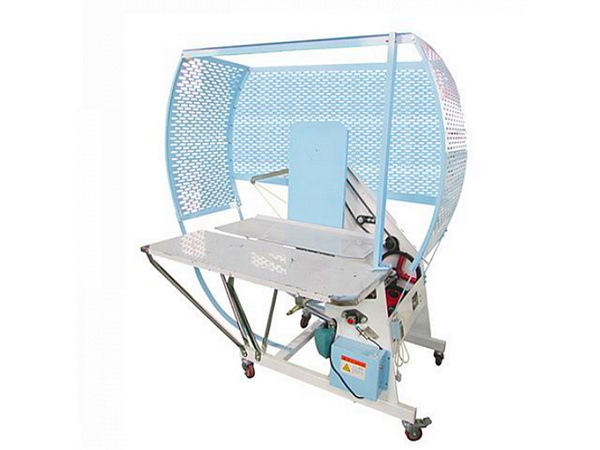
A strapping machine applies a strap—a flexible band made typically from polypropylene (PP), polyester (PET), or steel—around goods to hold them securely. It automates the process of feeding, tightening, sealing, and cutting the strap, resulting in bundled products or packages firmly held together. These machines are essential in ensuring load stability during transit and storage, thus minimizing damage and increasing handling efficiency.
The core mechanism involves several automatic steps. First, the machine feeds a strap around the item or carton. Then, controlled tension is applied to tighten the strap to optimal firmness. The strap ends are sealed, usually by heat welding, friction welding, or metal sealing clips, and finally, the excess strap is cut. Many machines use sensors to detect package size and adjust operations automatically, enhancing productivity and reducing manual labor efforts.
Strapping machines are categorized based on automation levels and specific application needs:
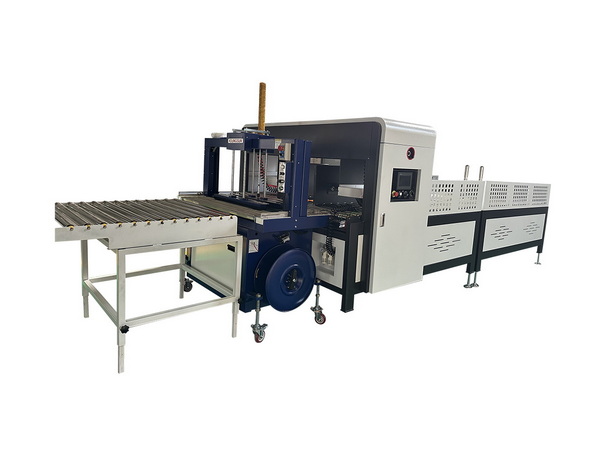
These machines incorporate sensors, conveyor belts, and product detection systems to strap packages without any human intervention. They are ideal for high-volume production lines, achieving speeds of up to 60 straps per minute. Features often include adjustable strap tension, automated strap feeding, and programmable settings for different package sizes. These machines are commonly used in cartoning and palletizing operations where speed and consistency are critical.[4][11]
Semi-automatic models require an operator to place the strap around the package manually. The machine then automatically tensions, seals, and cuts the strap. They offer a good balance between automation and cost, suitable for moderate production volumes. Semi-automatic machines often include electronic tension controls and sensor-controlled heating systems for consistent seals. They support various strap widths, typically ranging between 5mm and 12mm, and can operate with power supplies around 110V or 240V depending on the model.[1][2][3]
These are handheld or pneumatic tools used to manually tension and seal straps. Though labor-intensive, they remain useful in locations where automation is impractical or for occasional strapping tasks. These tools apply friction welds or seals and provide good control over strap tension but are slower compared to mechanized options.[9][12]
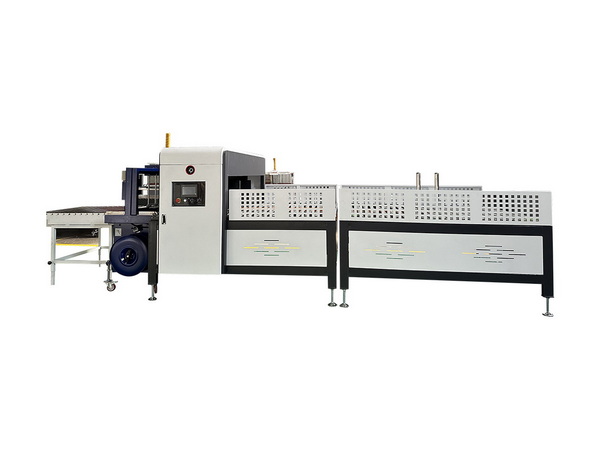
Modern strapping machines offer a variety of technical features to suit diverse industrial needs:
- Tension Control: Electronic or pneumatic systems provide adjustable tension (ranging generally from 10 to 100 lbs) to suit different package types.
- Sealing Methods: Heat sealing, friction welding, or metal seals provide durable strap joining.
- Speed: Cycle times typically range from 2 to 3 seconds per strap, allowing rapid processing.
- Strap Sizes: Machines accommodate strap widths commonly between 5mm and 15mm, with thicknesses from 0.4mm to 0.8mm.
- Power Supply: Most run on single-phase 110V or 240V power; some fully automatic machines require three-phase power.
- Material Compatibility: Capable of using PP, PET, or steel strapping depending on the application.
- Construction: Stainless steel and robust frames ensure durability and suitability for food-safe or harsh environments.[2][3][1]
Strapping machines find use across various industries and packaging requirements:
Strapping machines secure boxes and cartons to prevent them from opening or shifting during shipping and storage, ensuring the integrity of consumer goods, electronics, foodstuffs, and more.
Items such as paper rolls, pipes, lumber, or metal rods are bundled efficiently, facilitating easier handling and transportation.
Strapping aggregated goods on pallets stabilizes the load, preventing movement and damage within warehouses and across transport networks.
For delicate or heavy goods, strapping provides additional mechanical strength to reinforce packaging, enhancing safety.
Manufacturers tailor strapping machines for sectors like food processing (e.g., fish packaging), construction materials, and wholesale distribution. Adjustable tension and specific strap materials cater to these niche needs.[6][10][13]
- Enhanced Load Security: Firm strapping reduces load shift and damage risks during handling.
- Increased Productivity: Automating the strapping process accelerates operations and reduces human error.
- Cost Efficiency: Reduces packaging material waste and product losses, streamlining overall packaging costs.
- Versatility: Supports various package sizes and types, adapting to changing production demands.
- Reduced Labor Intensity: Automated and semi-automatic models minimize manual effort and operator fatigue.[8][4]
Strapping machines are indispensable tools in modern packaging, offering secure, efficient means to bundle and stabilize goods. From carton packaging to pallet securing, these machines contribute significantly to reducing damage, improving operational efficiency, and cutting packaging costs. Companies like Hebei Ouye Carton Machinery Co., LTD. provide innovative strapping machine solutions tailored for OEM clients globally, combining precision engineering with easy operation. Incorporating these machines into packaging workflows is a smart investment that enhances product protection and optimizes logistics.
Strapping machines work with a variety of materials including cardboard cartons, wood bundles, plastic-wrapped goods, and palletized items. Strap materials include polypropylene (PP), polyester (PET), or steel depending on strength and application needs.[13][2]
Automatic machines perform the entire strapping cycle without operator intervention, suitable for high-volume lines. Semi-automatic machines require manual strap placement but handle tightening and sealing automatically, balancing cost and efficiency.[11][1]
By tightly bundling packages, strapping reduces the risk of load shifts or breakage during transport, enhancing the safety of goods and handlers alike.[14][13]
Yes, strapping machine manufacturers offer customization of tension control, sealing methods, strap materials, and size ranges to fit industry-specific requirements such as food packaging or heavy construction materials.[6][13]
Regular cleaning, lubrication of moving components, inspection of tension systems and sealing heads, and prompt replacement of worn parts ensure optimal machine performance.[1][8]
[1](https://strapsolutions.com/products/strapping-machines/semi-automatic-strappers/)
[2](https://www.sepackindia.com/strapping-machines.html)
[3](https://www.signode.com/en-us/productslist/sig-n/)
[4](https://www.isg-pack.com/product/automatic-strapping-machine-easy-strap-309bp-312bp/?lang=en)
[5](https://messersi.com/en/prodotti/tl5st/)
[6](https://www.fromm-automation.com/es/productos/machines-es/semiautomatic-machines-es/automated-horizontal-strapping-machine-for-bricks/)
[7](https://www.samuelpackaging.com/en/standard-plastic-strapping-machines)
[8](https://www.eammosca.com/news/newsdetail/strapping-machines-101-1943)
[9](https://www.mosca.com/en/Produkte/Umreifungsmaschinen/Umreifungsmaschinen/productdetail/hug-1397)
[10](https://www.fhopepack.com/Automatic-Strapping-Machine/)
[11](https://www.fromm-pack.com.au/fromm-central/blog/what-is-a-strapping-machine-understanding-types-and-how-they-work/)
[12](https://www.pscl.co.uk/blogs/strapping-machines/5869649-strapping-machines-types-and-uses)
[13](https://www.signode.com/en-us/products/strapping-systems/application-specific-strapping-machines/)
[14](https://www.rajapack.co.uk/blog-uk/guide-strapping-machines)


