
Views: 222 Author: Ouye Carton Machinery Publish Time: 2026-05-19 Origin: Site


Anilox rollers are the metering heart of any cardboard flexographic printing machine. They collect a precise ink volume from the chamber or fountain and transfer it to the plate, which then deposits the ink onto corrugated board. [blog.focuslabel]
For 6‑color high‑definition graphics on packaging (e‑commerce boxes, FMCG cartons, retail‑ready trays), ink density, dot gain, and registration stability are directly tied to:
- Cell volume and geometry of the anilox.
- Surface material (metal vs ceramic).
- Cleanliness and wear over thousands of impressions. [precisionrollsolutions]
On a modern Cardboard Flexographic Printing Machine, you typically combine:
- High line‑screen plates (e.g., 100–150 LPI for corrugated).
- Low to medium anilox volumes for process colors.
- Consistent, clean anilox cells to avoid dirty print. [convertingquarterly]
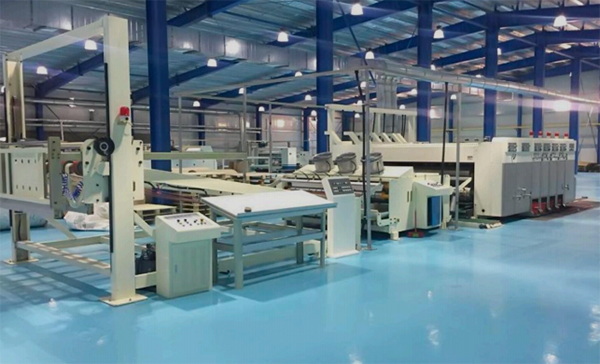
Metal anilox rollers
- Traditionally chrome‑plated steel or other metals.
- Cells engraved mechanically (often with lower line counts).
- Softer surface, more prone to wear and volume loss over time. [harpercorporation]
Ceramic anilox rollers
- Metal base covered with a dense, hard ceramic coating (often chromium oxide) via plasma or thermal spray. [herzpack]
- Cells engraved by high‑precision laser, enabling higher line counts and more uniform cell geometry. [herzpack]
- Extremely wear‑resistant and more stable in volume across long production cycles. [jinhangmachinery]
For ink transfer efficiency, the critical topics are:
- How much ink volume the cells can carry.
- How consistently they release that volume to the plate.
- How quickly the surface wears and how dirt/ink residues accumulate.
When you print 6‑color high‑definition graphics on cardboard (typically CMYK + 1–2 spot colors), variation in ink transfer directly shows up as:
- Color shifts between impressions or across the sheet.
- Unstable vignettes and mid‑tones.
- Haloing or broken text at small point sizes. [blog.focuslabel]
Ceramic anilox rollers generally deliver better ink transfer efficiency for HD flexo because:
- Laser‑engraved cells are more uniform and offer optimized geometries (hex, elongated, or channel) for specific ink types and volumes. [precisionrollsolutions]
- Their high hardness keeps cells open and consistent across longer runs, maintaining color density with less pressure and fewer adjustments. [jinhangmachinery]
- They are especially stable with high‑viscosity inks and UV coatings, which are increasingly used in high‑graphics packaging. [jctprintco]
By contrast, metal anilox rollers:
- Wear faster, gradually reducing effective cell volume and ink transfer.
- Are more susceptible to surface damage, scratches, and polishing, which leads to inconsistent ink laydown. [harpercorporation]
On a 6‑color cardboard flexographic printing machine tuned for HD work, this usually translates into:
- Ceramic rolls on all process and spot stations for repeatable color.
- Occasional use of metal rolls only in low‑risk applications (e.g., simple line or text print, low coverage work).
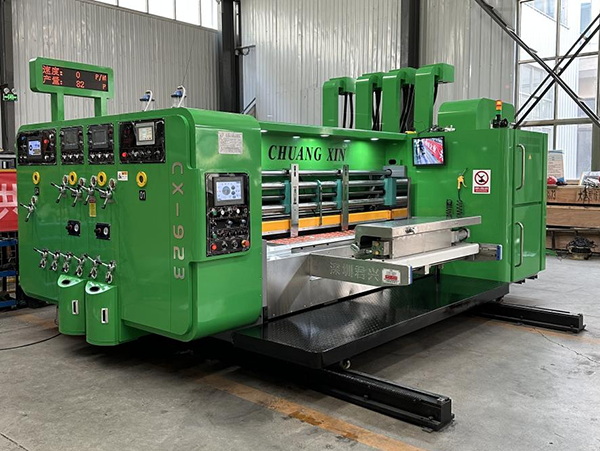
| Aspect | Metal Anilox Rollers | Ceramic Anilox Rollers |
|---|---|---|
| Surface material | Chrome‑plated metal (harpercorporation) | Ceramic coating on metal core (herzpack) |
| Typical line screen | Lower line counts, limited for HD graphics (harpercorporation) | Higher line counts via laser engraving, ideal for HD (herzpack) |
| Ink transfer uniformity | Decreases as surface wears and polishes (harpercorporation) | Consistent over time due to hardness and stable cells (blog.focuslabel) |
| Suitability for 6‑color HD on corrugated | Adequate for basic work, risky for fine vignettes and gradients | Well‑suited for tonal ranges, fine text, barcodes |
| Wear resistance | Moderate; cell volume falls with use (harpercorporation) | High; 2–3 years of normal use with proper cleaning (blog.focuslabel) |
| Cleaning behavior | Easier to damage surface when scrubbing | Tolerates ultrasonic and chemical cleaning when controlled (blog.focuslabel) |
| Best use cases | Simple line work, low‑coverage jobs | Process colors, spot colors, coatings on HD packaging (jctprintco) |
On corrugated board, absorbency and flute profile increase the risk of:
- Dot gain.
- Loss of fine highlight dots.
- Uneven ink penetration between flute peaks and valleys. [flexography]
Ceramic anilox cells can be optimized by:
- Selecting appropriate cell geometry (e.g., 60‑degree hex for general process work, elongated cells for coatings). [precisionrollsolutions]
- Balancing cell volume (BCM/cm³ or cm³/m²) against plate LPI and substrate roughness to avoid both "starving" and flooding. [blog.focuslabel]
In practice for a 6‑color cardboard flexographic printing machine:
- Process colors (CMYK) often use higher line counts, lower volumes to control dot gain.
- Spot colors or solid areas may use slightly lower line counts, higher volumes for full coverage.
- Ceramic anilox stability allows you to keep this balance without constantly chasing color with pressure adjustments. [convertingquarterly]
The global flexographic printing market is growing steadily, driven by packaging, labels, and folding cartons. [psmarketresearch]
- Recent analysis shows global flexographic print markets expanding at around 2.6–4.3% CAGR through 2030, with packaging as the dominant segment. [flexography]
- Asia‑Pacific (including China) is expected to hold around 45% market share over the coming years, making export‑ready equipment and print quality critical. [psmarketresearch]
This trend pushes converters to:
- Upgrade from simple one‑ or two‑color machines to 4–6 color cardboard flexographic printing machines.
- Transition from metal anilox rollers to ceramic anilox rollers to support brand owners' expectations for sharper graphics and consistent color across regions. [jctprintco]
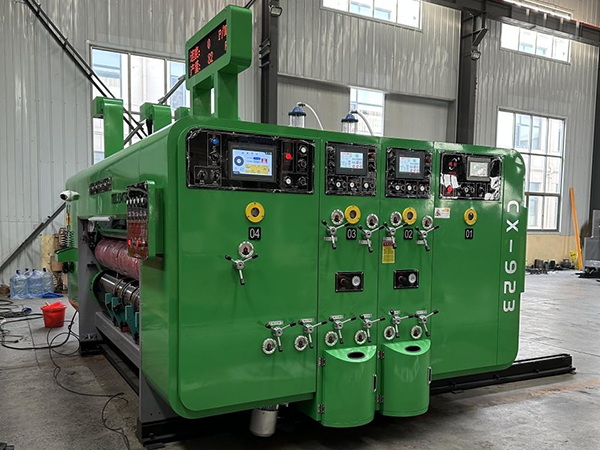
Consider a regional box plant running a 4‑color cardboard flexographic printing machine with metal anilox rollers:
- Operators report color drift during longer runs and frequent cleaning stops.
- Fine text around 6–8 pt occasionally breaks or fills, especially on recycled liners.
After upgrading to ceramic anilox rollers:
- The plant can run longer jobs with fewer wash‑ups, due to more stable cells and easier deep cleaning. [jctprintco]
- Ink transfer to the plate becomes more predictable, enabling tighter process color tolerances and better registration.
- The customer can confidently sell 6‑color high‑definition graphics to export brand owners, using the same machine platform but with a higher‑spec anilox configuration. [jinhangmachinery]
This type of shift aligns with what many flexo manufacturers and converters have observed: technology upgrades at the anilox level give a strong ROI compared with a full machine replacement. [convertingquarterly]
When we help customers configure Hebei Ou Ye Carton Machinery lines, we typically walk through five steps:
1. Define application mix
- Basic shipping cartons with 1–2 colors.
- Retail or shelf‑ready packaging with 4–6 colors.
- Coatings (water‑based, UV, or varnish).
2. Choose base anilox type
- Metal anilox rollers only if print is low‑risk (simple logos, text, no fine images).
- Ceramic anilox rollers for any 4–6 color work, fine screens, or export‑grade branded packaging. [blog.focuslabel]
3. Match cell volume and line screen
- Align with plate LPI and substrate type.
- Use higher line counts for process, lower for solids/coatings. [precisionrollsolutions]
4. Plan cleaning and maintenance
- Implement daily manual cleaning plus scheduled ultrasonic or advanced cleaning to keep ceramic cells open. [blog.focuslabel]
- Standardize chamber and doctor blade pressure to avoid premature wear. [convertingquarterly]
5. Verify with test runs
- Run control charts and color bars to confirm ink transfer efficiency.
- Document anilox setups for repeat jobs to reduce makeready time.
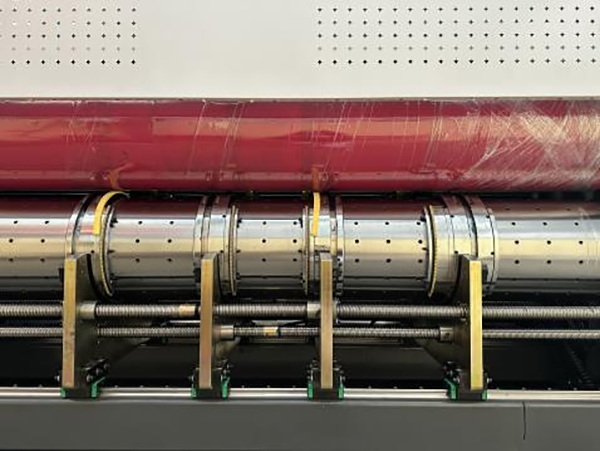
Ink transfer efficiency is not only about the initial choice of metal vs ceramic; it is also about how the roller is maintained.
For ceramic anilox rollers:
- Regular hand cleaning combined with periodic ultrasonic cleaning helps restore near‑new performance by removing dried ink and coatings from the cells. [blog.focuslabel]
- Proper handling (gloves, covers, dry storage) protects the ceramic surface and keeps cells from getting plugged with dust or debris. [jctprintco]
For metal anilox rollers:
- Aggressive cleaning can scratch the surface or polish cell walls, altering volume and transfer.
- As chrome wears, cells become shallower, leading to weaker color and uneven coverage. [harpercorporation]
On a cardboard flexographic printing machine that runs multiple shifts per day, ceramic's superior wear resistance and cleanability directly translate into more consistent ink transfer across the full life of the roll. [jinhangmachinery]
From a machinery‑manufacturer point of view, metal anilox rollers are not obsolete. They can still be appropriate when:
- The customer mainly prints single‑color shipping marks, dates, or simple logos.
- Print quality requirements are moderate, and cost constraints are tight.
- The plant has limited cleaning infrastructure and prefers simpler maintenance routines.
However, if your business plan includes:
- 6‑color high‑definition graphics for brand owners.
- Frequent job changes and shorter runs.
- Export markets expecting consistent color across multiple plants.
…then ceramic anilox rollers should be considered the default choice for your cardboard flexographic printing machine, with metal reserved for niche or backup roles. [jinhangmachinery]
To simplify the decision for users of Cardboard Flexographic Printing Machines:
- Choose ceramic anilox rollers for:
- All CMYK and extended gamut stations.
- Spot colors requiring solid and gradient performance.
- Coating units applying water‑based or UV finishes. [jctprintco]
- Keep metal anilox rollers as:
- Spare rollers for emergency use.
- Designated rolls for extremely simple line work where capital cost is the primary concern. [harpercorporation]
This mixed strategy protects budget while ensuring that ink transfer efficiency for 6‑color HD graphics is not compromised.
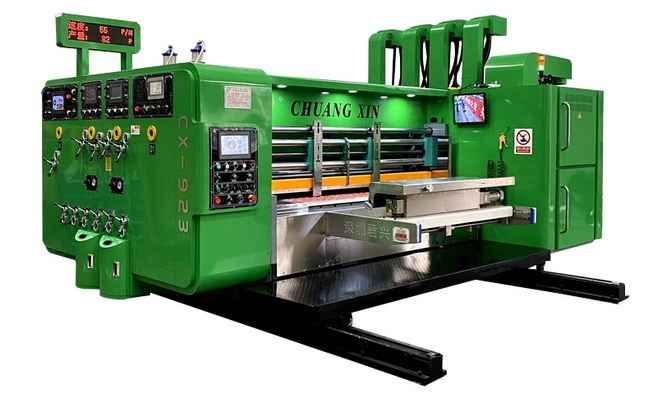
If your goal is to upgrade from basic carton printing to 6‑color high‑definition graphics, the most cost‑effective step is often re‑engineering the anilox configuration of your cardboard flexographic printing machine.
Hebei Ou Ye Carton Machinery Co., Ltd can:
- Help you specify ceramic anilox rollers tailored to your substrates, inks, and color targets.
- Design complete 4–6 color cardboard flexographic printing lines configured for export‑grade packaging.
- Support you with training on ink transfer optimization, cleaning, and maintenance to protect your investment.
You can reach out with your current machine specs, ink system, and target print quality level, and we will recommend a metal vs ceramic anilox roller strategy customized to your plant.
1. Can I mix metal and ceramic anilox rollers on the same cardboard flexographic printing machine?
Yes. Many plants use ceramic for high‑demand color stations and keep a few metal rollers for basic line work; however, color management is easier when all critical stations use ceramic. [jinhangmachinery]
2. How long does a ceramic anilox roller typically last in corrugated printing?
With proper handling and regular ultrasonic cleaning, a ceramic anilox roller can last 2–3 years of normal use while maintaining stable ink transfer. [blog.focuslabel]
3. Are ceramic anilox rollers compatible with water‑based and UV inks?
Yes. Ceramic surfaces are widely used with water‑based, solvent‑based, and UV inks, and they are especially valued for stable ink transfer with high‑viscosity or specialty coatings. [convertingquarterly]
4. Will upgrading to ceramic anilox rollers reduce my ink consumption?
In many cases, yes. More consistent cell volume and better metering allow you to achieve target densities with less over‑inking, reducing waste and improving color stability. [precisionrollsolutions]
5. What is the main risk if I stay with metal anilox rollers for 6‑color HD cartons?
The main risks are inconsistent color, faster wear, and reduced print sharpness over time, especially on long runs and fine graphics, which can limit your ability to meet export‑level brand standards. [harpercorporation]
- Harper Corporation. "Converting from chrome to ceramic anilox rollers for gravure and flexo printing." (Technical paper on metal vs ceramic anilox and transfer efficiencies).
https://harpercorporation.com/ [harpercorporation]
- JCTPRINT. "Ceramic Anilox Rollers in Flexo Printing: Advantages and Maintenance Tips."
https://www.jctprintco.com/news/news/_Ceramic_Anilox_Rollers_in_Flexo_Printing_JCTPRINT_s_Advantages_and_Maintenance_Tips.html [jctprintco]
- Focus Label Machinery. "Anilox Rolls Performance: What Why and How?"
https://blog.focuslabel.com/everything-you-need-to-know-about-anilox-rolls [blog.focuslabel]
- Converting Quarterly. "The role of the anilox roll."
https://convertingquarterly.com/the-role-of-the-anilox-roll/ [convertingquarterly]
- Jinhang Machinery. "Why does the printing industry use ceramic anilox rollers?"
https://www.jinhangmachinery.com/news/why-does-the-printing-industry-use-ceramic-anilox-rollers [jinhangmachinery]
- Herzpack. "Ceramic Anilox Roller – Product Overview."
https://herzpack.com/product-archive/rollers/ceramic-anilox-roller/ [herzpack]
- Precision Roll Solutions. "Anilox Rolls for Flexographic Printing."
https://www.precisionrollsolutions.com/products/arc-anilox-rollers [precisionrollsolutions]
- Flexographic Technical Association. "The Future of Flexographic Print Markets Through 2027."
https://www.flexography.org/industry-news/the-future-of-flexographic-print-markets-through-2027/ [flexography]
- P&S Market Research. "Flexographic Printing Market Size and Growth Report."
https://www.psmarketresearch.com/market-analysis/flexographic-printing-market-report [psmarketresearch]


