
Views: 222 Author: Ouye Carton Machinery Publish Time: 2026-05-17 Origin: Site


Automatic packing systems dramatically reduce bottlenecks on high‑volume pizza box lines compared with semi‑automatic strapping, but they require higher upfront investment and tighter integration with upstream equipment. For OEM buyers in the carton packaging industry, the right choice depends on throughput targets, labor costs, and long‑term flexibility of the production line. [alibaba]

In modern pizza box manufacturing, end‑of‑line automation is often the hidden bottleneck that holds back otherwise fast flexo printing, slotting, and gluing sections. Many plants in Europe and North America still rely on semi‑automatic carton box strapping machines, which are simple and low cost but depend heavily on manual loading and unloading. As an OEM carton machinery manufacturer, Hebei Ou Ye Carton Machinery Co., Ltd. frequently sees customers upgrade from semi‑auto strapping to automatic packing when they push beyond 8–10k boxes per hour on a single line. [youtube]
Automatic carton packing in this context refers to fully integrated systems that receive stacks of printed, die‑cut, and glued pizza boxes, automatically count, form bundles or packs, strap or wrap them, and discharge them to pallets with minimal human intervention. These machines can handle different box sizes and bundle configurations through recipe settings and servo‑driven adjustments. [dongtengcn]
Semi‑automatic strapping machines are standalone units where operators manually place bundles of boxes on the table; the machine then tensions and seals a PP strap around the bundle. They are widely used because they are compact, easy to operate, and suitable for lower‑volume or mixed‑product operations. [mywaymachine.en.made-in-china]
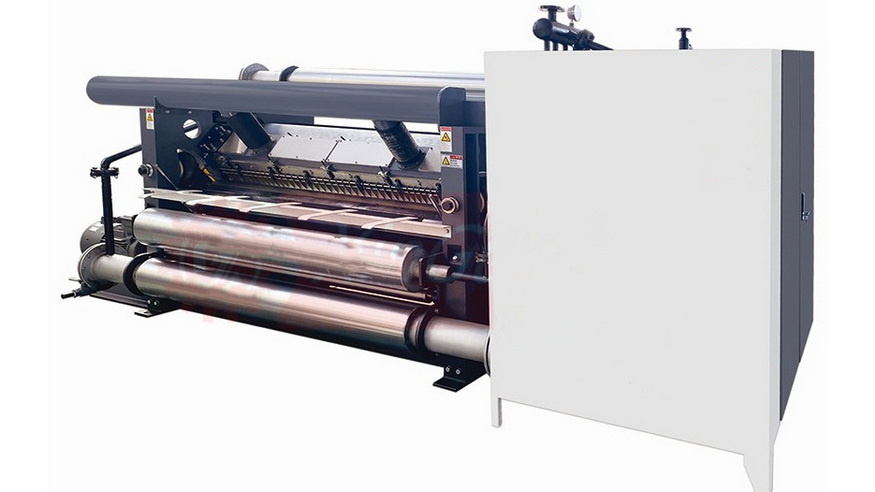
Pizza box production lines that run high‑graphics flexo printing and automatic folding‑gluing can easily reach 10,000–20,000 boxes per hour depending on format and board grade. If the end‑of‑line can only process 5,000–8,000 boxes per hour due to manual handling around a semi‑auto strapper, the entire line must slow down or accumulate work‑in‑process. [youtube]
- Automatic carton packing lines for similar carton applications often support multiple bundle patterns and high‑speed counting with short changeover times. [dongtengcn]
- Semi‑automatic PP strap packing machines usually strap a bundle every 2–3 seconds under continuous operation, which is acceptable only if manual handling is well organized and labor is available. [kexinmachine.en.made-in-china]
Key point: In high‑volume pizza box lines running a narrow SKU range, automatic packing aligns better with upstream speed, while semi‑auto units are more suitable for low‑ to mid‑speed or highly mixed product environments. [shinjieco]
As an OEM, we consistently see labor and ergonomics as decisive factors when customers review ROI for automatic packing vs semi‑auto strapping. Semi‑automatic machines require operators to lift stacks of boxes, position them under the strap arch, and often rotate bundles for multiple straps. Over long shifts, this repetitive manual work increases fatigue, error rates, and safety risks. [alibaba]
Automatic packing systems, by contrast, rely on conveyors, stackers, and automatic bundle forming to eliminate most manual lifting. Operators monitor the HMI, clear jams, and handle quality checks, which is a very different and less physically demanding role. [dongtengcn]
From a purchasing perspective, semi‑automatic strapping machines have a clear advantage in initial price and installation simplicity. They are often treated as accessories that can be added or relocated without major layout changes. [shinjieco]
Automatic packing solutions, however, should be evaluated on total cost of ownership (TCO) rather than purchase price alone. When labor costs, overtime, scrap from mishandling, and lost production due to bottlenecks are included in the calculation, the payback period for automatic packing on a high‑volume pizza box line can be surprisingly short in many B2B scenarios. [kexinmachine.en.made-in-china]
When comparing bids for automatic packing vs semi‑auto strapping, production and engineering managers typically look at:
1. Line speed and OEE targets: Required boxes per hour and acceptable downtime.
2. Labor availability and cost: Number of operators per shift and wage levels.
3. SKU profile: Number of pizza box formats, changeover frequency, and campaign lengths.
4. Floor space and layout: Ability to integrate conveyors and stackers.
5. Spare parts and service: Local support and lead times.
For a plant running multiple shifts and standardized pizza box formats, automatic packing often provides the better long‑term financial outcome even though budget sign‑off is more complex. [youtube]
Pizza box converters serving international pizza chains usually work with a limited set of standardized sizes and print designs in large volumes. In this case, automatic packing can run recipe‑based changeovers with minimal intervention, making full use of servo controls and pre‑set bundle patterns. Once the process is locked in, operators simply call up the SKU in the HMI. [dongtengcn]
On the other hand, converters serving many small restaurant brands or private labels often produce shorter runs with frequent changeovers. Semi‑automatic strapping provides maximum flexibility, because operators can adjust stack height and strapping positions on the fly without complex programming. For these buyers, a hybrid approach—automatic packing on flagship lines and semi‑auto units on flexible lines—can balance efficiency and agility. [alibaba]

End‑of‑line packing determines how pizza boxes arrive at your customer's bakery or distribution center. Automatic packing systems apply consistent counting, stacking, and strapping tension, which improves bundle stability and reduces transit damage. Stable, neatly presented bundles also support a more professional brand image when boxes are inspected on arrival. [kexinmachine.en.made-in-china]
Semi‑automatic machines can achieve good strap quality, but the outcome is more dependent on operator technique and attention. Differences in bundle height, skewed stacks, or uneven strap placement may not be visible in the factory but can cause problems in downstream automated depalletizing or warehouse handling. [shinjieco]
As a carton machinery OEM, we see best results when automatic packing is designed as part of a complete line that includes printing, slotting, die‑cutting, folding‑gluing, and stacking. This allows the integrator to synchronize speeds, implement buffer conveyors, and standardize controls and safety across all sections. [youtube]
Semi‑automatic strapping machines are usually added to the end of an existing line with minimal integration beyond power supply and basic conveyor connection. This is attractive for retrofit projects and factories that cannot afford to stop production for a full line rebuild, but it also limits the degree of automation and data collection possible at the end of the process. [alibaba]

From our experience supplying carton packaging equipment to overseas brands and distributors, we see a clear pattern in Automatic Packing vs Semi‑Auto Strapping decisions:
- Choose automatic packing when
- Your pizza box line runs high volumes of a few core SKUs.
- Labor costs are rising or skilled operators are hard to retain.
- You plan to connect production data to MES/ERP systems and track OEE.
- Safety, ergonomics, and brand perception are strategic priorities.
- Choose semi‑auto strapping when
- You have many low‑volume SKUs and frequent order changes.
- Capital budget is constrained and you need a quick capacity boost.
- Floor space is limited and layout changes are difficult.
- You are in an early growth stage and still exploring product‑market fit.
In practice, many multi‑line factories standardize automatic packing on their main pizza box lines while keeping semi‑auto units as backup or for specialty runs. This staged approach spreads investment and reduces implementation risk.
Upgrading from semi‑auto strapping to automatic packing is not just about buying a new machine. For a smooth project, plant managers and OEM partners can follow a structured approach:
- Measure actual boxes per hour at each section of the line over at least one week.
- Document manual tasks around the semi‑auto strapper: lifting, stacking, rework, and delays.
- Identify constraints such as floor space, available power, and existing conveyor layout.
- Set target line speed, OEE, and staffing levels for the next 3–5 years.
- Prioritize SKUs for the automatic line based on volume and profitability.
- Decide which data points (bundle counts, downtime reasons, scrap) you want to collect.
- Share real production data and constraints with your selected OEM.
- Request simulations, layout drawings, and throughput estimates for automatic packing scenarios.
- Review options for staged implementation to minimize downtime.
- Schedule installation during a low‑season window if possible.
- Prepare training for operators, maintenance, and quality teams.
- Define clear KPIs for the first 3–6 months after go‑live.
| Aspect | Automatic Packing | Semi‑Auto Strapping |
|---|---|---|
| Core role | Fully automated counting, bundling, packing of cartons (dongtengcn) | Manual loading with automatic strap application (alibaba) |
| Typical throughput | Aligns with high‑speed lines, supports very high OEE (dongtengcn) | Limited by manual handling and operator fatigue (alibaba) |
| Labor requirement | Fewer operators, more supervision and monitoring (dongtengcn) | More operators for lifting, positioning, and stacking (alibaba) |
| Flexibility for SKUs | Best for standardized, high‑volume SKUs (dongtengcn) | Very flexible for short runs and frequent changes (alibaba) |
| Upfront investment | Higher, requires layout and controls integration (dongtengcn) | Lower, easy to add or relocate (alibaba) |
| Quality consistency | Very consistent bundles and strap tension (dongtengcn) | More variation due to manual work (alibaba) |
| Data and connectivity | Easier to connect to MES/ERP and track KPIs (dongtengcn) | Limited, mostly stand‑alone equipment (alibaba) |
As a Chinese OEM specializing in carton packaging equipment and pizza box line solutions, Hebei Ou Ye Carton Machinery Co., Ltd. designs and manufactures both high‑efficiency automatic packing systems and compatible end‑of‑line equipment tailored for overseas brand owners, wholesalers, and converters. Working with international partners, we customize machine configurations to match board grades, pizza box designs, and local safety standards. [dongtengcn]
For buyers migrating from semi‑auto to automatic, our engineering team can analyze your existing layout, recommend realistic throughput improvements, and create a phased upgrade roadmap that controls risk and protects ongoing production. This OEM‑level approach helps you turn end‑of‑line bottlenecks into a stable, scalable advantage in your pizza box business.
If you are evaluating automatic packing vs semi‑auto strapping for your pizza box lines, consider sharing your current line data and layout with your OEM partner so they can model the ROI and propose a practical upgrade roadmap.

Q1: Is automatic packing always better than semi‑auto strapping for pizza boxes?
A1: No. Automatic packing is superior for high‑volume, standardized pizza box production, but semi‑auto strapping remains a smart choice for lower volumes, frequent changeovers, or constrained budgets. [shinjieco]
Q2: How long is the typical payback period for automatic packing?
A2: Payback depends on local labor costs, line speed, and shift patterns, but many converters see attractive ROI when they run high volumes over multiple shifts and can redeploy manual labor. [kexinmachine.en.made-in-china]
Q3: Can existing semi‑auto strapping machines be integrated into a more automated line?
A3: Semi‑auto machines can be partially integrated with simple infeed and outfeed conveyors, but they rarely reach the same automation level or data connectivity as dedicated automatic packing systems. [alibaba]
Q4: What technical data should I prepare before talking to an OEM about automatic packing?
A4: Provide board specifications, box sizes, SKU mix, current line speeds, shift patterns, labor allocation, and layout drawings so your OEM can propose a suitable packing solution and realistic performance targets. [youtube]
Q5: Are automatic packing systems suitable for other carton products beyond pizza boxes?
A5: Yes. Many automatic carton packing machines can handle various corrugated and board products, as long as stack dimensions, bundle patterns, and surface treatments fall within the machine's specification range. [kexinmachine.en.made-in-china]
1. Dongteng Machinery – Automatic Carton Packing Machine (Key features and automation benefits for carton packing lines). (https://www.dongtengcn.com/product-list/automatic-carton-box-packing--strapping-machine
2. Alibaba – Plastic PP Semi‑Automatic Carton Box Strapping Machine (Performance attributes and usability of semi‑automatic strapper). (https://www.alibaba.com/product-detail/China-Plastic-PP-Semi-automatic-Carton_60049176684.html
3. Made‑in‑China – Good Quality Semi Automatic Strap Strapping Machine (General specs and applications for semi‑auto strapping in packaging). (https://kexinmachine.en.made-in-china.com/product/yXImFxJlAwUj
4. Huahang Packing Machinery – Automatic Carton Production Line / High Speed Flexo Printing Glue Box Packaging (Examples of high‑speed carton lines and integrated end‑of‑line solutions). (https://www.youtube.com/watch?v=1YYuCvwPEiY


