
Views: 222 Author: Ouye Carton Machinery Publish Time: 2026-05-07 Origin: Site


From my perspective as a packaging machinery specialist working with global corrugated plants, the move from traditional hard‑blade slitting to thin blade slitter scorer systems is no longer just a technical preference; it is a competitive necessity for plants running recycled lightweight flutes. In markets like China, where paper and paperboard now hold nearly half of the total packaging share and recycled containerboard capacity continues to expand, equipment choices at the slitting and scoring stage determine whether converters can meet export‑grade quality standards at scale. [alibaba]
For Hebei Ou Ye Carton Machinery, which designs and manufactures OEM carton packaging equipment for overseas brands, this comparison is not theoretical: it is based on daily feedback from customers in Europe, the Americas, and Asia who are shifting to thinner E‑flute and high‑recycled content boards to reduce cost and improve sustainability. In this article, I will break down how thin blade slitter scorers work, where they outperform traditional slitting, and what to look for when specifying equipment for recycled E‑flute production lines. [hycartonmachines]

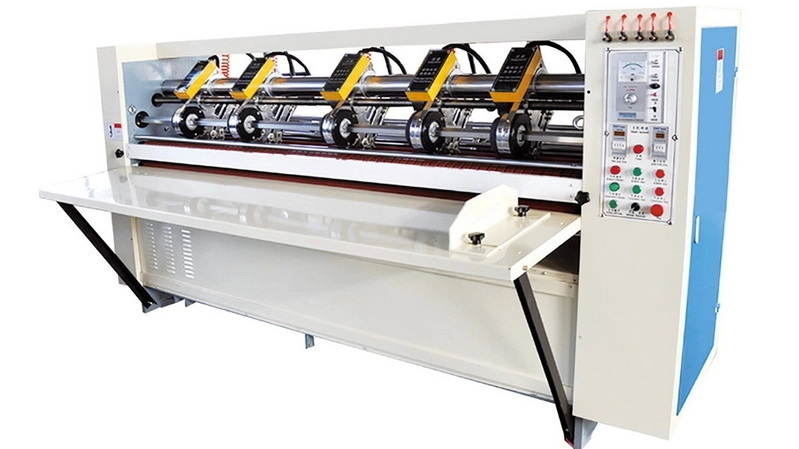
A thin blade slitter scorer uses narrow, high‑speed circular blades to slit and dedicated scoring heads to crease corrugated sheets in the machine direction. The blade diameter is typically in the 200–300 mm range, with very small blade thickness, which allows a fine cutting line at high web speeds while minimizing mechanical stress on the flute structure. [llypack]
Modern machines often feature automatic or motorized adjustment of slitter knives and scorer heads so the operator can quickly adapt to different sheet widths, scores, and flute profiles. To maintain edge quality, many systems include an automatic re‑sharpening device that periodically grinds the blade while the machine is running, keeping the cutting edge sharp and preventing fuzzing or crushing as speeds increase. [canghaimachine]
In many legacy corrugated lines, "traditional slitting" refers to wider, heavier blades or rotary knives that exert higher pressure on the sheet and rely on mechanical contact with an anvil or counter‑roller. These units often lack precise, independent control of slit and score positions and may not include automatic sharpening or fine‑tuned pressure control. [wepack-expo]
Because of the higher blade pressure and less refined support, traditional systems tend to damage flute tips, especially on lightweight or recycled boards, which leads to edge crush, delamination, and dust generation. On heavier double‑wall or older grades this was acceptable, but as converters move to E‑flute and higher recycled content, the limitations of conventional slitting become more visible in print quality and compression tests. [mordorintelligence]
On recycled E‑flute, a thin blade slitter scorer is designed to preserve the flute geometry by applying minimal radial pressure and performing a clean shear cut. This results in smooth, dust‑reduced edges with very low crush, which is essential for maintaining box compression strength when board grammage and flute height are already optimized. [wdcartonmachine]
Traditional slitting knives, by contrast, often introduce micro‑cracks and fiber pull‑out along the cut line, particularly when blades are not frequently sharpened or when operators increase pressure to compensate for wear. Over long runs, this can reduce edgewise crush resistance and lead to higher reject rates for premium packaging with tight tolerance specifications. [alibaba]
Recycled containerboard fibers are shorter and less uniform than virgin fibers, which makes them more vulnerable to mechanical damage during converting. E‑flute, with its lower caliper and finer flute pitch, gives less structural "reserve" to absorb crushing forces at the cut and score lines. [yikegroup.en.made-in-china]
Thin blade slitting technology, particularly when combined with pre‑pressing rollers and precision scorer holders, helps maintain board caliper and flute integrity across the full sheet width, even at high machine speeds. Plants that have upgraded to this type of equipment report smoother folding, fewer cracked scores, and better registration stability in downstream printing and die‑cutting. Traditional slitting systems are more likely to exacerbate the natural variability of recycled fibers, leading to inconsistent folding behavior and visible edge damage on litho‑laminated or high‑graphic boxes. [canghaimachine]
Most modern thin blade slitter scorers are engineered for high line speeds, with typical design speeds ranging from 150–900 m/min depending on configuration and production line design. Automatic or programmable grinding units keep blades sharp without stopping the machine, which reduces downtime and maintains consistent cut quality over long orders. [llypack]
Because edge quality remains stable, converters can reduce trim waste and claim tighter tolerances, which is especially important when running expensive specialty liners or multi‑color print jobs. Traditional slitting machines, which often require manual blade changes and adjustments, can generate more off‑spec sheets during setup and after each maintenance intervention, directly affecting cost per box. [bmcpack]
Thin blade slitter scorers typically support a wide range of effective widths (for example, 1400–2500 mm) and can be configured with different combinations of slitting knives and scoring heads to suit local product mixes. With motorized lifting and positioning of heads, operators can quickly adapt from E‑flute to B‑ or C‑flute and from singlewall to heavier specifications. [hycartonmachines]
Traditional slitting systems offer less flexibility and often require longer changeover times, which makes them less suitable for converters serving multiple customer segments with frequent SKU changes. For OEM buyers, specifying a thin blade system provides more future‑proofing as customer demand shifts to finer flutes and lighter but stronger structures. [wepack-expo]
From the perspective of international brands sourcing packaging from China and other manufacturing hubs, zero‑crush edges on recycled E‑flute boards translate into observable quality in three areas:
- Carton appearance and shelf impact
- Structural performance in transit
- Print and converting consistency across batches
E‑flute is widely used for high‑graphic folding cartons and e‑commerce boxes, where customers expect sharp folds and clean edges even when the board is made from recycled content. If slitting and scoring damage the flute, the finished box may show wavy edges, cracked scores, or uneven closure, all of which undermine a premium brand's image. [statista]
Supply chain requirements are also tightening: major platforms and retailers increasingly measure box performance through compression tests and drop tests, and zero‑crush edges give converters more margin to meet these requirements while still using lighter board. For OEM clients working with private‑label machinery from Hebei Ou Ye, specifying thin blade technology is therefore a way to align equipment performance with brand‑level expectations in export markets. [ouyecartonmachine]
As an equipment partner, we typically guide corrugated plant managers through a practical specification checklist before they move away from traditional slitting:
1. Define board mix and future trend
2. Set quality and tolerance targets
3. Align machine speed and automation
4. Plan integration with existing lines
5. Confirm OEM customization and service
Start by mapping your current and projected board portfolio: share of recycled content, usage of E‑flute vs. B/C‑flute, and percentage of high‑graphic work. If your strategy includes higher recycled content and thinner grades, a thin blade slitter scorer becomes a core enabler for maintaining performance at lower basis weights. [mordorintelligence]
Next, translate customer expectations into measurable targets such as maximum allowable edge crush, acceptable dust levels, and crease quality at folding lines. Thin blade systems with automatic blade grinding and precise scorer positioning make it easier to hit these targets consistently across long runs. [canghaimachine]
Evaluate your overall converting line speed and desired throughput to specify design speed, effective width, and the number of blades and scoring heads. Modern Chinese manufacturers have reached international levels in speed, positioning accuracy, and automation, so there is no need to compromise here. Check for features such as PLC control, man‑machine interface, and automatic adjustment of pre‑pressing rollers and scorer holders. [yikegroup.en.made-in-china]
Consider how the new thin blade slitter scorer will integrate with upstream single facers and downstream printers, slotters, or die cutters. Accurate slitting and scoring reduce mechanical stress on downstream units, improving register and reducing setup waste. OEM suppliers like Hebei Ou Ye can align electrical, control, and mechanical interfaces so the new unit fits into your existing line with minimal disruption. [ouyecartonmachine]
For international buyers, OEM customization and after‑sales support are critical. Chinese packaging machinery exports are now in a stable growth stage, and many domestic manufacturers offer OEM/ODM configurations tailored to regional standards. Hebei Ou Ye, for example, supports custom branding, flexible voltage, automation level matching, and remote technical assistance for clients in Europe, the Americas, the Middle East, and Southeast Asia. [ouyecartonmachine]
China's packaging market is projected to reach around USD 229 billion by 2026, with paper and paperboard accounting for approximately 45–46% of material share. At the same time, domestic paper packaging machinery output saw a compound annual growth rate of about 7.4% from 2016 to 2021, reflecting strong investment in more advanced equipment. [statista]
This combination—higher demand for paper packaging and rapid local machinery development—explains why more corrugated converters, both in China and internationally, are choosing domestically produced thin blade slitter scorers instead of imported legacy systems. For OEM partners sourcing from Hebei Ou Ye, this means access to technology that matches global performance benchmarks while retaining cost and service advantages. [ouyecartonmachine]
Based on feedback from converters that have replaced traditional slitting units with thin blade slitter scorers from Chinese manufacturers, the most commonly reported improvements include:
- Noticeably smoother slit edges and reduced visible crush on E‑flute and lightweight boards
- Lower dust generation around the slitting section, improving cleanliness and reducing maintenance
- Higher consistency of crease quality, leading to fewer cracked scores during folding and gluing
- Reduced setup waste, as automatic grinding and precise head positioning stabilize cutting behavior
- Ability to run at higher speeds while still meeting export quality standards
These outcomes align with the broader industry trend in which domestic paper packaging machinery has caught up with many international benchmarks in speed and automation, making upgrades both technically and economically attractive. For OEM brands and private‑label machinery buyers, they also make thin blade technology an effective differentiator when promoting "zero‑crush E‑flute" capabilities to their own customers. [ouyecartonmachine]
| Aspect | Thin blade slitter scorer | Traditional slitting |
|---|---|---|
| Edge quality on recycled E‑flute | Smooth, low‑crush, minimal fuzzing thanks to narrow, sharp blades and low pressure llypack | Higher risk of crushed, fuzzy edges due to wider blades and higher contact pressure alibaba |
| Flute integrity | Preserves flute shape and board caliper, supporting box strength alibaba | More flute damage and micro‑cracks, especially on lightweight and recycled grades alibaba |
| Dust generation | Reduced fiber dust with sharp, auto‑ground blades hycartonmachines | More dust as blades wear and operators increase pressure hycartonmachines |
| Speed and uptime | High design speed with on‑the‑fly grinding and automated adjustments llypack | Lower effective speed due to more frequent stops for manual adjustment and sharpening hycartonmachines |
| Changeover flexibility | Motorized knife and scorer positioning, supports many board grades and sizes hycartonmachines | Slower mechanical changeovers, less suited to short runs and SKU variety hycartonmachines |
| Fit for recycled E‑flute | Highly suitable for zero‑crush, export‑grade boxes alibaba | Increasingly inadequate as board lightweights and recycled content rise mordorintelligence |
Hebei Ou Ye Carton Machinery is recognized as a professional carton box printing and converting machine manufacturer in China, supplying intelligent, high‑efficiency equipment to customers in markets such as Russia, the UK, Brazil, Australia, Mexico, South Korea, the Middle East, and Southeast Asia. The company integrates design, production, sales, and after‑sales service, with over 20 years of manufacturing experience in corrugated machinery. [ouyecartonmachine]
For OEM and private‑label partners, Ou Ye provides full customization, including machine configuration, automation level, color scheme, branding, and interface localization so that thin blade slitter scorer modules can be integrated into complete lines under the customer's brand. With 24/7 support, flexible voltage standards, and shipping assistance, the factory helps overseas customers deploy zero‑crush E‑flute capability without building an in‑house engineering team. [ouyecartonmachine]
For plant managers and engineering teams planning an upgrade, a structured rollout helps minimize risk and secure buy‑in. A typical three‑phase approach looks like this:
1. Audit current performance
2. Specify and source the new unit
3. Pilot, optimize, and scale
Document the current state of your slitting and scoring section: edge quality samples, board loss, dust levels, typical speeds, and downtime due to blade maintenance. Include test results for compression strength and crease quality on your main E‑flute and recycled grades so you can quantify improvement after the upgrade. [wdcartonmachine]
Engage with an OEM equipment supplier that has experience in thin blade slitter scorer design for corrugated lines, and prepare a specification covering width, speed, automation, and integration needs. Chinese manufacturers now routinely provide PLC‑controlled, man‑machine interface‑equipped systems with automatic adjustment and grinding, making it easier to configure the right solution for your product mix. [canghaimachine]
Start by installing the thin blade unit on a pilot or high‑priority line and train operators to use automated settings instead of relying on manual "feeling" when adjusting pressure and scoring depth. Monitor KPIs such as board waste, speed, dust, and complaint rates from key customers, then use those results to build the business case for rolling out similar equipment across other lines. [bmcpack]
If you are running recycled E‑flute or planning to shift more of your portfolio toward lighter, sustainable board, the slitting and scoring stage is one of the fastest levers you can pull to stabilize quality and reduce cost. Thin blade slitter scorers offer a proven path to zero‑crush edges, better flute integrity, and cleaner production—especially when paired with OEM‑configured lines from experienced manufacturers.
To explore a line or module designed around your board mix, markets, and brand strategy, consider partnering with Hebei Ou Ye Carton Machinery for a customized thin blade slitter scorer solution that integrates seamlessly into your existing or new corrugated production line. You can bring your own brand, we will provide the engineering behind it. [ouyecartonmachine]
Q1: Is a thin blade slitter scorer only necessary for E‑flute?
A: No. While the benefits are most visible on E‑flute and lightweight recycled boards, thin blade technology also improves edge quality and dust reduction on B‑ and C‑flute, which helps overall plant cleanliness and consistency. [alibaba]
Q2: Will a thin blade slitter scorer work with my existing corrugator?
A: In most cases, yes. Modern units are designed to integrate with standard corrugator widths and can be adapted to existing control systems through OEM engineering support, especially when working with flexible suppliers in China. [hycartonmachines]
Q3: How often do blades need to be replaced?
A: Because the blades are automatically ground during operation, replacement intervals are longer than on traditional systems, though the exact interval depends on board abrasiveness, production volume, and maintenance routines. [canghaimachine]
Q4: Does thin blade slitting increase machine price significantly?
A: The initial investment is usually higher than simple traditional slitting units, but converters often recover the difference through reduced waste, higher usable speed, and lower complaint rates, particularly on high‑value, high‑graphic work. [mordorintelligence]
Q5: Why choose a Chinese OEM like Hebei Ou Ye instead of a European brand?
A: China's paper packaging machinery makers have significantly improved technology in recent years, with key indicators such as speed and automation now close to international leaders, while still offering competitive pricing and flexible OEM customization. For many converters, this combination of capability and cost makes Chinese OEMs an attractive choice. [wepack-expo]
1. BMC Pack. "How Corrugated Carton Box Machines Improve Packaging Quality, Output, and Cost Efficiency." [Link]. [bmcpack]
2. HUAYU Carton Machinery. "Thin Blade Slitter Scorer, Paperboard Converting Equipment." [Link]. [hycartonmachines]
3. Alibaba. "Corrugated Cardboard BFY Thin Blade Slitter Scorer Machine." [Link]. [alibaba]
4. Canghai. "High Quality Thin Blade Slitter Scorer – Computer Type Corrugated Carton Box Making Machine." [Link]. [canghaimachine]
5. Mordor Intelligence. "China Packaging Market Size, Growth, Share Analysis 2026." [Link]. [mordorintelligence]
6. WePack Expo. "It Has Become the Mainstream and Inevitable Trend for Domestic Packaging Equipment to Replace Imported Equipment." [Link]. [wepack-expo]
7. Statista. "Packaging Industry in China – Statistics & Facts." [Link]. [statista]
8. Hebei Ouye Carton Machinery. "China Carton Machinery Manufacturer." [Link]. [ouyecartonmachine]
9. Hebei Ouye Carton Machinery. "Customized Carton Printing Machine Manufacturers." [Link]. [ouyecartonmachine]
10. WDCarton Machine. "The Core Advantages of Thin Blade Slitter Scorer Machine." [Link]. [wdcartonmachine]


