
Views: 222 Author: Ouye Carton Machinery Publish Time: 2026-05-06 Origin: Site


Triple-wall corrugated is unforgiving: once you over‑crush the flutes, you lose stacking strength, compression resistance, and long-distance transport safety. From my experience working with OEM buyers and plant engineers, the real question is not "which technology is better in general," but which process keeps board strength within spec at the required speed and volume. [pinlongmachinery]
In this article, we will compare rotary die cutting vs. flatbed die cutting specifically for heavy-duty triple-wall corrugated, looking at flute damage, compression strength, tolerances, tooling, and total cost of ownership from a plant-level perspective. [shinkomachinery]

Triple-wall corrugated (often in grades like A/C/A or BC double-double) is engineered for heavy loads, export packaging, and industrial parts. Any die-cutting method must respect its unique mechanical behavior. [dayuanmach]
Key characteristics that affect die cutting performance: [pinlongmachinery]
- High caliper and stiffness: The board is thick, making penetration and ejection harder.
- Multi-layer flute structure: Three corrugated mediums plus liners mean more points where crushing can occur.
- High edge-crush and compression targets: Customers often specify strict BCT or ECT values that must be maintained after converting.
- Longer box life cycle: Triple-wall is often reused in closed loops, so any damage during converting compounds over time.
For this class of material, die-cutting is no longer just about shape accuracy; it's about protecting stacking strength under real-world logistics conditions. [pinlongmachinery]
From an OEM supplier perspective, rotary die cutters are designed around a continuous nip between the cylinder and anvil, which directly affects how the triple-wall board is compressed. [giantcorrugated]
In a rotary system, the board passes through a rotating cylinder that cuts against an anvil roll. This creates a rolling compression profile rather than a flat impact. [pinlongmachinery]
Implications for structural integrity on triple-wall:
- Moderate but continuous compression across the sheet, which, if nip pressure is too high, can lead to progressive flute crush over long runs.
- Higher line speeds, typically advantageous for large-volume heavy-duty SKUs, but increasing the risk of heat build-up and tool wear that can indirectly affect board strength. [shinkomachinery]
- Stable cutting once set up, which reduces random weak points if maintenance is consistent.
When properly configured, a rotary line can maintain acceptable compression strength, but the safety margin is narrow on extra-thick boards if operators overcompensate nip pressure to chase clean cuts. [pinlongmachinery]
In rotary die cutting, tooling diameter, anvil hardness, and overbear (penetration) settings become critical for triple-wall applications. [giantcorrugated]
Best practices we see in heavy-duty plants include: [shinkomachinery]
- Using slightly larger cylinder diameters to reduce curvature stress on thick board.
- Selecting softer anvil covers or specially formulated anvil materials to cushion the board.
- Carefully controlling overbear to avoid cutting too deeply into liners.
- Establishing strict anvil rotation and resurfacing schedules to keep pressure consistent.
These measures help rotary lines preserve more of the original compression strength, but they require disciplined maintenance and operator training.
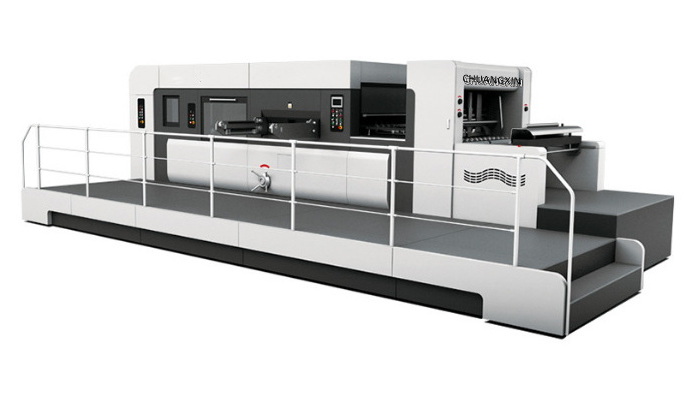
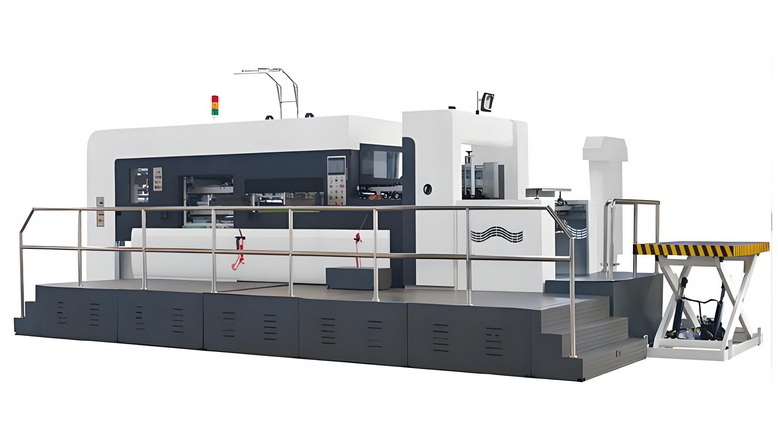
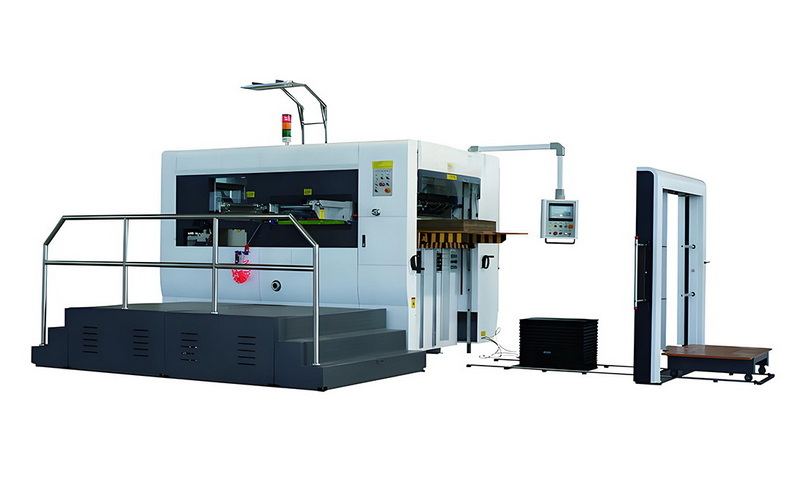
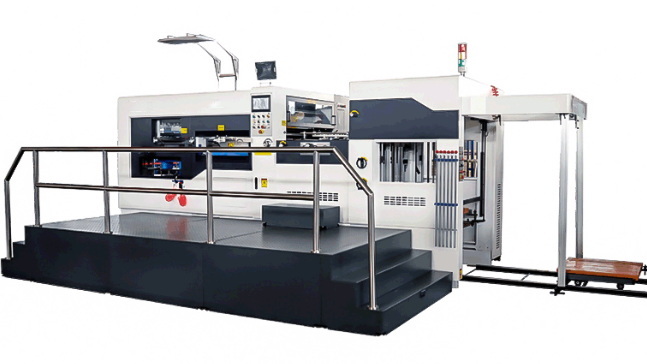
Flatbed die cutting uses a vertical, planar cutting action: the board is pressed between a flat die and a platen. This changes how forces are distributed through the triple-wall structure. [pinlongmachinery]
Because the pressure is applied over a flat area, flatbed machines can be tuned to provide very controlled, localized force on cutting and creasing rules. [labelprint24]
For heavy-duty triple-wall, this usually leads to:
- Cleaner creases with defined depth, which improves folding without over-breaking flutes.
- Reduced random flute crush, as pressure can be more finely balanced between cut rules, crease rules, and rubber.
- Better performance on complex, large-format designs, such as heavy-duty pallet boxes, bulk bins, and octabins.
In practice, flatbed systems tend to maintain board integrity better than rotary when you are running near the upper limit of board caliper and compression requirements, provided that make-ready is done correctly. [pinlongmachinery]
Flatbed die cutting does demand more time and skill in make-ready, especially for heavy-duty board. [pinlongmachinery]
Key setup factors that affect integrity:
- Crease channel depth and width matched to flute profile and total caliper.
- Rubber profile selection to support ejection without crushing the surrounding area.
- Pressure zoning across the platen to avoid overloading corners or edges.
- Compensation for board variation, such as moisture or batch differences.
When these are optimized, flatbed machines can deliver high structural consistency across the entire production batch, which is essential for export and long-haul applications. [pinlongmachinery]
Below is a conceptual comparison for heavy-duty triple-wall corrugated, assuming both machines are modern, well-maintained, and set up by experienced operators. [shinkomachinery]
| Aspect (Triple-Wall Focus) | Rotary Die Cutting | Flatbed Die Cutting |
|---|---|---|
| Flute crush risk at production speed | Medium to high if nip pressure is aggressive pinlongmachinery | Low to medium with proper make-ready pinlongmachinery |
| Post-converting compression strength (vs. raw board spec) | Slightly reduced, more sensitive to wear and pressure drift pinlongmachinery | Easier to keep close to spec across run pinlongmachinery |
| Consistency on large-format heavy-duty boxes | Good at stable setups, but sensitive to anvil condition shinkomachinery | Very good when pressure zoning is tuned pinlongmachinery |
| Suitability for extreme caliper or very high stacking requirements | Limited unless specifically engineered for thick board pinlongmachinery | Preferred choice if integrity is priority pinlongmachinery |
| Sensitivity to operator error for board strength | High: small nip changes can crush flutes pinlongmachinery | Medium: more steps, but easier to "see" and adjust make-ready pinlongmachinery |
From a structural integrity standpoint alone, flatbed generally has the advantage for the heaviest triple-wall specifications, while rotary can be competitive when caliper is moderate and parameters are tightly controlled. [shinkomachinery]
For plant managers, the choice is rarely purely technical. It's a trade-off between speed, cost, and how much risk you can tolerate on board strength. [dayuanmach]
- Rotary die cutting
- Strengths: Very high throughput, ideal for long runs of similar heavy-duty SKUs. [giantcorrugated]
- Risk: You may sacrifice a small percentage of stacking strength due to cumulative flute crush, especially at higher speeds and pressures.
- Flatbed die cutting
- Strengths: Better dimensional accuracy and crease control, safer for critical compression targets. [pinlongmachinery]
- Trade-off: Lower throughput and more setup time, which increases per-unit cost for short-term price-sensitive contracts.
A common approach we see in advanced plants is hybrid allocation: high-volume, less critical heavy-duty items on rotary; structurally demanding or export-grade packaging on flatbed. [dayuanmach]
Imagine a triple-wall export box designed to carry a 600–800 kg industrial product on a pallet. The customer requires minimum stacking strength for 30 days in a humid warehouse.
In such a scenario, most converters and buyers will lean toward flatbed die cutting for the outer heavy-duty components, because: [pinlongmachinery]
- They can more precisely control crease profile to avoid stress concentrations at corners.
- They can ensure compression strength remains closer to the tested raw board data.
- They reduce the variability between the first and last pallet in a long run.
Rotary may still be used for inner partitions or less critical components where a small strength reduction is acceptable in exchange for higher speed. [giantcorrugated]
From an OEM and converter collaboration perspective, here is a practical decision checklist you can use when specifying equipment or outsourcing heavy-duty jobs. [dayuanmach]
1. Define structural priority
- Is stacking/burst strength mission-critical (export, hazardous goods, reusable bins)?
- If yes, start with flatbed as the default; if no, consider rotary for volume efficiency. [shinkomachinery]
2. Confirm board specification and testing data
- Review ECT/BCT targets, flute combinations, and moisture conditions.
- Ask for pre- and post-converting compression test data where possible. [dayuanmach]
3. Assess design complexity and size
- Large-format boxes with complex cuts and deep scores generally benefit from flatbed precision. [pinlongmachinery]
- Simple RSC-type heavy-duty boxes may run acceptably on rotary with correct setup. [giantcorrugated]
4. Evaluate run length and SKU stability
- Long, stable runs: rotary can justify its speed advantage.
- Frequent changeovers: flatbed's flexibility and consistency may be more valuable. [dayuanmach]
5. Audit the converter's process control
- Check maintenance records, anvil management, and standard operating procedures.
- A well-run rotary line can beat a poorly managed flatbed line on integrity in real life.
This structured approach helps buyers and production teams align equipment choice with performance and risk tolerance, instead of relying on generic rules.
As a specialized Chinese manufacturer of carton packaging equipment and machines, an OEM like Hebei Ou Ye Carton Machinery Co., Ltd. typically supports overseas brands, wholesalers, and producers in several key ways. [dhcartonmachine.en.made-in-china]
For customers focused on heavy-duty triple-wall, OEMs can:
- Configure rotary and flatbed die cutters with suitable cylinder diameters, platen forces, and feeding systems for thick board.
- Recommend matched components (feeders, stackers, printing units) that minimize board abuse throughout the line.
- Provide process guidelines for maintaining structural integrity, from nip setting to periodic testing. [shinkomachinery]
By combining equipment capabilities with real-world application data, such OEM partners help customers balance cost, capacity, and safety margins in their packaging operations. [dayuanmach]
Looking at triple-wall corrugated for heavy-duty or export packaging? Share your current board grade and box design with our engineering team, and we will recommend a rotary or flatbed configuration designed to protect your compression strength while meeting your output targets.
Q1: Which process is generally safer for structural integrity on very thick triple-wall corrugated?
Flatbed die cutting is generally safer for structural integrity when board caliper and compression requirements are at the high end, because pressure can be more precisely controlled and localized. [pinlongmachinery]
Q2: Can rotary die cutting be used for triple-wall corrugated at all?
Yes, many plants successfully run triple-wall on rotary machines, but it requires careful control of nip pressure, anvil condition, and speed, especially for long production runs. [giantcorrugated]
Q3: How can I tell if my current process is over-crushing flutes?
Common indicators include lower-than-expected compression test results after converting, visible liner crush near creases, and increased damage in stacking or transport tests. Regular lab testing before and after converting is essential. [pinlongmachinery]
Q4: Does printing (flexo units) before die cutting affect board strength?
Yes, aggressive printing pressure or multiple passes can pre-compress the flutes, making them more vulnerable during die cutting, especially on rotary lines. That's why integrated line settings must be coordinated. [giantcorrugated]
Q5: What should I share with an OEM when requesting a machine for triple-wall corrugated?
You should provide board specs (flutes, liners, caliper), target box dimensions, stacking/transport requirements, expected run lengths, and performance issues you've faced before. This information allows the OEM to recommend a more suitable rotary or flatbed configuration. [shinkomachinery]
- Pinlong Machinery – The Difference Between Rotary and Flatbed Carton Box Die Cutting Machines (2024) [pinlongmachinery]
- Pinlong Machinery – Key Differences Between Flatbed and Rotary Carton Die Cutting Machines (2024) [pinlongmachinery]
- Shinko Machinery – Choosing Corrugated Die Cutter: Rotary vs Flatbed for Flexo Printers (2025) [shinkomachinery]
- Giant Corrugated – Rotary Die Cutter vs Flatbed Die Cutter: Which Is Better for Flexo Printing Machines? (2025) [giantcorrugated]
- Dayuan Machinery – Die Cutting Machine Types 2025: Rotary vs Flatbed Compared (2025) [dayuanmach]
- Labelprint24 – Punching processes at a glance: Rotary die-cutting vs. flatbed die-cutting (2023) [labelprint24]
- Made-in-China – Corrugated Cardboard Carton Box Die Cut Rotary Die Cutting Machine company profile for Hebei-based manufacturers [dhcartonmachine.en.made-in-china]


