
Views: 222 Author: Ouye Carton Machinery Publish Time: 2026-05-18 Origin: Site


As a packaging engineer with over 15 years of hands-on experience in corrugated manufacturing, I've witnessed countless production delays and customer complaints stemming from one persistent quality defect: fish-tailing. This dimensional deviation—where the edges of a folded box fail to align evenly, creating a characteristic fishtail shape—poses severe challenges for large-format appliance cartons that demand structural precision and automated downstream processing. The choice between inline folder gluer systems and offline gluing processes directly impacts your ability to control this critical defect while maintaining production efficiency. [baumerhhs].

Fish-tailing occurs when the edges of folded panels diverge from their intended alignment, compromising both the aesthetic quality and structural integrity of corrugated boxes. For large-format appliance cartons—typically measuring 1200x2400mm or larger—this deviation becomes magnified due to the extended panel lengths and increased material stress during folding operations. [baumerhhs]
Root causes of fish-tailing include:
- Improper scoring alignment relative to flute direction, particularly when scoring parallel to flutes [dgm-global]
- Inconsistent material moisture content creating differential expansion rates [leelinepackage]
- Inadequate scoring depth or excessive penetration causing liner damage [dgm-global]
- Misaligned folding sections and uneven compression during the gluing phase [leelinepackage]
Research indicates that dimensional deviations should not exceed half the corrugated board thickness to maintain acceptable quality standards. For heavy-duty appliance packaging using double-wall or triple-wall construction, precision becomes even more critical as these materials exhibit greater resistance to folding along score lines. [weipong]
Inline folder gluer systems represent fully integrated, continuous production lines where die-cutting and folder gluing operations occur in seamless succession without intermediate handling. Die-cut blanks transfer directly from the rotary die-cutter to the folder gluer via automated conveyor systems, eliminating manual touchpoints that introduce variability. [weipong]
Continuous material flow control: The electronic integration between die-cutting and folding stages maintains consistent board tension and alignment throughout the entire production sequence. This eliminates the dimensional shifts that occur when blanks are stacked, transported, and reloaded in offline processes. [weipong]
Real-time adjustment capability: Advanced inline systems employ servo-driven folding sections with automated gap sensors that detect and correct misalignment within milliseconds. For large-format appliance cartons, this instantaneous feedback prevents cumulative errors across extended panel lengths. [weipong]
Optimized scoring precision: Inline die-cutters can integrate water scoring technology, which applies precisely controlled moisture along crease lines before folding. This technique ensures folds occur exactly at intended points, dramatically reducing gap deviations—particularly critical when scoring parallel to flute direction where traditional methods risk tearing. [dgm-global]
Production speed advantages: Inline systems achieve speeds exceeding 1,000 boxes per minute in high-end corrugated applications. This velocity, combined with continuous material flow, minimizes the time between scoring and folding operations—a crucial factor since material moisture equilibrium can shift during delays, contributing to fish-tailing. [leelinepackage]
Despite these advantages, inline systems face challenges when addressing fish-tailing in diverse production scenarios. Changeover complexity means that optimizing scoring and folding parameters for a new appliance carton design requires extended setup time, potentially generating significant scrap during the initial calibration phase. Quality issues become more difficult to diagnose since defects could originate in either the integrated die-cutter or folder gluer sections. [weipong]
Offline folder gluers operate as standalone units where die-cutting and folding/gluing constitute separate operations. Blanks are die-cut on independent machines, then palletized and transported to the folder gluer for processing in discrete batches. [weipong]
Inspection checkpoint advantages: The bifurcated workflow enables quality control teams to inspect die-cut blanks before they enter the folder gluer. Floor managers can measure scoring depth, verify crease alignment, and assess material moisture content—identifying potential fish-tailing factors before folding operations compound the defects. [leelinepackage]
Material conditioning opportunities: The time gap between die-cutting and folding allows blanks to reach moisture equilibrium with the production environment. For appliance cartons using heavy-flute profiles, this conditioning period reduces internal stresses that contribute to dimensional deviations during folding. [orconind]
Rapid parameter optimization: Modern offline folder gluers feature servo-driven, computer-controlled adjustment systems that recall preset job parameters in under two minutes. When fish-tailing appears in appliance carton production, operators can immediately modify folding pressure, glue application patterns, and compression timing without disrupting upstream die-cutting operations. [weipong]
Defect source isolation: Quality control becomes more straightforward as defects are traceable to specific production stages. If fish-tailing emerges, technicians can definitively determine whether scoring inaccuracies in the die-cutter or folding misalignment in the gluer caused the deviation—enabling targeted corrective action. [leelinepackage]
The manual material handling inherent to offline systems introduces variables that can exacerbate fish-tailing. When pallets of die-cut blanks sit in warehouse environments with fluctuating humidity, edge fibers absorb or release moisture unevenly, creating the dimensional instability that manifests as fish-tailing during subsequent folding. Optimal storage humidity should remain between 40-50% to prevent fiber degradation. [victoryboxcorp]
Loading new stacks into the folder gluer feeder creates pause points where material alignment can shift. For large-format appliance cartons with extended panel dimensions, even minor feeding misalignment compounds geometrically across the folding sequence, producing visible edge deviation. [tcbvba]
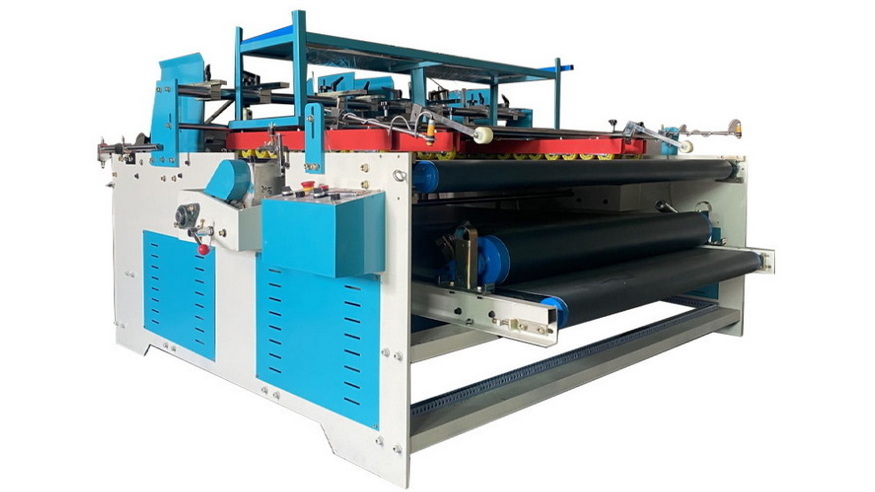
| Performance Factor | Inline Folder Gluer | Offline Gluing Process |
|---|---|---|
| Dimensional Accuracy | Superior consistency due to continuous flow and real-time correction (weipong) | Variable depending on intermediate handling and environmental control (weipong) |
| Setup Waste (Initial Run) | Higher scrap during complex integrated changeovers (weipong) | Lower waste due to independent die-cut blank inspection (weipong) |
| Production Speed | 800-1,200+ boxes/min for appliance cartons (weipong) | 200-600 boxes/min typical range (weipong) |
| Changeover Time | Extended (30-90 min for full line adjustment) (weipong) | Rapid (2-5 min with preset recall) (weipong) |
| Defect Detection Speed | Delayed identification due to integrated workflow (weipong) | Immediate isolation at inspection checkpoints (weipong) |
| Material Moisture Control | Excellent through continuous processing minimizing exposure (leelinepackage) | Requires controlled storage between operations (victoryboxcorp) |
| Fish-Tail Prevention Technology | Integrated water scoring and servo folding (dgm-global) | Standalone precision adjustments per job (weipong) |
Regardless of your chosen gluing process, scoring methodology fundamentally determines fish-tailing susceptibility in large-format appliance cartons. [dgm-global]
Parallel-to-flute scoring precision: When score lines run parallel to corrugation flutes—common in appliance carton side panels—the scoring wheel position becomes critical. Positioning the scoring wheel precisely at the flute peak allows deeper penetration without tearing the liner, while scoring in the valley between flutes significantly increases tear risk and folding deviation. Research on 180 single- and double-wall samples revealed that the least favorable scoring position occurs approximately 20% of the distance between adjacent flutes. [dgm-global]
Water scoring technology: This technique applies precisely controlled moisture along crease lines through programmable nozzles before or immediately after the scoring process. The moisture penetrates the material structure, reducing bending stiffness and ensuring folds occur exactly at intended points—minimizing gap deviations that cause fish-tailing. Modern inline systems operate at speeds up to 450 m/min while maintaining reliable water scoring performance. [dgm-global]
Score depth calibration: The corrugated board should fold at 180° along the score line without tearing. For heavy-duty appliance cartons using BC-flute or EB-flute double-wall construction, this requires material-specific scoring depth that balances adequate bending stiffness reduction against liner integrity preservation. [lancoadhesives]
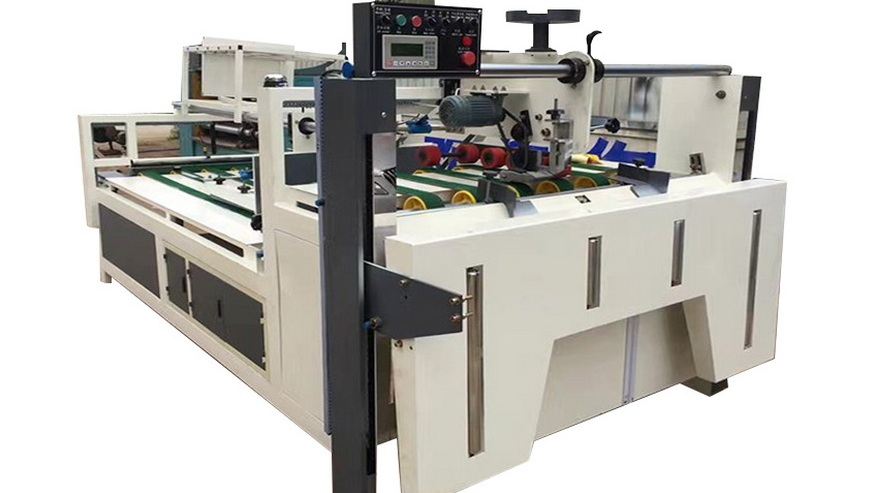
Beyond mechanical process selection, environmental controls significantly impact fish-tailing prevention in large-format appliance carton production. [victoryboxcorp]
Humidity management: Ambient relative humidity directly influences liner moisture content. When outer paper layers absorb atmospheric water, dimensional instability occurs during folding operations. A production floor technician recently reported that a 10% humidity spike ruined 500 boards before detection through systematic hygrometer monitoring. Maintaining warehouse environments below 55% relative humidity prevents fiber degradation that compromises folding accuracy. [victoryboxcorp]
Material conditioning protocols: Large-format blanks should acclimate to production environment temperature and humidity for minimum 24 hours before folding. This equilibration period allows internal moisture gradients to stabilize, eliminating differential expansion rates between liner layers that manifest as fish-tailing during the folding sequence. [orconind]
Adhesive compatibility: Cold-glue dispersion adhesives (water-based formulations) require careful viscosity control between 35-40 seconds to prevent over-saturation that can cause board warping. For appliance cartons, excessive moisture from adhesive application compounds with any existing material moisture imbalance, exacerbating dimensional deviations. [lancoadhesives]
From my experience managing production lines for major appliance manufacturers, inline folder gluer systems deliver superior fish-tailing prevention for high-volume, standardized appliance carton production. The continuous material flow, integrated water scoring capability, and real-time servo-driven adjustments create inherent dimensional consistency that offline processes struggle to match when processing hundreds of thousands of identical units. [dgm-global]
However, offline gluing processes excel in fish-tailing control for diverse appliance carton portfolios requiring frequent design changes. The ability to inspect die-cut blanks before folding, optimize parameters rapidly between jobs, and isolate defect sources enables precision quality management across varied specifications. For contract packagers serving multiple appliance brands with different carton designs, this flexibility outweighs the inline system's raw speed advantage. [weipong]
Recommendation framework:
- Choose inline systems when: Producing 500,000+ identical appliance cartons annually, running dedicated production lines for specific appliance models, prioritizing maximum throughput over design flexibility [weipong]
- Choose offline processes when: Handling 50+ different appliance carton designs monthly, requiring rapid prototyping capabilities, managing seasonal production variations, or operating with limited floor space for linear integrated systems [weipong]
Implementing systematic quality control measures enhances fish-tailing prevention regardless of your chosen gluing process. [sblmachinery]
In-process monitoring: Deploy glue sensors and camera systems to verify adhesive placement continuity and folding accuracy in real-time. UV tracer additives in adhesives enable automated optical inspection that rejects cartons with defects before downstream packaging operations. [lancoadhesives]
Material testing regimen: Conduct daily viscosity checks on adhesive systems, verify glue pan temperature matches line speed, and measure liner moisture content using calibrated hygrometers. For appliance cartons, Edge Crush Test (ECT) values on raw board and Box Compression Test (BCT) on assembled cartons provide objective structural performance data. [leelinepackage]
Preventive maintenance schedules: Inspect folder gluer guide-plate clearance weekly, verify roller temperature and pressure settings, and replace worn corrugating rolls that cause washboarding defects. Clean glue nozzles regularly to prevent clogging that creates inconsistent adhesive flow contributing to folding misalignment. [lancoadhesives]
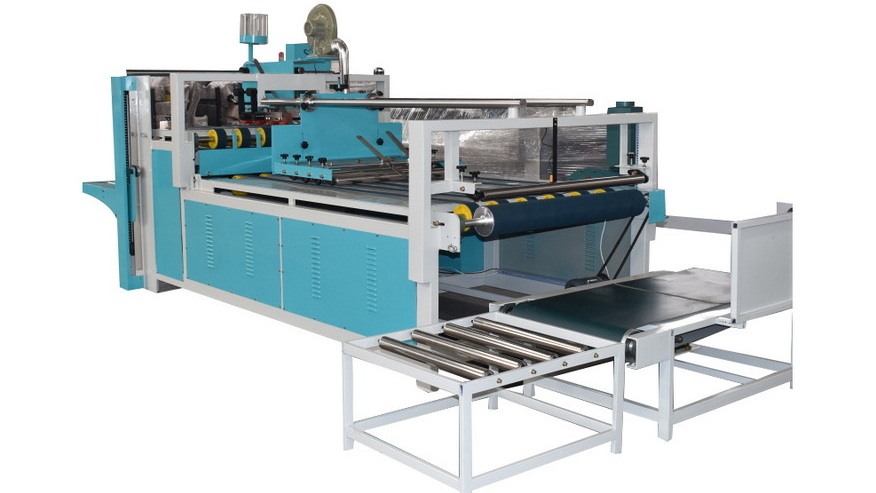
The traditional distinction between inline and offline systems continues evolving as technological innovations blur previous limitations. [weipong]
Hybrid automation solutions: High-end offline folder gluers now incorporate Automated Guided Vehicles (AGVs) and robotic arms that transport pallets and load blanks into feeders, reducing manual handling variables that contribute to fish-tailing. These semi-automated offline systems achieve 70-80% of inline consistency while retaining changeover flexibility. [impack]
Digital job management platforms: Cloud-connected folder gluers store thousands of job parameters accessible via mobile devices, enabling operators to recall optimal settings that previously minimized fish-tailing for specific appliance carton designs. Machine learning algorithms analyze historical production data to recommend preventive adjustments before quality deviations occur. [onesilq]
Non-contact jet gluing systems: Both inline and offline systems increasingly employ JIT (Just-In-Time) gluing heads that apply adhesive without physical contact with the board surface. Software-controlled glue pattern changes occur instantaneously, eliminating mechanical adjustment delays and improving folding consistency across varied carton geometries. [lancoadhesives]
Minimizing fish-tailing in large-format appliance cartons requires understanding that your folder gluer selection represents a strategic business decision extending far beyond equipment specifications. Inline systems deliver unmatched dimensional consistency and throughput for dedicated high-volume production, while offline processes provide the agility and quality control granularity essential for diverse product portfolios. [weipong]
At Hebei Ou Ye Carton Machinery Co., Ltd., we've engineered both inline and offline folder gluer solutions that incorporate advanced fish-tailing prevention technologies including programmable water scoring, servo-driven folding sections, and integrated quality monitoring systems. Our OEM partnerships with international appliance brands have demonstrated that the optimal choice depends on your specific production volume, product mix, and operational priorities.
The definitive answer: For standardized appliance carton production exceeding 500,000 annual units, invest in inline folder gluer systems to achieve sub-millimeter dimensional accuracy through continuous process control. For operations requiring flexibility across 30+ carton designs with production runs under 10,000 units, implement offline folder gluers with advanced preset management and staged quality verification to maintain precision while maximizing adaptability. [sblmachinery]
Q1: What is the acceptable fish-tailing tolerance for appliance cartons in automated erecting systems?
A1: Industry standards specify that dimensional deviations should not exceed half the corrugated board thickness. For typical appliance carton double-wall construction (8-10mm thickness), maximum acceptable fish-tailing measures 4-5mm at panel edges. Automated erecting equipment typically rejects cartons exceeding 6mm deviation, as misalignment prevents proper case former feeding and sealing operations. [baumerhhs]
Q2: Can water scoring technology be retrofitted to existing offline folder gluers?
A2: Yes, modern water scoring systems from manufacturers like Baumer hhs can be integrated into existing die-cutting equipment as standalone modules. The retrofit requires installing programmable nozzles upstream of folding sections and implementing moisture control systems, with typical installation costs recovering within 12-18 months through reduced complaint rates and scrap reduction. Systems must operate reliably at production speeds up to 450 m/min for modern high-performance applications. [dgm-global]
Q3: How does flute direction impact fish-tailing in large-format appliance cartons?
A3: Scoring perpendicular to flute direction generally produces less fish-tailing as deeper tool penetration is tolerated without liner damage. However, scoring parallel to flutes—common in appliance carton side panels—exhibits high sensitivity to scoring wheel positioning. Research demonstrates that scoring at the flute peak allows optimal depth, while scoring in flute valleys increases tearing risk by over 300%. For panels exceeding 1200mm length, even minor scoring misalignment compounds geometrically, producing visible edge deviation. [tcbvba]
Q4: What role does adhesive selection play in preventing fish-tailing?
A4: Adhesive viscosity and moisture content directly influence dimensional stability during the folding process. Cold-glue dispersions (water-based adhesives) should maintain viscosity between 35-40 seconds; excessive viscosity causes inadequate penetration and weak bonds, while insufficient viscosity over-saturates board fibers causing warping. For large-format appliance cartons, hot-melt adhesives provide faster tack and reduced moisture introduction, minimizing the dimensional shifts that contribute to fish-tailing. Proper glue head alignment and nozzle maintenance prevent inconsistent application patterns that create uneven folding pressure. [arozone]
Q5: How can I calculate ROI for upgrading from offline to inline systems specifically for fish-tailing reduction?
A5: Calculate total cost of ownership over 5-10 years incorporating: (1) Current complaint costs from fish-tailing defects (customer returns, credit claims, rework labor), (2) Scrap reduction from improved dimensional accuracy (typically 15-25% waste decrease with inline systems), (3) Labor savings from reduced manual handling (inline systems eliminate 2-4 material handling operators per shift), and (4) Throughput increase enabling higher-margin contracts (inline speeds of 1,000+ boxes/min vs. offline 200-600 boxes/min). For operations producing 2+ million appliance cartons annually, inline systems typically achieve ROI within 36-48 months despite 200-300% higher initial capital investment compared to offline equipment. [weipong]
1. Weipong Machinery. "What are the differences between inline and offline folder gluer machines." [https://www.weipong.com/news/what-are-the-differences-between-inline-and-offline-folder-gluer-machines.html]
2. Baumer hhs. "Precise Folding, Stable Packaging: Why Dimensional Deviations Are Not Just a Nuisance, But a Problem." [https://www.baumerhhs.com/precise-folding-stable-packaging](https://www.baumerhhs.com/precise-folding-stable-packaging)
3. Leeline Packaging. "What Are Common Corrugated Box Defects and How to Spot Them?" [https://www.leelinepackage.com/corrugated-box-defects/](https://www.leelinepackage.com/corrugated-box-defects/)
4. Lanco Adhesives. "Best Practices for Folding Carton Adhesives: Achieving Smooth and Durable Seals." [https://www.lancoadhesives.com/post/best-practices-folding-carton-adhesives](https://www.lancoadhesives.com/post/best-practices-folding-carton-adhesives)
5. Victory Box Corp. "How Humidity Affects Corrugated Boxes." [https://victoryboxcorp.com/how-humidity-affects-corrugated-boxes/](https://victoryboxcorp.com/how-humidity-affects-corrugated-boxes/)
6. SBL Machinery. "Best Practices to Avoid Folder-Gluer Rejects." [https://sblmachinery.com/folder-gluer-best-practices/](https://sblmachinery.com/folder-gluer-best-practices/)
7. Impack. "How to Maximize Your Folder-Gluer Productivity." [https://impack.ca/learning-center/folder-gluer-productivity-maximize](https://impack.ca/learning-center/folder-gluer-productivity-maximize)
8. OrCon Industries. "Why Is Your Corrugated Box Failing Under Heavy Loads." [https://orconind.com/why-corrugated-box-failing-under-heavy-loads/](https://orconind.com/why-corrugated-box-failing-under-heavy-loads/)
9. TCB. "How to Improve the Folding of an RSC." [https://www.tcbvba.be/index_htm_files/17%20FoldingRSC.pdf](https://www.tcbvba.be/index_htm_files/17%20FoldingRSC.pdf)


