
Views: 222 Author: Ouye Carton Machinery Publish Time: 2026-05-10 Origin: Site


Semi-automatic gluer and fully automatic folder gluer each have a clear role in short‑run custom ecommerce packaging, and the best choice depends on your order mix, labor costs, and growth plans. For most small to mid-size converters focused on short‑run jobs, a semi-auto line often delivers a faster payback, while a fully automatic line wins when you scale to higher daily volumes and stricter lead times. [chinacartonmachine]

Short‑run custom ecommerce packaging is growing fast as DTC brands and Amazon sellers demand smaller batches, more SKUs, and frequent design changes. In this context, choosing between a Semi-Auto Gluer and a Fully Automatic Folder Gluer directly impacts your cost per box, defect rate, and delivery lead time. [youtube]
From the perspective of a Chinese OEM carton machinery manufacturer like Hebei Ou Ye Carton Machinery Co., Ltd., which designs and builds carton packaging equipment for overseas brands and converters, this decision is something we analyze with customers on a daily basis. Based on real factory projects and customer feedback, we can map out when a semi-auto solution makes more sense, and when an upgrade to a fully automatic folder gluer becomes unavoidable. [xlcartonmachine.en.made-in-china]
A Semi-Auto Gluer typically combines manual or assisted feeding with automatic gluing and simple compression/stacking. Operators load pre‑creased carton blanks by hand, the machine applies glue along the manufacturer's joint, folds the panels, and presses them to form the box. [scribd]
Key characteristics for short runs:
- Flexible setup for many box sizes and styles with modest changeover time. [scribd]
- Higher labor involvement, especially at the feeding and collection stations. [rinopackaging]
- Lower initial investment and simpler maintenance requirements. [corrugatedcartonboxmachine]
From an expert's standpoint, a semi-auto line is often the "first industrial step" away from manual gluing for small factories or new ecommerce-focused converters. It allows you to stabilize quality and throughput without immediately committing to full automation and high capex. [rinopackaging]
A Fully Automatic Folder Gluer integrates automatic feeding, high-speed folding, gluing, compression, and often automatic bundling or packing. Carton blanks are loaded into a feeder, then conveyed through multiple folding sections with precise guides before being glued and pressed at speed. [dgcartonmachine]
Typical capabilities:
- Continuous high-speed production, often hundreds of cartons per minute. [youtube]
- Automatic correction, memory presets, and precise servo control for repeat jobs. [dgcartonmachine]
- Integration with printing, die cutting, and downstream packing for a near-unmanned line. [youtube]
In my experience with international clients, fully automatic folder gluers become truly cost-effective when your daily carton demand and labor costs reach a level where manual intervention becomes a bottleneck or a risk to delivery performance. [chinacartonmachine]
For short‑run ecommerce packaging, the headline speed in cartons per minute is less important than effective throughput after setup and changeover. A fully automatic folder gluer might run at 250–300 cartons/minute in theory, but frequent job changes reduce its real advantage if not managed well. [chinacartonmachine]
Typical ranges in real factories:
- Semi-Auto Gluer: about 2,000–4,000 boxes/hour for mixed short runs with 2–4 operators. [scribd]
- Fully Automatic Folder Gluer: about 8,000–20,000 boxes/hour, depending on size, board grade, and automation level. [dgcartonmachine]
From a UX perspective, what matters to your customers is lead time and on-time delivery, not just machine speed. If your daily order book contains many small SKUs (e.g., 200–1,000 pcs per design), a well-organized semi-auto line may cover them with lower complexity and faster job switching. Once you see repeated SKUs and predictable reorders from stable ecommerce clients, the fully automatic machine's speed and memory presets start to generate real savings. [youtube]
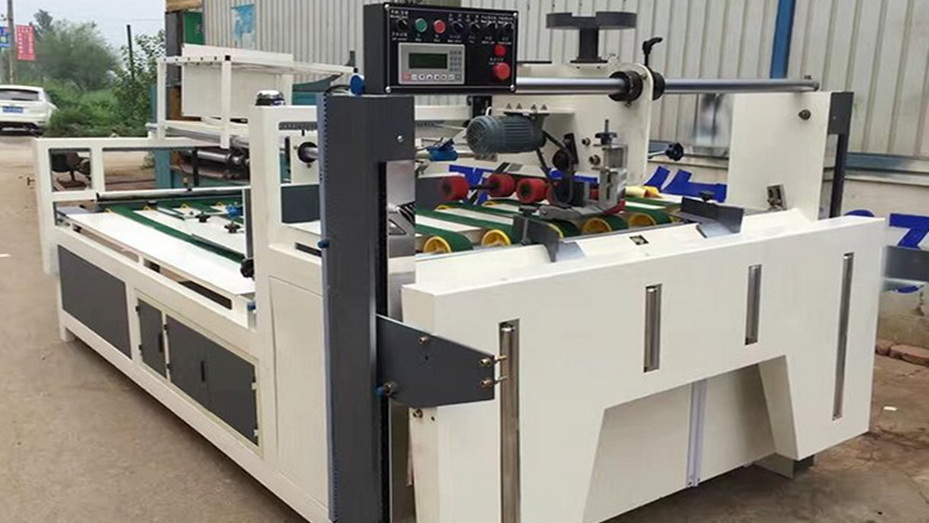
Semi-auto gluers rely heavily on human operators for feeding, quality checks, and stacking. For short-run packaging, this can be a benefit, because trained operators can react quickly to design changes, special folding requirements, or fragile coatings. [rinopackaging]
Typical labor pattern:
- 2–4 operators per shift (feeder, receiver, quality checker, packer). [scribd]
- Lower digital skill requirements; training focuses on mechanical adjustment and visual inspection. [scribd]
- Easy onboarding in regions where labor is still relatively cost-effective. [corrugatedcartonboxmachine]
From my observation in Chinese and overseas plants, converters often use semi-auto lines as a training ground where operators build intuition about board behavior and glue performance before moving to more automated equipment. [rinopackaging]
A fully automatic folder gluer is designed to reduce manual touch points. One or two skilled technicians can manage feeding, monitoring, and downstream packing, sometimes with robotic support. [dgcartonmachine]
Key points:
- Lower total headcount on the line, but each operator needs higher technical skills. [youtube]
- Operators work more with HMIs, presets, sensor feedback, and preventive maintenance schedules. [youtube]
- Better ergonomics and safety when integrated with CE-standard guarding and automation. [youtube]
For converters in Europe or North America, where labor costs and safety compliance demands are high, this shift in labor profile strongly favors the fully automatic solution over time. [chinacartonmachine]
When evaluating Semi-Auto Gluer vs. Fully Automatic Folder Gluer, you should consider:
- Capex: purchase price, installation, and commissioning. [chinacartonmachine]
- Opex: labor, energy, glue consumption, spare parts, and downtime. [chinacartonmachine]
- Quality: reject rate, rework, and claims from ecommerce clients. [chinacartonmachine]
- Flexibility: setup time, minimum economic order quantity, and SKU complexity. [chinacartonmachine]
As an OEM factory, we often build ROI models for customers using their actual monthly order data to simulate how many shifts and operators are needed under each scenario. This data-driven approach reveals that cost per box is not only about speed but also about how stable and predictable your order flow is. [xlcartonmachine.en.made-in-china]
Below is a simplified, experience-based view for short‑run ecommerce packaging applications:
| Aspect | Semi-Auto Gluer | Fully Automatic Folder Gluer |
|---|---|---|
| Initial investment | Low to medium, easier to finance for small plants corrugatedcartonboxmachine | High, often requires long-term planning and larger volume base youtube |
| Labor cost | Higher per 1,000 boxes due to more operators scribd | Lower per 1,000 boxes; fewer but more skilled operators youtube |
| Throughput in short runs | Moderate, but flexible for many small SKUs scribd | Very high, but best for repeated or larger batches youtube |
| Setup/changeover time | Short and intuitive; manual adjustments scribd | Longer initial setup, but presets cut time for repeat jobs youtube |
| Quality control | Depends on operator attention and experience scribd | More stable with sensors and controlled folding paths youtube |
| Floor space | Compact footprint rinopackaging | Larger footprint and stricter layout requirements youtube |
| Suitability for short runs | Very strong for mixed small orders and startups scribd | Strong when short runs repeat frequently and volume grows youtube |
From an expert UX and operations perspective, many ecommerce-focused converters start with semi-auto, then add a fully automatic line once stable demand and clear "hero SKUs" justify the investment. [dgcartonmachine]
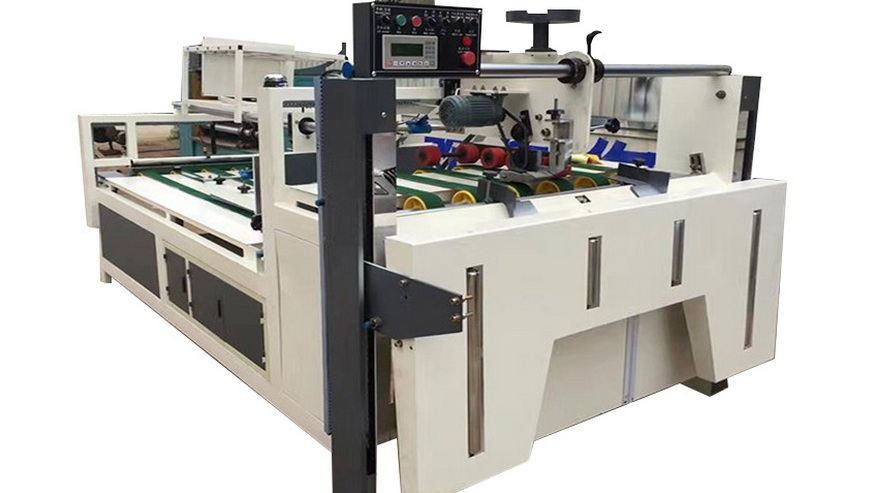
For ecommerce brands, unboxing is part of their identity, so packaging defects directly affect brand perception and return rates. [youtube]
Semi-Auto Gluer quality characteristics:
- Good stability when operators are well trained and the machine is correctly maintained. [rinopackaging]
- Slightly higher risk of inconsistent glue application or folding defects in long shifts or with inexperienced staff. [scribd]
- Easier for operators to stop and manually correct specific units on the fly. [rinopackaging]
Fully automatic folder gluer quality characteristics:
- Consistent glue lines and folding angles due to precise guides and electronically managed pressures. [dgcartonmachine]
- Integrated inspection and reject systems available on advanced lines. [youtube]
- Particularly beneficial for high-value printed ecommerce boxes where a small misalignment becomes very visible. [chinacartonmachine]
From a user experience angle, upgrading from semi-auto to fully automatic often shows up first not in speed, but in more uniform cartons, improved stacking, and fewer claims from logistics partners due to collapsed or open boxes. [youtube]
Based on projects with overseas converters, a Semi-Auto Gluer tends to be the better fit when:
- Your average order size is below 3,000–5,000 cartons per SKU. [scribd]
- You serve many new or unstable ecommerce brands testing the market. [chinacartonmachine]
- Labor is relatively affordable and you can build a flexible team across multiple processes. [rinopackaging]
- You want to keep financial risk low while validating your ecommerce packaging business model. [rinopackaging]
In these scenarios, the semi-auto line acts as a multifunctional workhorse that adapts quickly to changing carton sizes, seasonal campaigns, and one-time influencer collaborations. [scribd]
A Fully Automatic Folder Gluer shines when your operation reaches the point where manual interventions limit growth. It usually becomes the superior choice if: [dgcartonmachine]
- You have several repeating ecommerce SKUs with stable monthly volume above 10,000–20,000 pcs. [youtube]
- Delivery time and service-level agreements (SLAs) with major brands are strict. [youtube]
- Local labor costs are high or fluctuating, pushing you toward automation. [chinacartonmachine]
- You plan to integrate with upstream flexo printers and die cutters for a continuous line. [dgcartonmachine]
In these conditions, the fully automatic folder gluer can reduce cost per box, stabilize quality, and free your best operators to focus on line optimization rather than manual feeding. [chinacartonmachine]
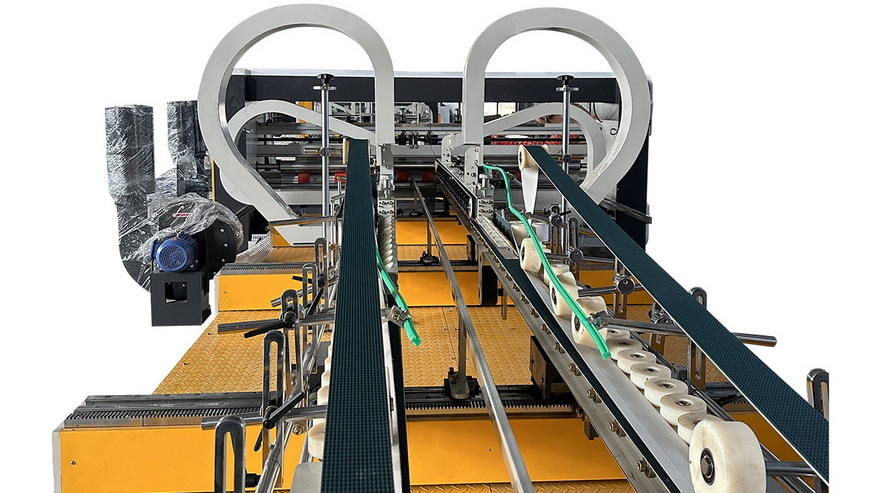
From the viewpoint of an OEM manufacturer helping factories scale step by step, an effective roadmap for short‑run custom ecommerce packaging often looks like this: [xlcartonmachine.en.made-in-china]
1. Start with one high-quality Semi-Auto Gluer to replace manual gluing and stabilize quality.
2. Standardize job data, including board grades, glue recipes, and setup parameters.
3. Implement simple product coding and repeat-job records to understand SKU behavior.
4. Once certain SKUs grow beyond a threshold, plan for a Fully Automatic Folder Gluer and migrate those high-volume jobs.
5. Keep the semi-auto line for trial orders, seasonal designs, and complex special boxes.
This staged approach balances capital efficiency with strategic automation, and it's the model we see most often among successful exporters and regional ecommerce packaging specialists. [dgcartonmachine]
Before investing, use this practical checklist as a decision tool:
1. Calculate your average and median order size per SKU for the last 6–12 months.
2. Identify how many SKUs are repeating monthly with stable demand.
3. Evaluate your labor cost trend and availability over the next 3–5 years.
4. Map your current and planned machine layout and power capacity.
5. Confirm your ecommerce clients' expectations on lead time, defect rates, and peak-season capacity.
If most of your volume is small, irregular orders, a semi-auto solution will likely align better with your risk profile. If you already see clear "winner SKUs" with strong repeat volume and margin, integrating a fully automatic folder gluer can secure your competitive position for the next growth phase. [dgcartonmachine]
If you are planning or expanding short‑run custom ecommerce packaging, the most effective next step is to request a tailored ROI simulation for your own job data. By sharing your monthly order structure, target markets, and labor conditions, our engineering team can model both Semi-Auto Gluer and Fully Automatic Folder Gluer scenarios and recommend the configuration that delivers the best cost-benefit balance for your plant. [xlcartonmachine.en.made-in-china]
Contact our technical sales team to discuss your current workflow, future volume expectations, and integration needs so we can design a semi-auto, fully automatic, or mixed solution that fits your growth roadmap.
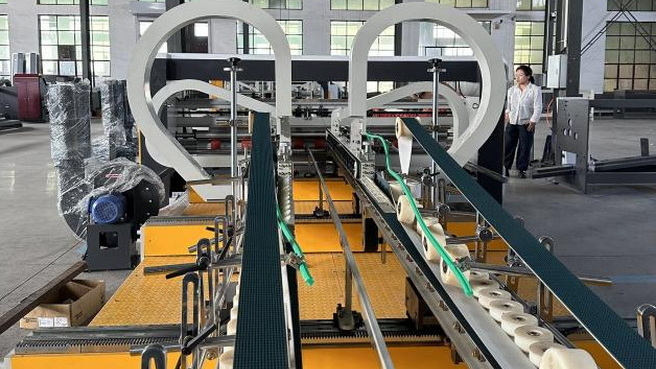
Q1: Is a semi-auto gluer enough for an ecommerce packaging startup?
For most startups with small, mixed orders and limited capital, a semi-auto gluer is usually sufficient and delivers a faster payback than a fully automatic folder gluer. [scribd]
Q2: When is the right time to upgrade to a fully automatic folder gluer?
Upgrade makes sense when several SKUs show stable monthly volume above 10,000–20,000 pcs, labor costs rise, and your existing equipment becomes a bottleneck to lead time and quality. [youtube]
Q3: Can I run both semi-auto and fully automatic gluers in the same plant?
Yes, many successful converters keep semi-auto lines for flexible short runs and use fully automatic folder gluers for repeat high-volume jobs, balancing flexibility and efficiency. [youtube]
Q4: How does a fully automatic folder gluer improve carton quality?
Fully automatic folder gluers use controlled folding sections, precise glue application, and often in-line inspection to reduce defects, misalignment, and open-joint issues. [dgcartonmachine]
Q5: What information do I need for a reliable cost-benefit analysis?
You should prepare data on order sizes, SKU repetition, labor rates, energy costs, current defect rates, and available floor space so that the OEM can simulate both semi-auto and fully automatic scenarios accurately. [corrugatedcartonboxmachine]
1. Hebei carton machinery product and company information (manufacturing base and OEM services for carton machines). [xlcartonmachine.en.made-in-china]
2. Technical description of semi-auto gluer machines, including scope, parameters, and operating characteristics. [scribd]
3. Product listings and specifications for semi-automatic folder gluer machines from Chinese manufacturers. [wxaunoland.en.made-in-china]
4. Semi-automatic carton folder gluer machine market and contact details from Chinese OEM suppliers. [corrugatedcartonboxmachine]
5. High-speed automatic carton production lines and folder gluer capabilities for corrugated packaging. [youtube]
6. Discussion of advantages of full automatic carton folder gluer versus semi-automatic machines in industrial use. [chinacartonmachine]
7. Full automatic folder gluer product information and typical application scenarios in carton converting. [dgcartonmachine]


