
Views: 222 Author: Ouye Carton Machinery Publish Time: 2026-05-14 Origin: Site


If you run a carton packaging line, choosing the right gluing machine can quietly decide your profit margin, reject rate, and delivery time. As a packaging equipment manufacturer working daily with OEM customers in printing, corrugated, and folding carton plants, I have seen the difference between a well‑matched gluer and an outdated or misconfigured one. [venveo]
In this guide, I will walk you through what a gluing machine is, how different types work, where they are used in modern carton plants, and how to select and operate the right solution for your production. The goal is to give you a practical, experience‑based overview you can use before sending your next RFQ. [texasbelting]

A gluing machine (also called glue coating machine, glue scraping machine, or automatic glue spraying machine) is packaging equipment that applies liquid adhesive onto a substrate such as cardboard, paperboard, fabric, or leather in a controlled, repeatable way. In carton plants, it is typically used to apply glue to box blanks or board surfaces before folding and forming. [tianhuipackingmachine]
Modern systems often use pneumatic or servo‑driven applicators to spray or coat glue according to a programmed path, with settings for glue thickness, bead width, and cycle time. This enables consistent bonding quality across long production runs. [texasbelting]
From an operator's point of view, a well‑integrated gluer must do three things reliably: apply the right amount of adhesive, in the right position, at the right speed. In carton and general industrial use, typical functions include: [texasbelting]
- Quantitative coating – The machine controls glue film thickness or bead size so each board receives a consistent amount of adhesive.
- Trajectory‑based application – A numerical control (NC) system guides the glue head along a predefined path, matching the carton blank layout.
- Adjustable line speed – Many machines allow stepless speed adjustment (for example 0–6 m/min) to balance glue penetration and throughput.
- Positioning and quality vision options – Some systems can add a visual positioning system to confirm glue position before and after application. [texasbelting]
- Multi‑station operation – For flexible plants, one machine can be configured with multiple stations or heads to serve different workpieces.
- Automatic cleaning and anti‑blocking – Glue heads can be auto‑flushed to reduce downtime from clogged nozzles.
On carton lines, these features help stabilize bonding quality across diverse board grades and printing conditions. [tianhuipackingmachine]
Different gluing technologies suit different production scales and carton types. Below is a breakdown based on the original FAQ content, plus our own plant‑side experience. [texasbelting]
A double roller gluing machine uses two main components: a top and bottom adhesive roll plus a glue tank. As the veneer or board passes between these rollers, glue transfers to both surfaces.
Key characteristics:
- The gap between top and bottom rolls and the pressure on the top roll determine how much glue is applied.
- Thicker or narrower boards usually require higher pressure, which paradoxically reduces glue quantity; thinner boards get more glue.
- Groove design and quantity on the roller surface directly influence glue volume.
- Glue liquid level in the tank should be about one‑third of the bottom roll diameter; too high or too low affects coating consistency.
This design is common where both faces of a substrate need adhesive, such as certain laminate or veneer applications.
The three‑roll gluer adds an extra roll to improve control over glue transfer. One side (top or bottom) is coated by adjusting the clearance between adhesive rolls.
- A glue pump delivers adhesive into a groove formed between the glue‑applying roll and a rubber pressing roll.
- Because glue is stored in this groove, output is less sensitive to tank liquid level.
- The design yields high‑quality adhesive films, but it mainly controls glue on one side, so its use in high‑volume carton operations is limited.
In practice, we see three‑roll designs used where precision one‑sided coating is more important than throughput. [texasbelting]
The four‑roll gluer is widely used because it can precisely control glue on both the top and bottom surfaces.
- Glue is applied to the top and bottom glue rolls, while their linear velocity is purposely set to be about 15–20% lower than the coating rolls.
- The gap between coating and glue rolls is adjustable, ensuring consistent thickness on both sides.
- Top and bottom systems do not interfere with each other, so glue is supplied simultaneously and independently.
There are two common roller arrangements:
- Side‑mounted adhesive rollers on both sides of the coating rolls, fed by glue pump. This configuration saves glue through more uniform application.
- Feed‑side adhesive rollers where the top roll is supplied by glue pump and the bottom roll by a glue tank, favoring higher‑efficiency production.
For corrugated and folding carton plants, four‑roll designs are often the most economical way to balance speed, glue savings, and quality. [eureka-machinery]
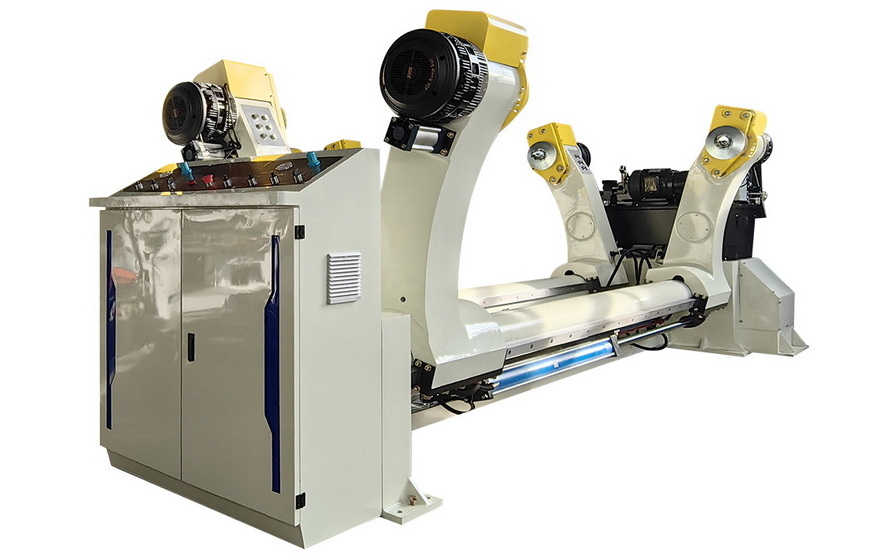
Although many people first think of cartons, industrial gluing machines are used in a wide range of sectors. [texasbelting]
Common applications include:
- Automotive – Engine oil pans, cylinder heads, flywheel housings, and upper covers where sealant must be applied along precise sealing paths.
- Construction and glass – Window glass bonding and sealing with controlled adhesive beads.
- Consumer products – Toys, crafts, hair accessories, purses, handbags, and small paper items.
- Electronics and wiring – Wire harness fixation, connector potting, and small electrical appliances requiring insulation and bonding.
- Signage and frames – Photo frames, nameplates, and identification tags.
- General carton & small package bonding – Small boxes and accessories where semi‑automatic or manual assisted gluing is still common.
For carton packaging, gluing modules are often integrated with folder gluer machines, forming a complete folding, gluing, and delivery system. [eureka-machinery]
From long‑term cooperation with international OEM and private‑label clients, the advantages that matter most are ease of use, quality consistency, and cost savings. The original FAQ highlights several practical benefits: [webfx]
- Simple operation and programming – Many machines can record a glue path simply by guiding the head along the required bonding line once; the system then generates the program automatically. In our experience, operators without advanced coding skills can learn basic programming in one to two days of guided training.
- Consistent product quality – By reducing operator‑dependent variability, the machine outputs more uniform glue patterns, which directly lowers rework and rejects. [texasbelting]
- Higher labor productivity – One trained worker can often operate two lines or machines, since adjustment and monitoring are simplified. [venveo]
- Lower production cost – Glue savings, less manual touch‑up, and lower scrap rates combine to reduce total cost per box. [webfx]
For factories scaling up export carton production, these gains can be more impactful than a small difference in machine purchase price.
While every model has its own manual, most NC or automated gluing systems follow a similar workflow. [scilife]
First, you create or select the program corresponding to a particular product. On many systems, you can manually guide the glue head along the desired bonding line, and the machine records this trajectory to generate the program.
This "teaching" method allows technicians with basic computer skills to set up new SKUs quickly, rather than writing code from scratch.
Next, you fine‑tune the glue seam:
- Choose needles or nozzles with appropriate orifice sizes.
- Adjust internal air pressure in the glue cartridge or pump.
- Keep glue joints as narrow as possible while maintaining bond strength to reduce consumption and squeeze‑out.
We typically recommend running a short test batch and using simple destructive tests (peel or compression) to confirm bond quality. [texasbelting]
Once setup is complete, operators control production through a small set of intuitive buttons, such as Run, Stop, Reset, or Emergency Stop.
During operation: [texasbelting]
- Regularly check glue level and viscosity.
- Inspect the first and last cartons of each pallet for glue position and coverage.
- Follow a defined cleaning schedule for nozzles and rollers to prevent blockage.
These habits, combined with a preventive maintenance plan, significantly reduce unplanned downtime. [scilife]
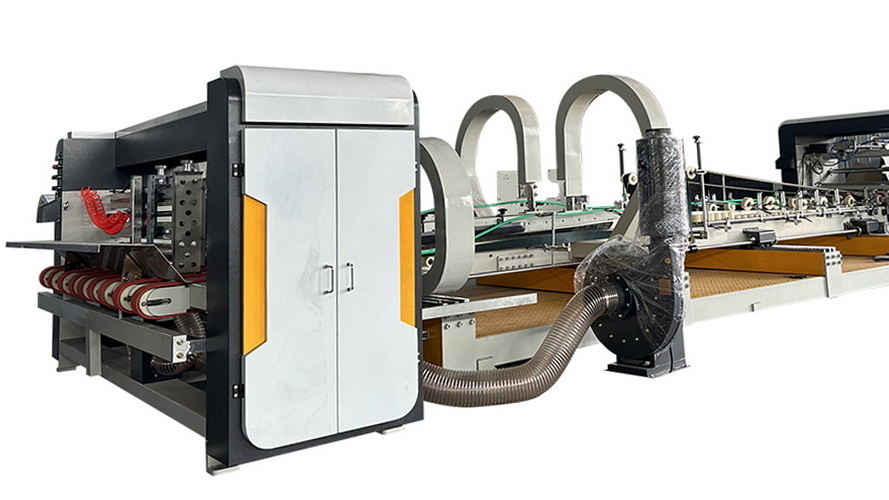
This is where many buyers struggle: there is no "one size fits all" gluer. The best choice depends on your product mix, order size, substrates, and automation level. [venveo]
When advising overseas customers, we usually start with these questions: [venveo]
1. What board and box types do you produce most?
- Corrugated RSC cartons, litho‑laminated boxes, folding cartons, or specialty displays?
2. What is your typical run length?
- Short runs with frequent changeovers vs. long stable runs.
3. What glue types do you use?
- Hot melt, cold glue (PVA), PUR, or hybrid systems.
4. What integration do you need?
- Stand‑alone gluer or a module integrated into a folder gluer or automated line.
5. What is your target speed and capacity?
- Output per hour, expected annual carton volume, and available floor space.
Based on these answers, we match machine type (double, three, four‑roll or spray systems) and level of automation (manual feed, semi‑auto, or fully automatic). [texasbelting]
Below is an illustrative matrix for selecting a gluing solution in a carton plant.
| Scenario | Recommended gluing concept | Main reasons |
|---|---|---|
| Short runs, many SKUs, specialty boxes | NC spray gluing with quick program change | Faster changeovers, flexible paths, lower tooling cost (texasbelting) |
| Medium runs, two‑sided board coating | Four‑roll gluer integrated with folder gluer | High efficiency, controlled top/bottom coating, glue savings |
| One‑sided precision coating for laminates | Three‑roll gluer | Excellent single‑side coating quality with stable output |
| Heavy‑duty industry parts sealing | Robot or mechanical‑arm gluer with sealant | Complex trajectories around engine parts and housings |
Using a structured approach like this turns equipment selection into a technical decision, not just a price comparison. [webfx]
Even the best gluer will disappoint if maintenance is neglected. Industry data for folder‑gluer lines shows that worn belts, contaminated glue, and blocked nozzles are among the top causes of unplanned stoppages. [sblmachinery]
To keep your gluing machine running at peak performance:
- Monitor adhesive quality – Use recommended glue brands and avoid mixing different formulations in the same tank. [texasbelting]
- Schedule periodic belt and roller inspections – Replace worn belts and check roller surface condition to maintain even glue transfer. [texasbelting]
- Standardize cleaning procedures – Define daily, weekly, and monthly tasks for cleaning tanks, filters, and nozzles. [scilife]
- Leverage available automation – When possible, use auto‑cleaning and anti‑blocking functions instead of relying solely on manual flushing. [texasbelting]
In our customers' plants, following a simple, documented maintenance checklist often increases effective uptime by 5–10%, especially on multi‑shift operations. [webfx]
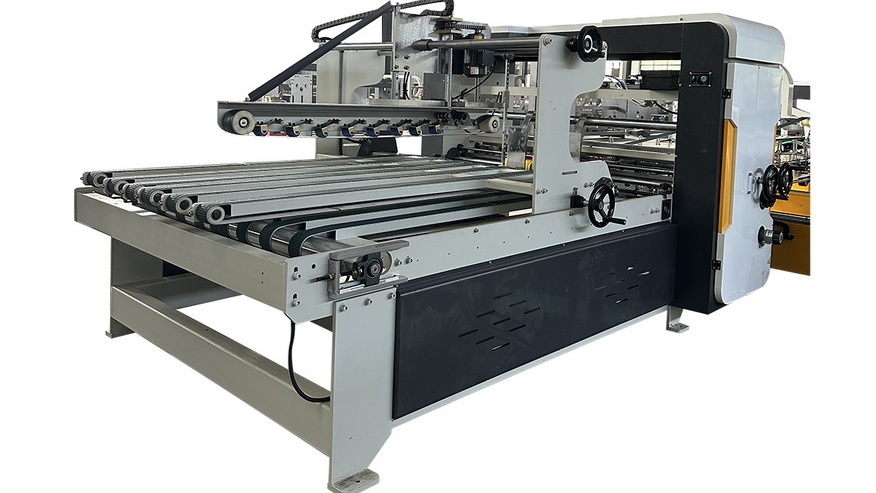
Carton plants today are under pressure to deliver higher efficiency, lower waste, and more sustainable solutions. Gluing technology is evolving to support these goals in several ways: [magetop]
- Automation and robotics – More lines integrate robotic arms or gantry systems to reduce manual handling around the gluer and improve positioning accuracy. [texasbelting]
- Smarter controls – Advanced NC systems can store hundreds of programs, log glue consumption, and connect to plant MES/ERP for production tracking. [venveo]
- Sustainability focus – Optimized glue application reduces adhesive consumption and supports the use of more eco‑friendly formulations. [magetop]
- Quick‑change design – Tool‑less adjustments and modular components minimize changeover time for short‑run, high‑mix production. [venveo]
For OEM and private‑label partners, these trends mean gluing machines are no longer "just" auxiliary equipment; they are key enablers of lean, data‑driven carton production. [webfx]
In a typical export‑oriented carton factory, the gluer sits after printing, die‑cutting, and creasing and before final folding and packing. Its role is to support: [tianhuipackingmachine]
- Inline folder‑gluer systems for folding cartons and corrugated boxes. [eureka-machinery]
- Offline gluing of special components, partitions, or laminated structures. [tianhuipackingmachine]
- Pre‑assembly of complex retail displays or e‑commerce packaging. [venveo]
When we design or customize machines for overseas clients, we look at the entire line layout: feeder, printing, slotting, die‑cutting, gluing, folding, bundling, and palletizing. Aligning gluer speed and format range with upstream and downstream equipment prevents bottlenecks and under‑utilization. [webfx]
If you are planning a new carton line or upgrading an existing one, it's worth discussing your specific box sizes, substrates, and speed targets before finalizing any machine. As an OEM‑focused Chinese manufacturer of carton packaging machinery, we can: [venveo]
- Customize gluing units for your preferred adhesives and carton formats. [venveo]
- Integrate gluing modules into complete corrugated or folding carton lines. [tianhuipackingmachine]
- Provide remote commissioning support, training, and long‑term spare parts service. [venveo]
You can share your current challenges (glue waste, open flaps, low speed, or frequent changeovers), and we will propose a tailored machine configuration and layout drawing.

1. What is the difference between a gluing machine and a folder gluer?
A gluing machine focuses on precise adhesive application, while a folder gluer combines folding and gluing into a single continuous process for carton blanks. In many lines, the gluing function is integrated into a folder‑gluer system. [eureka-machinery]
2. Which gluing method is best for high‑speed carton production?
For high‑speed, two‑sided board coating, a four‑roll gluer integrated with a folder gluer offers the best balance of speed and glue control. For complex patterns or short runs, NC spray systems provide more flexibility. [eureka-machinery]
3. How can I reduce glue consumption without affecting bond strength?
You can optimize nozzle size, line pressure, roller gaps, and glue viscosity, and keep glue paths as narrow as possible while meeting strength requirements. Regular maintenance of rollers and nozzles also prevents over‑coating. [texasbelting]
4. What training do operators need to run a modern gluing machine?
Most operators can master basic programming and operation (Run, Stop, Reset, Emergency Stop) in one to two days with structured training. Additional time may be needed for advanced recipe management and integration with plant systems. [scilife]
5. How often should I service a gluing machine?
You should follow a tiered plan: daily cleaning of exposed glue parts, weekly inspection of belts and rollers, and monthly checks on pumps, filters, and sensors. Your manufacturer's manual will give model‑specific intervals. [scilife]
1. Venveo. "SEO For Manufacturing: 8 Best Ways For Manufacturing Companies." (https://www.venveo.com/blog/content-marketing/seo-for-manufacturing-companies)
2. Magetop. "How SEO Can Transform the Packaging Industry: A Guide for Manufacturers." (https://www.magetop.com/blog/how-seo-can-transform-the-packaging-industry-a-guide-for-manufacturers/)
3. Texas Belting. "How To Optimize Your Folder Gluer Machines." (https://texasbelting.com/blogs/news/how-to-optimize-your-folder-gluer-machines)
4. Tianhui Packing Machine. "The Ultimate Guide to Carton Packing Machine." (https://tianhuipackingmachine.com/zh/the-ultimate-guide-to-carton-packing-machine/)
5. SBL Machinery. "3 Crucial Folder Gluer Machine Techniques for Maximizing Product Yield." (https://sblmachinery.com/3-crucial-folder-gluer-machine-techniques-for-maximizing-product-yield/)
6. WebFX. "SEO for Machinery Manufacturers: 5 Proven Lead Strategies.(https://www.webfx.com/blog/manufacturing/machinery-seo-guide/)
7. Scilife. "Best practices and tips for technical writing."(https://www.scilife.io/blog/best-practices-tips-technical-writing)


