
Views: 222 Author: Ouye Carton Machinery Publish Time: 2026-05-16 Origin: Site


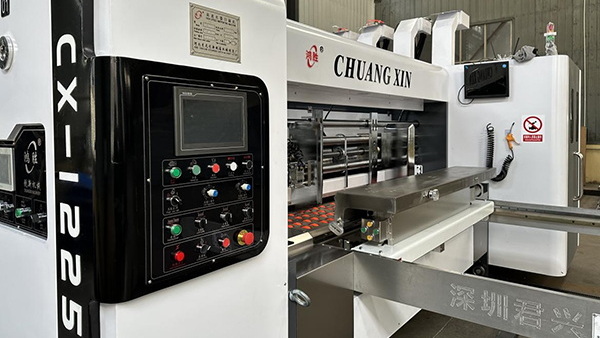
In a carton printing, slotting, and die-cutting machine, the lead edge feeder is the subsystem that picks corrugated or cardboard sheets from the stack and delivers them to the printing and die-cutting units. It grips the leading edge of each sheet and meters it forward with controlled timing, which is critical for print registration and accurate die-cutting. [northpackdg]
In modern flexographic printing-slotting-die-cutting lines, lead edge feeding has largely replaced older rear-edge or friction-feeding methods because it reduces double-feeds, misfeeds, and sheet skew. This improvement directly impacts scrap rates, especially when running warped, lightweight, or recycled corrugated board. [shinkomachinery]

A servo-driven lead edge feeder uses independent servo motors and electronic control to drive the feed rollers and belts; each motion profile is programmable and synchronized with the main line via digital signals. A chain-fed lead edge feeder relies on mechanical chains and gears linked to the main drive, so the feeder motion is mechanically coupled and less independently adjustable. [pinshangmachine.en.made-in-china]
This fundamental difference dictates how each system handles speed changes, board variation, and registration accuracy during printing, slotting, and die-cutting. For converters processing a wide mix of board grades—including low-GSM liners and high recycled content—this choice has a measurable effect on scrap rates and overall equipment effectiveness (OEE). [lctautomation]
Warped and low-GSM corrugated sheets tend to curl, flutter, and deform as they travel through the machine, making consistent feeding a challenge. Low basis weight liners have lower stiffness, so they are more prone to buckling, especially when subjected to uneven vacuum, pressure, or mechanical shocks. [shinkomachinery]
On chain-fed systems, any backlash or variation in the chain drive can translate into small but significant timing errors at the feeder, which magnifies the handling problems of difficult board. In contrast, servo-driven feeders can compensate via dynamic speed control and fine-tuned acceleration ramps, reducing sheet damage and misalignment. [teamdls]
Below is a high-level comparison tailored to carton printing, slotting, and die-cutting machines:
| Aspect | Servo-Driven Lead Edge Feeder | Chain-Fed Lead Edge Feeder |
|---|---|---|
| Drive principle | Independent servo motors with electronic synchronization. (lctautomation) | Mechanical chains and gears coupled to main drive. (pinshangmachine.en.made-in-china) |
| Speed change response | Rapid, programmable, smooth ramps for start/stop and order changes. (lctautomation) | Limited to mechanical ratios; speed changes less flexible. (teamdls) |
| Registration accuracy | High, due to precise motion control and feedback. (lctautomation) | Adequate but sensitive to wear, chain stretch, and backlash. (teamdls) |
| Handling warped/low-GSM board | Better sheet control, adjustable pressure, lower misfeed risk. (lctautomation) | Higher misfeed/double feed risk, more manual adjustment. (shinkomachinery) |
| Maintenance profile | Less mechanical wear, more electronic diagnostics but higher skill requirement. (lctautomation) | Familiar mechanics, easier basic maintenance but more wear items. (pinshangmachine.en.made-in-china) |
| Upgrade flexibility | Firmware and motion profile upgrades extend life and performance. (lctautomation) | Major performance changes require mechanical modifications. (teamdls) |
For a plant investing in next-generation flexo printer-slotter-die-cutter lines, servo-driven feeders typically align with automation and data-collection strategies, while chain-fed designs may keep initial CAPEX lower at the expense of long-term flexibility. [alibaba]

From both a plant engineer and OEM perspective, servo-driven feeders reduce scrap through several mechanisms:
1. Consistent Sheet Registration
Servo-driven systems maintain tight synchronization between the feeder and printing cylinders, improving color-to-color and print-to-die registration. Better registration reduces the number of sheets discarded for misaligned prints or off-position die-cuts. [lctautomation]
2. Adaptive Motion Profiles
Engineers can program gentle acceleration and deceleration profiles that minimize shock and board deformation, which is critical when feeding flexible, low-GSM sheets. In practice, this leads to lower edge damage and fewer bent corners, reducing downstream jams and stoppages. [lctautomation]
3. Reduced Misfeeds and Double Feeds
Lead edge feeders already reduce misfeeds compared with rear-fed systems, but servo-driven units add precise gap control and sheet separation timing. This helps avoid double-feeding and "no sheet" events, both of which generate immediate scrap and can damage printing plates or die-cut tools. [shinkomachinery]
4. Quick Adaptation to Order Changes
Frequent job changes are common in modern box plants; servo systems allow recipe-based setups where feeder parameters are recalled with each job. Faster, more repeatable setups mean fewer trial sheets, reducing make-ready waste. [teamdls]
As an OEM working closely with cost-sensitive converters, we recognize that chain-fed lead edge feeders remain a practical choice in some contexts. Chain-fed feeders can be appropriate when:
- Board mix is stable: Mostly medium to heavy board with minimal warping or very limited use of low-GSM grades. [shinkomachinery]
- Production speeds are moderate: Plants do not push the upper speed limits of the machine, reducing the impact of drive backlash. [teamdls]
- Budget constraints are significant: Lower initial price and familiarity with mechanical systems can be decisive for smaller operations. [alibaba]
- Maintenance skills are mechanical: In-house teams are more comfortable with chains, gears, and manual adjustments than with servo drives and PLC tuning. [pinshangmachine.en.made-in-china]
However, as customer expectations for print quality and board mix flexibility increase, many plants find that the total cost of ownership of chain-fed systems rises due to scrap and labor, even if the initial investment is lower. [lctautomation]

Drawing on industry case studies and our own customer feedback, a typical upgrade path looks like this:
- A mid-size converter running a flexo printing slotting die-cutting machine with chain-fed lead edge feeder experiences elevated scrap when switching to lighter, more sustainable corrugated board. [shinkomachinery]
- As they add more low-GSM and high-recycled content board to satisfy brand owners' sustainability requirements, warping becomes frequent and feeding issues increase. [shinkomachinery]
- After installing a servo-driven lead edge feeding module tuned for low-pressure, controlled feeding, the plant observes improved registration and reduced feeding errors, leading to lower scrap rates and more stable throughput. [lctautomation]
Industry sources report that in comparable upgrades, the combination of better registration and fewer feeder-related stoppages can yield double-digit percentage reductions in scrap and notable improvements in OEE. In a competitive market, this improvement directly supports higher margins and more flexible service to brand owners. [lctautomation]
From a hands-on operations perspective, the following steps help you get the most from either feeder type:
1. Optimize Stack Preparation
- Keep stacks square and aligned to ensure consistent presentation to the feeder. [shinkomachinery]
- Use aeration and de-stacking practices to minimize compression and additional warping. [shinkomachinery]
2. Adjust Feeder Settings by Grade
- On servo-driven feeders, store grade-specific recipes with tailored vacuum, pressure, and timing for low-GSM and warped board. [lctautomation]
- On chain-fed feeders, standardize manual settings and document best practices to reduce operator-to-operator variation. [pinshangmachine.en.made-in-china]
3. Regular Maintenance and Inspection
- Inspect leading edge wheels, belts, and vacuum nozzles for wear that can cause slipping or double feeding. [shinkomachinery]
- On chain-fed systems, monitor chain tension and replace worn sprockets to minimize backlash and timing drift. [teamdls]
4. Data-Driven Performance Tracking
- Track scrap by cause (feeder misfeed, registration, die-cut error) in your MES or production logs. [lctautomation]
- Use these data to identify when a mechanical feeder may be reaching its performance limits, supporting the business case for a servo-driven upgrade. [teamdls]
Hebei Ou Ye Carton Machinery Co., Ltd specializes in carton printing, slotting, and die-cutting machines designed for a broad spectrum of corrugated board applications. By integrating servo-driven lead edge feeders into selected models, we help customers handle warped and low-GSM board more reliably while achieving high-speed, high-precision production. [alibaba]
For customers prioritizing investment control, we also support chain-fed lead edge feeders with optimized mechanical design and robust components, to ensure reliable performance at a lower entry cost. Through application engineering and training, we work with each plant to align the feeder choice with their board mix, shift patterns, and quality targets. [pinshangmachine.en.made-in-china]

From a user-experience standpoint on the shop floor, the difference between the two feeder types is significant:
- Operators on servo-driven systems benefit from recipe-based setups and touch-screen interfaces, which reduce manual intervention and lower the learning curve for complex jobs. [lctautomation]
- Chain-fed systems often rely on mechanical knobs, levers, and manual checks, which experienced operators may prefer, but which increase the risk of inconsistency between shifts. [pinshangmachine.en.made-in-china]
In plants with high staff turnover or frequent job changes, the UX advantages of servo-driven feeders—such as on-screen guidance, alarm logs, and integrated diagnostics—translate directly into fewer operator errors and faster training. For stable, low-variety production, the simplicity of chain-fed systems can still provide a comfortable user experience. [teamdls]
To summarize practical guidance for converters:
- If your board mix includes significant volumes of warped or low-GSM corrugated, prioritize servo-driven lead edge feeders on new or upgraded carton printing, slotting, and die-cutting machines. [lctautomation]
- If you run primarily medium to heavy board with limited job changes and strict budget limits, a well-engineered chain-fed feeder may remain acceptable, especially if supplemented with strong maintenance and operator training. [pinshangmachine.en.made-in-china]
- Combine feeder choice with process controls, stack preparation, and maintenance programs to ensure that mechanical capability translates into actual scrap reduction on the shop floor. [shinkomachinery]
Suggested image here:
- Position: After this section.
- Prompt: "Decision tree infographic guiding carton plant managers to choose servo-driven or chain-fed lead edge feeders based on board mix, speed, and budget, clean flat vector style."
For converters facing pressure to lower scrap rates, support more sustainable low-GSM board, and deliver high-quality printing and die-cutting, upgrading to servo-driven lead edge feeders is one of the most impactful levers available. When integrated into a well-designed carton printing, slotting, and die-cutting line, these feeders help stabilize production, protect margins, and future-proof your plant as customer requirements evolve. [teamdls]
If you are evaluating a new line or considering a retrofit, contact Hebei Ou Ye Carton Machinery Co., Ltd to discuss which feeder concept best fits your board mix, throughput targets, and investment plan. Our engineering team can provide application-specific recommendations, layout proposals, and ROI estimates to help you build a compelling business case for your next step in automation. [alibaba]
1. What is the main advantage of servo-driven lead edge feeders for low-GSM board?
Servo-driven feeders deliver precise, programmable motion control, which reduces misfeeds and registration errors when handling flexible, low-GSM board. This precision directly translates into fewer defective sheets and lower overall scrap. [lctautomation]
2. Are servo-driven feeders more difficult to maintain than chain-fed feeders?
Servo-driven feeders require electrical and control expertise, but they also provide diagnostics and alarm logs that simplify troubleshooting. Chain-fed systems are mechanically simpler but demand more frequent inspection and mechanical adjustment to keep timing accurate. [pinshangmachine.en.made-in-china]
3. Can I retrofit a servo-driven feeder to an existing chain-fed carton line?
In many cases, retrofit kits or custom engineering solutions can integrate a servo-driven feeder with existing flexo printing slotting die-cutting lines. The feasibility depends on your current machine's frame, drive concept, and control architecture, so a detailed technical assessment is necessary. [teamdls]
4. How do lead edge feeders differ from suction belt feeders?
Lead edge feeders grip the sheet at the leading edge, which reduces double-feeds and improves alignment compared with many rear-fed or belt-only systems. This makes them particularly well-suited for varied substrates and warped board. [shinkomachinery]
5. What KPIs should I monitor to evaluate feeder performance?
Key indicators include scrap rate by cause, feeder-related stoppages, sheet registration accuracy, and mean time between failures (MTBF). Tracking these KPIs over time helps quantify the benefits of upgrading or optimizing your feeder system. [teamdls]
1. Keshenglong / Shinko Machinery – "What are the Benefits of Lead Edge Feeding in Corrugated Box Machines?" – Overview of lead edge feeder advantages.(https://www.shinkomachinery.com/article/what-are-the-benefits-of-lead-edge-feeding-in-corrugated-box-machines-keshenglong-shinko)
2. Lingchen Automation – "Servo Pressure-Free Lead-Edge Feeding Solution" – Servo-based feeding and efficiency gains.(https://www.lctautomation.com/news/lingchen-servo-pressure-free-lead-edge-feeding-solution/)
3. Team DLS – "Servo-driven vs Gear-driven Flexographic Presses" – Comparison of servo and mechanically driven systems.(https://teamdls.com/DLS-Blog/Servo-vs-Gear-Driven.htm)
4. Made-in-China – "Automatic Lead Edge Feeder Flexo Carton Printer Slotter" – Example of chain-fed and automatic feeder configurations.(https://pinshangmachine.en.made-in-china.com/product/sFEAvwtYboTU/China-Automatic-Lead-Edge-Feeder-Flexo-Carton-Printer-Slotter.html)
5. Alibaba – "Carton Print Slot Die Cut Machine" – Market overview and pricing context for carton printing, slotting, and die-cutting machines.(https://www.alibaba.com/showroom/carton-print-slot-die-cut-machine.html)
6. Northpack – "Automatic Lead-edge Feeding Corrugated Cardboard Flexo Printing Slotting Die-cutting Machine" – Example of integrated lead edge feeding in carton lines.(https://www.northpackdg.com/Automatic-Lead-edge-feeding-corrugated-cardboard-flexo-printing-slotting-die-cutting-machine-pd49957277.html)


