
Views: 222 Author: Ouye Carton Machinery Publish Time: 2026-05-15 Origin: Site


Corrugated boxes are the silent workhorses of global trade, and as someone who has spent years inside Chinese carton plants, I can say their manufacturing process is both more technical and more strategic than most buyers realize. In this guide, I will walk you through how corrugated boxes are really made—from raw fiber to printed, glued, and palletized cartons—and how a specialist OEM factory like Hebei Ou Ye Carton Machinery Co., Ltd. can help overseas brands and converters upgrade their packaging lines with the right carton packaging equipment. [aopackmachine]

At its core, a corrugated shipping box is a sandwich structure: two flat linerboards plus a fluted medium in the middle. That wavy inner layer is what gives the box its crush resistance and stacking strength while keeping weight low. [diapkg]
Most of the cartons you see in warehouses and e‑commerce fulfillment centers are made from:
- Linerboard (outer and inner faces).
- Corrugating medium (the fluted layer).
- Starch‑based adhesive to bond the layers. [packagingcorp]
From an equipment perspective, turning rolls of paper into finished boxes requires several coordinated machines: a corrugator, printing and slotting equipment, die cutters, folder‑gluers, and downstream carton packaging equipment for bundling and palletizing. An OEM manufacturer like Hebei Ou Ye focuses on the latter segment—carton packaging machines that help you strap, wrap, or bundle boxes efficiently at the end of the line. [packagingdigest]
he journey of a corrugated box starts with cellulose fibers sourced from wood pulp and recycled paper. In modern mills, a high share of the fiber comes from recovered paper—old corrugated containers (OCC), mixed paper, and other post‑consumer scraps—combined with virgin softwood pulp for strength. [aopackmachine]
Key upstream steps include:
1. Pulp preparation
- Wood chips and recycled paper are mixed with water and chemicals to form a fiber slurry. [diapkg]
- Impurities like plastics, metals, and inks are removed through screening and cleaning. [gwp.co]
2. Refining and blending
- Fibers are refined to the target length and bonding characteristics needed for linerboard or medium. [gwp.co]
- Mills may add mineral fillers and sizing agents to tune stiffness, printability, and moisture resistance. [gwp.co]
3. Paper making
- The slurry is spread onto a moving wire, water drains, and the web is pressed and dried into rolls of linerboard or corrugating medium. [aopackmachine]
For converters, the critical point is that paper specs (basis weight, recycled content, stiffness) directly influence the performance of the final box—and must be matched with the right corrugator settings and downstream carton equipment. [diapkg]

nce the paper arrives at the box plant, it is transformed into corrugated board on a corrugator, a long production line combining heat, pressure, and starch adhesive. [mtdpack]
A typical corrugator process includes:
1. Heating and conditioning
- Paper rolls are pre‑heated to the right temperature and moisture content so they form and bond correctly. [packagingcorp]
2. Fluting the medium
- The corrugating medium passes between heated fluting rolls that press it into the familiar wave pattern. [aopackmachine]
- The flute profile (A, B, C, E, F, etc.) is selected based on required compression strength, cushioning, and print surface. [mtdpack]
3. Single‑face web formation
- Starch adhesive is applied to the flute tips and the medium is bonded to the inner liner to form a single‑face web. [packagingcorp]
4. Double‑facer and multi‑wall combinations
- A second liner is glued to the exposed flute tips to create single‑wall board. [packagingcorp]
- Additional mediums and liners can be added to produce double‑wall or triple‑wall board for very heavy loads. [mtdpack]
5. Slitting, scoring, and cutting
- The combined board is slit to width, scored across the flutes where panels will fold, and cut into sheets at the required length. [packagingdigest]
From my experience, the most common source of hidden cost in a box plant is poor coordination here: if your flute quality or scoring is inconsistent, downstream printing, die‑cutting, and folding become unstable, which then stresses the final carton packaging equipment. [sunautomation]
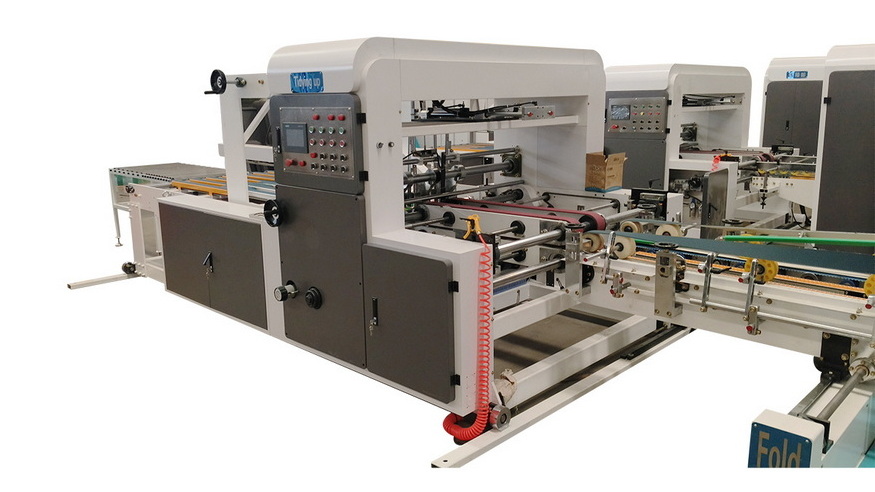
nce corrugated board sheets are produced, they move to converting machines that turn them into functional packaging for real brands. [packagingdigest]
Typical steps include:
- Printing
- Flexo or high‑speed digital printers apply logos, handling symbols, barcodes, and full‑color graphics. [yorkcontainer]
- As e‑commerce grows, more buyers expect shelf‑ready and brand‑consistent print even on transport cartons. [sunautomation]
- Slotting and scoring
- Slotters create flaps, and additional scores define fold lines for the box panels. [packagingdigest]
- Die‑cutting
- Rotary or flatbed die cutters produce special shapes, hand holes, ventilation slots, or complex retail‑ready designs. [mtdpack]
A well‑designed line will balance printing speed with die‑cutting and folding capacity, then match that output to the capabilities of the end‑of‑line carton packaging machine to avoid bottlenecks. [sunautomation]
he printed and die‑cut blanks then go to folder‑gluers or stitchers, where they become actual boxes. [airseacontainers]
Core steps:
1. Folding and joint formation
- Blanks are folded along pre‑scored lines to create sidewalls and flaps. [airseacontainers]
- The manufacturer chooses either glued joints (using hot‑melt or cold glue) or stitched joints (metal staples) depending on strength and application. [airseacontainers]
2. Quality inspection
- Operators check print registration, glue integrity, dimensions, and fold accuracy. [packagingdigest]
3. Bundling, strapping, and palletizing
- Finished boxes are typically shipped knocked down flat in strapped bundles, then stacked on pallets. [airseacontainers]
- This is where specialized carton packaging equipment—automatic counters, stackers, strappers, wrappers, and palletizers—creates real labor savings and consistency. [sunautomation]
From an OEM standpoint, this last stage is critical. A high‑speed flexo‑folder‑gluer loses much of its value if bundles are still tied manually; automated carton packaging machines close that gap and keep the whole line balanced. [yorkcontainer]
ifferent products need different levels of stacking strength, cushioning, and print quality, so converters choose from various board constructions and flute types. [diapkg]
| Board / flute type | Structure & typical thickness | Typical use case | Notes |
|---|---|---|---|
| Single‑wall, C‑flute | 3 layers, medium thickness | Standard shipping cartons | Good balance of strength and cost. (packagingcorp) |
| Single‑wall, B‑flute | Thinner flutes, more per meter | Die‑cut and retail packaging | Better print surface, good for smaller boxes. (packagingcorp) |
| Single‑wall, E‑flute | Very fine, thin board | High‑graphic and e‑commerce boxes | Excellent print quality; not for heavy loads alone. (mtdpack) |
| Double‑wall, BC | 5 layers, two flute types | Heavy goods and industrial parts | Higher stacking strength and puncture resistance. (packagingcorp) |
| Triple‑wall | 7 layers, three mediums | Bulk containers and export packaging | Can replace wood crates in some applications. (diapkg) |
Choosing the wrong board is one of the fastest ways to increase damage rates or overspend on material. In practice, we recommend that overseas buyers optimize board grade together with their OEM equipment supplier, because flute type also affects creasing, folding behavior, and machine settings. [sunautomation]
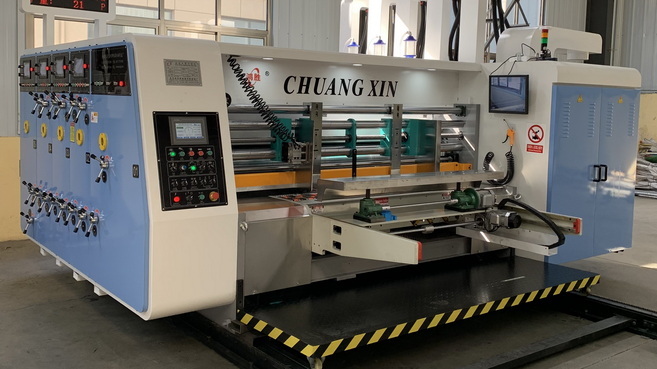
orrugated packaging is already one of the most recycled materials in the world, and the industry continues to move toward higher recycled content and water‑based inks and adhesives. At the same time, brands demand better print, shorter runs, and faster delivery, which is reshaping the equipment landscape inside box plants. [yorkcontainer]
Several trends stand out today:
- High‑speed, high‑performance machinery as the norm
- Modern corrugators and converting lines are designed for faster order changes, tighter tolerances, and reduced waste. [sunautomation]
- End‑of‑line carton packaging equipment has to match this speed, with rapid order changeovers and recipe‑based setups. [yorkcontainer]
- Digital printing and short‑run agility
- High‑speed digital presses have evolved from prototyping tools to full production solutions, enabling fast artwork changes without printing plates. [yorkcontainer]
- AI, IIoT, and data‑driven optimization
- Plants are increasingly integrating sensors, IIoT platforms, and AI analytics to monitor uptime, adhesive usage, compression strength, and energy consumption. [sunautomation]
- Smart packaging and track‑and‑trace
- Some advanced corrugated solutions now embed RFID or other tracking technologies to monitor shipments in real time. [linkedin]
For overseas buyers, these trends mean that choosing OEM carton packaging machines is no longer just about basic mechanics; it is about connectivity, data, and lifecycle performance. [linkedin]
orking with multiple export‑oriented Chinese carton plants, I have seen the same pattern repeat: customers invest heavily in a new corrugator or flexo printing line, but underestimate the ROI potential of optimized carton packaging equipment at the end of the line. [facebook]
From an OEM and user perspective, here are the areas where a specialist factory like Hebei Ou Ye Carton Machinery Co., Ltd. can make a measurable difference:
- Faster order changeovers
- Automatic job recall and quick adjustments allow converters to switch between SKUs in minutes, matching today's shorter production runs. [facebook]
- Consistent bundle quality
- Automated counting, stacking, and strapping ensure each bundle and pallet is uniform, which reduces handling damage and speeds up downstream warehouse operations. [yorkcontainer]
- Labor and safety optimization
- By automating manual bundling and palletizing tasks, plants can re‑allocate labor, reduce repetitive strain injuries, and stabilize shift performance. [sunautomation]
- OEM customization for brand owners and converters
- As an OEM partner, Hebei Ou Ye can tailor machine dimensions, control systems, and integration interfaces to match your existing corrugator, printer, and folder‑gluer setup. [facebook]
For overseas brands and wholesalers who rely on contract box suppliers in Asia, working directly with an OEM equipment factory also helps ensure that your packaging specifications and quality standards are embedded into the production process, not just written on a spec sheet. [yorkcontainer]

o make this more tangible, here is a simplified real‑world sequence for a typical export carton order:
1. Define requirements
- Product dimensions, weight, stacking height, shipping route, and branding needs are collected to determine board grade, flute profile, and print specs. [diapkg]
2. Design and structural testing
- CAD tools are used to design the box style (e.g., RSC, die‑cut) and estimate compression strength using standard tests like ISO 3037. [mtdpack]
3. Schedule production
- The corrugator plan is created to optimize paper usage and changeovers, followed by printing and converting schedules. [sunautomation]
4. Run production
- Corrugator produces board to spec → converting line prints, slots, and die‑cuts → folder‑gluer completes boxes → carton packaging equipment bundles and palletizes. [packagingcorp]
5. Inspection and logistics
- QC checks board and box performance; finished pallets are stretch‑wrapped, labelled, and shipped. [airseacontainers]
For many of our overseas customers, the key comfort factor is knowing that the same OEM equipment and process run your orders every time, rather than relying on manual adjustments that vary from operator to operator. [sunautomation]
In practice, I advise overseas buyers and converters to consider a packaging‑line upgrade when they face one or more of these issues:
- Your flexo‑folder‑gluer or die‑cutter frequently waits for manual packing to catch up.
- Bundle counts are inconsistent and customer complaints about missing or mixed sizes are rising.
- Manual labor costs or turnover are increasing and training new operators is slow.
- You plan to expand export volume and need stable, auditable processes for overseas audits.
If this sounds familiar, it is time to review your end‑of‑line setup and consider OEM solutions that are tailored to corrugated cartons rather than generic packing machinery. [yorkcontainer]
If you are a brand owner, wholesaler, or carton converter looking to:
- Improve box strength and consistency.
- Increase throughput while reducing manual handling.
- Customize packaging equipment to your specific SKUs and plant layout.
…then it is worth speaking directly with an experienced Chinese OEM manufacturer of carton packaging equipment such as Hebei Ou Ye Carton Machinery Co., Ltd. By aligning your packaging specifications with the right carton machinery from the beginning, you can reduce total cost, stabilize quality, and make your corrugated packaging a true competitive asset instead of a hidden problem. [facebook]
1. What is the difference between cardboard and corrugated board?
"Cardboard" is a general term, while corrugated board specifically refers to linerboard plus a fluted medium in a sandwich structure. Corrugated board is engineered for stacking strength and cushioning, which is why it dominates transport packaging worldwide. [aopackmachine]
2. How recyclable are corrugated boxes?
Corrugated boxes are among the most recycled packaging materials, often achieving recovery rates above 80% in mature markets. They are typically made with a high share of recycled fiber and water‑based adhesives, making them suitable for repeated fiber cycles. [aopackmachine]
3. Which flute type should I choose for e‑commerce packaging?
For many e‑commerce applications, single‑wall board with B‑ or E‑flute provides a good balance of print quality and protection. Heavier or more fragile products may require double‑wall combinations such as BC‑flute, especially for long shipping routes or high stacking heights. [packagingcorp]
4. Why is automated carton packaging equipment important if I already upgraded my printer or die‑cutter?
Without automated packing, high‑speed upstream machines often wait for manual bundling and palletizing, wasting capacity. Automated carton packaging equipment keeps the line balanced, improves bundle consistency, and reduces labor dependency. [yorkcontainer]
5. Can OEM carton packaging equipment be customized for my plant?
Yes. Experienced OEMs can adapt machine size, infeed/outfeed orientation, control systems, and integration interfaces to match your existing corrugator, printer, and folder‑gluer. This ensures smoother installation, faster ramp‑up, and better long‑term performance. [facebook]
1. Aopack. "How Corrugated Boxes Are Made? From Raw Materials to Finished Product." [Link]. [aopackmachine]
2. Packaging Corporation of America. "How Corrugated Boxes Are Made." [Link]. [packagingcorp]
3. Packaging Digest. "How Corrugated Board and Boxes Are Made." [Link]. [packagingdigest]
4. GWP Group. "How Is Cardboard Made: Manufacture of Corrugated Board." [Link]. [gwp.co]
5. Diamond Asia Packaging. "Corrugated Boxes Manufacturing Process & Material Guide." [Link]. [diapkg]
6. MTD Packaging. "The Ultimate Guide to Corrugated Cardboard and Box Manufacturing." [Link]. [mtdpack]
7. Sun Automation. "2026 Corrugated Manufacturing Outlook: The Trends Reshaping Box Plants Worldwide." [Link]. [sunautomation]
8. York Container. "Trends in Corrugated Packaging 2026." [Link]. [yorkcontainer]
9. LinkedIn. "Innovations in Corrugated Box Manufacturing ft. Enhanced …" [Link]. [linkedin]
10. Facebook. "China Ouye Carton Machinery | Cangzhou." [Link]. [facebook]


