
Views: 222 Author: Amanda Publish Time: 2025-10-01 Origin: Site


Content Menu
● Understanding Strapping Machines
>> Semi-Automatic Strapping Machines
>> Fully Automatic Strapping Machines
● Key Factors Affecting Strapping Machine Cost
>> Machine Type and Automation Level
>> Strapping Speed and Volume Capacity
>> Build Materials and Industry-Specific Requirements
>> Size and Strap Compatibility
>> Additional Features and Customization
>> Brand and After-Sales Support
● Price Overview by Machine Category
● Benefits of Using Strapping Machines
● Choosing the Right Strapping Machine
● Frequently Asked Questions (FAQ)
>> 1. What is the main function of a strapping machine?
>> 2. How does a fully automatic strapping machine operate?
>> 3. What factors determine the cost of a strapping machine?
>> 4. Can strapping machines reduce labor costs?
>> 5. Are there strapping machines suitable for small businesses?
In the fast-paced world of packaging and logistics, securing goods reliably and efficiently is a business imperative. Strapping machines are pivotal tools for bundling, reinforcing, and securing packages, cartons, and pallets. This article delves deeply into what affects the cost of strapping machines, the types available, their key features, and how they enhance packaging operations for businesses worldwide.

At its core, a strapping machine applies plastic or metal straps tightly around products or bundles to keep them secure during storage and transportation. This process prevents shifting, damage, and loss, while also facilitating easier handling. Due to this essential role, strapping machines are ubiquitous in warehouses, factories, shipping facilities, and retail distribution centers.
Strapping machines vary widely, from handheld tools to fully automated industrial systems. The choice depends on the volume, package size, budget, and required speed.
Strapping machines broadly fall into three categories based on automation and application:
Handheld tools are compact, battery-powered devices designed for manual strapping. They are best suited for low-volume use or when flexibility and portability are priorities. The operator manually loops the strap around the package and uses the tool to tension and seal the strap. These tools are affordable, ranging from a few hundred to a couple of thousand dollars, depending on features and battery life.
Semi-automatic machines require an operator to position the strap around the package manually. The machine handles tensioning, sealing, and cutting once activated. These machines are ideal for medium-volume operations seeking reliability with moderate automation. They are more expensive than handheld tools but offer faster, consistent strapping speeds. Pricing generally starts around $2,500, with variations based on features such as electric tension adjustment, strap width compatibility, and build quality.
Key features of semi-automatic machines include:
- Electric adjustment for strap length and tension
- Compatibility with polypropylene (PP) straps of various widths and thicknesses
- Compact and portable designs for ease of installation and movement
- Average strapping speed of approximately 2.5 seconds per strap
- Suitable for loads up to around 180kg
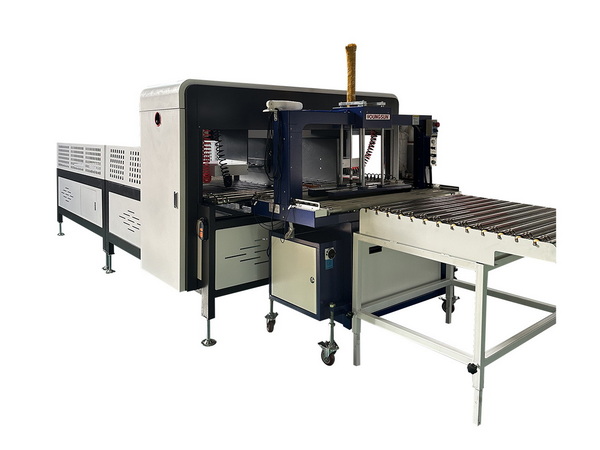
Fully automatic machines automate the entire process from strap feeding, looping, tensioning, sealing, and cutting without manual intervention. Operators simply place packages on a conveyor or within the machine's arch, and the system completes strapping at high speed. These machines suit high-volume packaging lines requiring maximum efficiency and minimal labor.
Depending on the model and customization, fully automatic machines offer:
- High strapping speeds, sometimes over 40 straps per minute
- Adjustable tension ranges (15 to 70 kg)
- Compatibility with various strap widths (typically 9 to 15.5 mm)
- Integration with conveyor systems for continuous operation
- Advanced features such as photo sensors, microprocessor controls, and dual photo cells for precise strap positioning
- Robust construction often incorporating stainless steel for hygienic or heavy-duty applications
The price range for fully automatic strapping machines starts around $6,500 and can exceed $50,000 for sophisticated models with conveyors and extensive automation options.
Various elements influence the final purchase price of a strapping machine:
As described, handheld tools are least expensive, semi-automatic machines occupy a mid-price range, and fully automatic systems command the highest prices due to complex electronics and engineering.
Machines designed for high throughput in large production lines cost more but deliver unparalleled speed, thus reducing packaging cycle time and labor costs.
For industries like food, pharmaceuticals, or marine, machines often require stainless steel or corrosion-resistant components, increasing cost but ensuring compliance and durability.
Larger arch sizes, heavier-duty machines, and compatibility with different strap materials (e.g., polypropylene vs. polyester) will impact cost.
Options like automatic strap feeders, conveyor integration, digital tension controls, alarms for strap end, and welding cooling time adjustments add upfront cost but improve operational efficiency.
Globally recognized brands with established reputations and robust customer service may offer premium pricing but reduced risk and higher uptime compared to generic suppliers.
| Machine Type | Typical Price Range (USD) | Key Application |
| Handheld Strapping Tools | $300 - $2,500 | Low volume, flexible, manual strapping |
| Semi-Automatic Machines | $2,500 - $7,000 | Medium volume with some automation |
| Fully Automatic Machines | $6,500 - $50,000+ | High volume, continuous production lines |
Adopting strapping machines brings manifold benefits essential for modern packaging workflows:
- Efficiency: Machines automate repetitive tasks, substantially increasing speed and throughput.
- Safety: Reduces operator injuries from manual strapping and cutters.
- Quality: Ensures consistent strap tension and sealing quality, preventing package damage.
- Cost Savings: Minimizes labor requirement and material waste with precise strap cutting.
- Scalability: Can support expanding production volumes with modular and integrative options.
Selecting the most suitable strapping machine involves considering:
- Expected packaging volume and speed requirements
- Package dimensions and weight limits
- Industry-specific hygiene or material standards
- Budget constraints and available workspace
- Integration with existing packaging or conveyor systems
Comprehensive supplier consultations and trial demonstrations can provide valuable insights.
The cost of strapping machines varies widely, from portable handheld tools costing a few hundred dollars to advanced fully automatic machines priced beyond fifty thousand dollars, reflecting their varying capabilities and application scope. Businesses benefit immensely by investing in strapping machines that align with their operational volume and specific packaging needs, resulting in faster packing, consistent quality, improved safety, and reduced costs. Understanding the types, features, and factors influencing cost enables informed purchasing decisions that support long-term efficiency and growth.
A strapping machine secures packages or pallets by tightly wrapping plastic or metal straps around them to prevent movement and damage during handling and transport.
It automates the entire strapping process — feeding, looping, tensioning, sealing, and cutting — allowing operators to place packages and start the cycle with minimal intervention.
Cost depends on machine type, automation level, speed capacity, build materials, customization options, and brand reputation.
Yes, automated machines speed up packaging and reduce manual labor, thereby lowering labor costs significantly.
Absolutely, handheld tools and semi-automatic machines are affordable and flexible options ideal for low to medium volume packaging needs.
[1](https://www.joinpackstrapping.com/automatic-strapping-machines.html)
[2](https://www.mhaproducts.com.au/semi-auto-strapping-machine)
[3](https://www.eammosca.com/news/newsdetail/strapping-machines-101-1943)
[4](https://www.reisopack.com/en/complete-guide-how-to-choose-the-best-fruit-strapping-machine-according-to-your-needs/)
[5](https://www.globalpackindia.com/choosing-the-right-strapping-machine/)
[6](https://www.mastekpack.com/company-news/how-to-choose-the-right-strapping-machine-for-your-needs.html)
[7](https://www.signode.com/en-us/products/strapping-systems/general-purpose-strapping-machines/)
[8](https://www.dubeypackaging.com/box-strapping-machines.html)
[9](https://www.fromm-pack.com.au/strapping-machines/)


