
Views: 222 Author: Ouye Carton Machinery Publish Time: 2026-06-11 Origin: Site


Content Menu
● Precision and Consistency: The First Non‑Negotiable
>> Why Traditional Cutting Struggles
>> How Die Cutting Machines Solve It
● Speed and Throughput: From Batch Work to Continuous Flow
>> Limitations of Manual and Rotary Cutting
>> Throughput Advantages of Die Cutting Machines
● Design Flexibility: From Standard Boxes to Brand‑Building Packaging
>> Traditional Cutting = Basic Shapes
>> Die Cutting = Creative Freedom
● Material Utilization and Waste Reduction
>> Waste Issues with Traditional Methods
>> How Die Cutting Machines Improve Yield
● Safety and Ergonomics: Protecting Workers While Increasing Output
>> Safer Workflows with Die Cutting Machines
● Cost and ROI: Why the Higher Upfront Investment Makes Sense
>> Hidden Costs of Traditional Cutting
>> ROI Drivers for Die Cutting Machines
● Aligning with Global Packaging Trends: Automation and Sustainability
>> Automation and Smart Packaging Lines
>> Sustainability and Material Efficiency
● Practical Checklist: Is It Time to Upgrade to a Die Cutting Machine?
● How Our Chinese OEM Factory Supports Overseas Buyers
● FAQs About Die Cutting Machines for Carton Packaging
Over the past decade, the global packaging machinery market has moved decisively toward automation and precision systems, driven by e‑commerce, higher graphics standards, and sustainability goals. Traditional carton cutting—manual knife work, basic guillotine shears, or simple rotary cutters—cannot keep up with the volume, consistency, and design complexity required today. [fortunebusinessinsights]
From my experience working with international packaging buyers, the tipping point usually comes when:
- Defect rates and rework on manually cut cartons start to erode margins.
- Brand owners demand tight tolerances for multi‑color printing and shelf‑ready packaging.
- Labor shortages and rising wages make manual cutting economically unsustainable.
At that stage, upgrading to an automatic die cutting machine is no longer a "nice to have" — it becomes a strategic necessity.
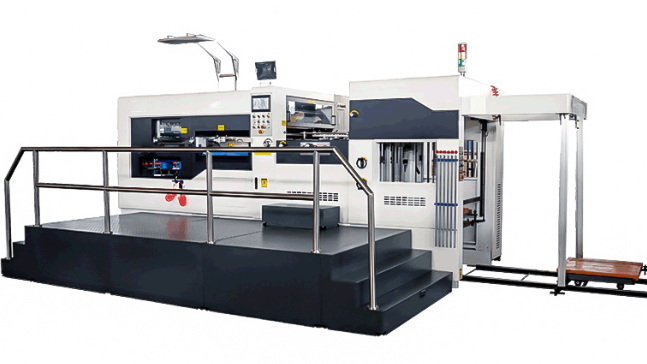
In high‑volume packaging, repeatable precision is everything. A difference of just 1–2 mm in slot positions or creasing lines can cause boxes to warp, pop open, or misalign with automated filling lines.
Traditional methods like hand‑cutting with knives or basic rotary cutters typically suffer from:
- Human variability: Operators tire over long shifts, leading to drifting cut lines and inconsistent dimensions.
- Limited registration accuracy: Aligning print graphics with cut lines manually is difficult, especially for multi‑color or varnished cartons.
- Poor repeatability on large orders: The first 1,000 units may be fine; the next 10,000 show accumulating errors.
A die cutting machine uses a pre‑engineered die (or digital tooling) to create exactly the same outline every time. [dayuanmach]
Key advantages include:
- Tight dimensional tolerances: Critical for pharmaceutical, electronics, and food packaging lines that require precise fit.
- Perfect registration with printing: Especially when the die cutter is integrated into a full carton line with printing and slotting. [dayuanmach]
- Stable quality across long runs: The 50,000th box matches the first, which protects both brand image and downstream automation.
For OEM manufacturers in Hebei and other Chinese industrial hubs, this level of consistency is now a baseline expectation from overseas buyers, not an optional feature. [b2bdata.baidu]
From an operational perspective, speed is not just pieces per hour—it is stable throughput with minimal downtime. Manual and semi‑manual carton cutting methods tend to create bottlenecks that block the entire packaging workflow.
- Manual cutting: Labor‑intensive, typically limited to small batches, and highly dependent on individual operator skill.
- Simple rotary cutting: Faster than manual work but still requires substantial setup and frequent manual adjustments, especially when changing sizes or designs.
These methods often lead to:
- Extended lead times on large orders.
- Overtime labor costs to catch up with peak demand.
- Difficulty in synchronizing with high‑speed printing or folding‑gluing lines.
Modern carton die cutting machines can process hundreds or even thousands of sheets per hour, with consistent cycle times and minimal operator intervention. Once the die is set and registration is dialed in, the machine runs with a continuous, predictable rhythm. [dayuanmach]
From a factory manager's viewpoint, this means:
- Higher daily output without proportionally increasing labor.
- Easier planning and more accurate delivery commitments to customers.
- The ability to integrate with upstream and downstream automation (stackers, bundlers, palletizers). [fortunebusinessinsights]
For OEM suppliers serving overseas carton converters, demonstrating throughput data — such as maximum sheets per hour at standard corrugated thickness — is now a central part of the sales discussion. [gminsights]
One of the biggest advantages of die cutting machines, and a major driver of OEM demand, is design flexibility. [dayuanmach]
Manual and basic rotary cutting are usually limited to:
- Simple RSC (Regular Slotted Carton) styles.
- Rectangular or very simple die‑lines.
- Limited control over perforations, windows, or locking tabs.
This makes it harder for brands to innovate with shelf‑ready packaging, e‑commerce mailers, or point‑of‑sale displays. [dhl]
With a flatbed or rotary die cutting machine, converters can offer:
- Intricate die‑lines: Custom flaps, locking structures, tear‑strips, and carry handles. [dayuanmach]
- Windows and specialty shapes: For premium food, cosmetics, and electronics packaging.
- Integrated perforations and creases: Facilitating easy opening and improved unboxing experiences.
As a Chinese OEM serving overseas brands and packaging converters, positioning your equipment as an enabler of creative packaging — not just a cutting tool — is a strong competitive differentiator. [directindustry-china]
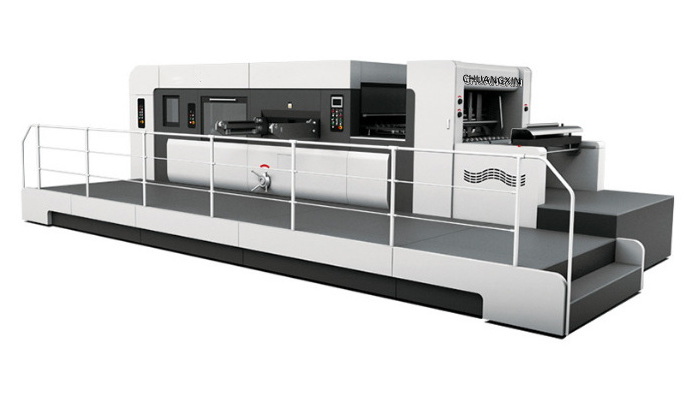
In the current era of cost pressure and sustainability, material utilization is a boardroom topic, not just a production issue. [gminsights]
Traditional carton cutting often results in:
- Irregular scrap due to imprecise layouts and cutting drift.
- Higher rejection rates at quality inspection, especially for printed cartons.
- Difficulty in optimizing sheet nesting for different box sizes.
Die cutting machines can significantly reduce waste by:
- Using precision‑engineered dies that minimize gaps between carton outlines.
- Leveraging layout software to auto‑nest multiple designs on the same sheet, where compatible. [dayuanmach]
- Maintaining alignment over long runs, so fewer sheets are scrapped.
In practice, even a 2–3% improvement in board utilization on large volume orders can translate into tens of thousands of dollars in annual savings for mid‑size converters. This is one of the main reasons international buyers increasingly specify automatic die cutting capability when selecting OEM suppliers. [gminsights]
As factories scale up, worker safety becomes a non‑negotiable requirement for global buyers, especially from Europe and North America. [dhl]
Manual carton cutting involves:
- Direct handling of knives and open rotary blades, leading to potential lacerations and hand injuries.
- Repetitive cutting motions that can cause long‑term musculoskeletal issues.
- Increased risk when operators rush to meet deadlines.
Automatic die cutting machines typically incorporate:
- Enclosed cutting zones with interlocked guards.
- Emergency stop systems and safety light curtains.
- Programmable logic that prevents unsafe operation modes. [dayuanmach]
For overseas buyers auditing Chinese factories, seeing a modern, well‑guarded die cutting line gives confidence that productivity is not achieved at the expense of worker safety. [fortunebusinessinsights]
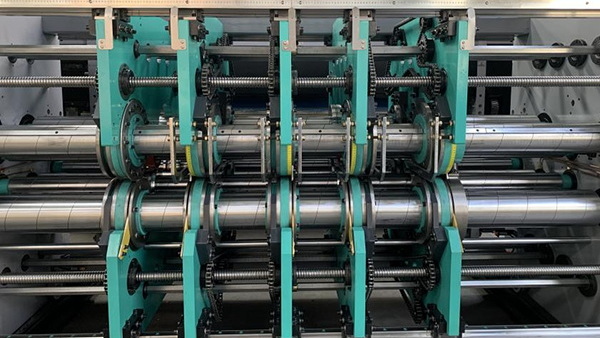
At first glance, traditional cutting methods appear cheaper because they require less equipment investment. However, a serious cost analysis usually tells a different story over 3–5 years.
- High labor costs: More operators per shift, plus training and supervision.
- Rework and scrap: Quality problems from inconsistent cuts erode margins.
- Longer lead times: Slower output means you cannot accept as many orders or tight‑deadline projects.
The main economic advantages of die cutting machines include:
- Labor savings: One operator can oversee a high‑speed automated line.
- Higher throughput: More jobs completed per month with the same headcount.
- Lower scrap rates: Better material utilization and fewer rejected cartons.
- Ability to win premium work: Complex, high‑margin packaging that manual methods cannot handle reliably. [gminsights]
Industry data shows that the global die cutting machine market has been expanding steadily, supported by the shift from traditional systems to smart, automated equipment. For many packaging converters, the payback period on a well‑specified die cutting machine can be measured in months rather than years, especially when it replaces multiple manual lines. [gminsights]
The move toward die cutting equipment is not happening in isolation—it is part of a larger shift within global packaging. [dhl]
Reports on the packaging automation market highlight a strong CAGR driven by demand for integrated, data‑driven systems. Die cutting machines are a core component of such lines, often linked with: [fortunebusinessinsights]
- Automated feeding and stacking systems.
- Inline printing, creasing, folding, and gluing.
- Digital controls that monitor throughput, reject rates, and maintenance needs. [fortunebusinessinsights]
For Chinese OEM suppliers, offering network‑ready die cutters that can feed data into a plant's MES or ERP system is increasingly a competitive edge in bidding for large overseas projects. [fortunebusinessinsights]
At the same time, sustainability pressures are reshaping packaging decisions worldwide. Brands are: [dhl]
- Reducing packaging weight and size.
- Switching to recyclable and renewable materials such as paper‑based and corrugated solutions.
- Seeking partners who can minimize waste and support circular packaging models. [dhl]
Die cutting machines support these goals by enhancing material yield, enabling precise, lighter designs, and maintaining quality even on thinner, eco‑optimized boards. [dhl]
If you are still relying heavily on traditional carton cutting methods, use this quick self‑assessment.
You likely need a die cutting machine if:
1. Your defect or rework rate on cut cartons is above 3–4%.
2. You have trouble meeting delivery deadlines for large or urgent orders.
3. Brand owners are asking for more complex box styles or retail‑ready packaging.
4. You feel constant pressure from rising labor costs or operator shortages.
5. Overseas buyers are asking detailed questions about your automation level and quality controls. [gminsights]
If several of these points match your current situation, investing in a carton die cutting machine aligned with your product mix and growth plans is likely the most effective way to protect margins and win higher‑value orders.
As a Chinese carton machinery OEM, a factory like Hebei Ou Ye Carton Machinery Co., Ltd. can provide more than just hardware. [b2bdata.baidu]
Typical support includes:
- Customized die cutting solutions aligned with each customer's board grades, box styles, and local safety standards.
- OEM and private‑label programs for overseas brands, distributors, and integrators who want to sell under their own names.
- Remote installation guidance and training, helping local teams quickly master setup, maintenance, and troubleshooting.
By combining cost‑effective manufacturing in China with global‑level performance and support, such OEMs enable converters and brand owners worldwide to upgrade to die cutting technology without a prohibitive capital burden. [directindustry-china]
If you are evaluating whether a die cutting machine is right for your carton production, the next step is to discuss your actual volumes, board specifications, and box portfolio with an experienced OEM partner.
- Share your current cutting method, monthly output, and defect rates.
- Clarify your main goals: higher speed, better print registration, more complex designs, or cost reduction.
- Request a tailored configuration and ROI estimate for a die cutting solution matched to your plant.
A focused technical discussion will quickly show you where automation can deliver the fastest payback in your specific case.
1. What is the main advantage of a die cutting machine over manual cutting?
The primary advantage is consistent precision at scale, which reduces defects, stabilizes quality, and enables higher‑speed downstream automation. [dayuanmach]
2. Is a die cutting machine only suitable for large factories?
No. While high‑volume plants benefit the most, small and mid‑size converters also gain from lower scrap, better quality, and the ability to offer more complex packaging to their customers. [gminsights]
3. How does die cutting help with sustainability goals?
Die cutting optimizes material utilization, supports lighter structural designs, and reduces waste, which aligns well with global trends toward eco‑friendly, resource‑efficient packaging. [gminsights]
4. What types of board can a carton die cutting machine handle?
Modern machines can process corrugated board, chipboard, and other paper‑based substrates, with adjustable pressure and settings to match board thickness and flute profiles. [dayuanmach]
5. How long does it usually take to see ROI on a die cutting machine?
Depending on volume and local labor costs, many converters see payback within 1–3 years, driven by higher throughput, reduced scrap, and the ability to win higher‑margin packaging projects. [fortunebusinessinsights]
1. Dongsheng Carton Machine – "What are the advantages of using a die cutting machine compared to traditional carton cutting methods?" (2025).
2. Global Market Insights – Packaging Machinery Market Size, Share & Trends Report. [gminsights]
3. Global Market Insights – Die Cutting Machine Market Statistics Report. [gminsights]
4. Fortune Business Insights – Packaging Automation Market Size, Share and Trends. [fortunebusinessinsights]
5. DHL – Sustainable Packaging Trends Guide 2026. [dhl]
6. Dayuan Machinery – "What Are the Different Types of Die Cutting Machines and Their Applications?". [dayuanmach]
7. DirectIndustry – Carton Packaging Lines (product listings and technical references). [directindustry-china]


