
Views: 248 Author: Ouye Carton Machinery Publish Time: 2026-06-28 Origin: Site


Content Menu
● Introduction: Why Honeycomb vs Corrugated Matters in Rotary Die‑cutting
● SEO Focus: Core Keywords and Search Intent
● Material Basics: Honeycomb Board vs Corrugated Board
● Structural Performance: When to Choose Honeycomb vs Corrugated
>> Load‑Bearing and Compression Strength
>> Impact Protection and Cushioning
● Converting Behavior: How Each Substrate Responds to Rotary Die‑cutting
>> Edge Quality and Cell Exposure
>> Dimensional Stability and Warp
● Tooling Adjustments for Rotary Die‑cutting Honeycomb Fillers
>> 1. Die Profile and Penetration Depth
>> 2. Anvil Covers and Surface Hardness
>> 3. Nip Pressure and Machine Settings
>> 4. Feeding and Registration
● Tooling Adjustments for Rotary Die‑cutting Corrugated Fillers
>> 1. Rule Selection and Creasing Geometry
>> 2. Anvil and Rubber Components
>> 3. Speed, Waste, and Quality Trade‑offs
● Honeycomb vs Corrugated: Practical Rotary Die‑cutting Comparison
>> Rotary Die‑cutting Focused Comparison Table
● Case Insight: OEM Projects with Structural Fillers
● Step‑by‑Step Checklist for Switching Fillers on a Rotary Line
● OEM and ODM Perspective: How a Chinese Carton Machinery Factory Supports You
● Call to Action: Plan Your Next Rotary Die‑cutting Upgrade
● FAQs: Honeycomb vs Corrugated Fillers in Rotary Die‑cutting
Honeycomb honeycomb board and corrugated board respond very differently inside a rotary die‑cutting line, and understanding those differences is the key to getting stable cuts, clean edges, and long tooling life when you process structural fillers on modern carton packaging equipment.

In many packaging projects I support, structural fillers made of honeycomb board or corrugated board sit inside the outer carton to protect products during transport or stacking. Yet buyers often treat these materials as "just cardboard" and then struggle with crushed cells, poor compression strength, or excessive scrap on their rotary die‑cutters. [linkedin]
From a carton machinery OEM perspective, honeycomb and corrugated fillers demand different tooling adjustments, feeding setups, and pressure curves to run reliably at speed. This article takes a practical, expert view of how these two substrates behave and what you should change in your rotary die‑cut tooling when switching between them.
- Primary keyword: Honeycomb board vs corrugated board rotary die‑cutting.
- Key supporting terms:
- honeycomb structural fillers in packaging. [linkedin]
- rotary die‑cutting tooling adjustments.
- compression strength of honeycomb vs corrugated. [linkedin]
- carton packaging equipment OEM for fillers.
For packaging engineers, technical buyers, and OEM partners, the search intent is clear: they need practical guidance on which material to choose, and how to set up their rotary die‑cut machine so both honeycomb and corrugated fillers run with predictable quality.
Honeycomb board (often called honeycomb paperboard or honeycomb core) uses a hexagonal cell structure sandwiched between surface liners to create a high strength‑to‑weight ratio panel. [linkedin]
Key characteristics:
- Excellent compression strength in the vertical direction, ideal for pallet‑level stacking and heavy products. [linkedin]
- Very lightweight compared with solid board or multi‑wall corrugated at similar load ratings. [linkedin]
- Lower tolerance for localized crushing at the cell edges if pressure is concentrated instead of evenly distributed. [linkedin]
In structural fillers, honeycomb board is widely used for corner blocks, load‑bearing pads, and interior partitions where you want maximum protection with minimal weight. [linkedin]
Corrugated board combines fluted medium between one or two liners to build stiffness and cushioning. In filler applications, plants often use: [linkedin]
- Single‑wall (e.g., B or C flute) for light products.
- Double‑wall (e.g., BC flute) for heavier industrial parts. [linkedin]
Corrugated fillers provide:
- Good impact absorption due to the spring effect of the flutes. [linkedin]
- Flexible converting options with standard rotary dies and slotters.
- Stable performance across a wide range of rotary die‑cutting lines already installed in carton plants.
For vertical compression (stacking on pallets, warehouse racking):
- Honeycomb board typically offers higher compression strength at the same weight than standard corrugated, thanks to its continuous hexagonal cell geometry. [linkedin]
- Double‑wall corrugated can match many applications but may require higher GSM and more board consumption to reach similar load ratings. [linkedin]
In my experience with overseas OEM projects, honeycomb fillers become attractive once you start moving into pallet‑level loads, large appliances, furniture, or heavy automotive parts, where weight reduction and stability matter equally. [linkedin]
For shock and vibration during transport:
- Corrugated board still wins in general impact cushioning because the flutes deform progressively under load. [linkedin]
- Honeycomb board provides rigid support but needs to be combined with foam or corrugated elements if the product is particularly sensitive to impact. [linkedin]
A practical approach many plants take is hybrid fillers: honeycomb pads under the load‑bearing zones, combined with corrugated partitions and top pads. [linkedin]
On a rotary die‑cutter:
- Corrugated board tends to show predictable edge quality as long as the die is sharp, anvil covers are in good condition, and pressure is set correctly.
- Honeycomb board can show open cells and visible tearing if the die penetrates too aggressively or if the nip pressure crushes the cell walls near the cut line. [linkedin]
To keep honeycomb fillers visually acceptable and structurally sound, it is critical to control penetration depth and use support liners that help stabilize the core during cutting. [linkedin]
Because rotary die‑cutting applies continuous pressure in the circumferential direction:
- Thin corrugated sheets can warp or skew if moisture content and feeding setup are not well controlled.
- Honeycomb board, particularly in thicker panels, stays dimensionally stable but can delaminate if liner adhesion is weak or if the cutting pattern concentrates stress on specific zones. [linkedin]
This difference directly affects tool design and machine settings, which we will explore in the next sections.
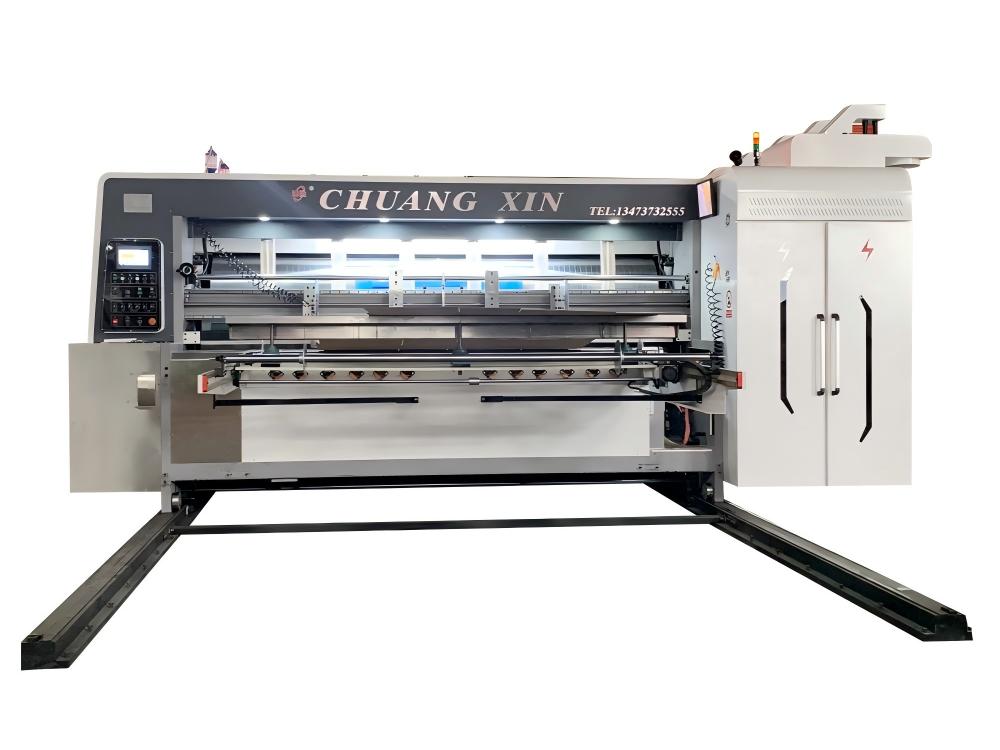
For honeycomb board, the die profile should focus on controlled penetration rather than deep cutting:
- Use slightly blunter cutting rules than you would for standard corrugated to avoid over‑penetration into the core. [linkedin]
- Consider scoring and partial cutting combined with snap‑break at downstream operations for very thick panels. [linkedin]
- Maintain precise rule height relative to board caliper to keep the cut mainly within the liner and upper portion of the core. [linkedin]
In our OEM projects, we usually start honeycomb trials with reduced rule height and test strips at different pressures, then finalize the rule specification once we have stable edge quality across several board batches.
Honeycomb fillers benefit from anvils that balance support and resilience:
- Slightly softer anvil covers can help distribute pressure across the board surface, reducing local crushing.
- At the same time, the cover must be firm enough to keep dimensional accuracy on the cut.
Regular inspection and replacement of anvil covers is especially important when you run mixed materials (corrugated plus honeycomb) on the same line.
Rotary die‑cutting thick, high‑compression honeycomb requires much tighter control of nip pressure than corrugated:
- Start with lower pressure settings than your standard corrugated recipes and gradually increase until cuts are complete but fibers are not excessively crushed. [linkedin]
- Use pressure monitoring at multiple points in the machine to detect uneven loading caused by board thickness variations.
- Implement recipe management so operators can recall specific honeycomb setups without manual trial‑and‑error each time.
On some lines, customers add closed‑loop pressure control based on load cells to maintain stable pressure as speed or board characteristics change.
Honeycomb boards are typically thicker and more rigid than corrugated sheets, which affects feeding:
- Use wider side guides and carefully adjusted feed rolls to avoid skew and mis‑registration.
- Check that your sheet infeed height and conveyor support can handle honeycomb thickness without introducing vibration or bounce.
When we configure a new rotary die‑cutting line for honeycomb fillers, we always run full‑size production samples to verify sheet handling before final acceptance.
Corrugated fillers rely on well‑designed cutting and creasing rules:
- For single‑wall corrugated, standard cutting rules and creasing profiles from the corrugated industry usually perform well.
- For double‑wall and heavy‑duty board, consider taller rules and modified crease geometry to maintain fold consistency and avoid liner cracking. [linkedin]
Aligning rule spec with flute type (B, C, E, BC) and board GSM is a core part of any new tooling design.
In rotary die‑cutting, corrugated performance depends heavily on anvil and rubber components:
- Anvil covers must be matched to expected load, board hardness, and desired life cycle.
- Ejectors and rubber inserts on the die should be tuned to avoid double‑sheet feeding and to keep waste under control.
Because corrugated is the primary material for most carton plants, having standardized spare sets of anvils and rubbers on site is best practice.
At high speed, corrugated fillers can show:
- Increased edge feathering if tools are worn or pressure is too low.
- Higher waste rates when board quality varies significantly (especially with recycled content).
To balance speed and quality, many plants implement sampling plans and inline inspection, watching key metrics like slot position tolerance, crease depth, and scrap percentage per batch.
| Aspect | Honeycomb board fillers | Corrugated board fillers |
|---|---|---|
| Typical use case | Load‑bearing pads, heavy product supports | Partitions, pads for general packaging |
| Strength‑to‑weight | Very high, excellent vertical compression | Good, improves with double‑wall |
| Impact protection | Rigid support, limited cushioning | Better cushioning via flutes |
| Cutting behavior | Sensitive to cell crushing, requires controlled penetration | Predictable on standard rotary dies |
| Tooling setup | Lower rule height, softer anvils, lower nip pressure | Standard rule heights, typical anvils |
| Feeding | Thicker, rigid sheets need careful infeed | Broad experience, easier handling |
| Visual edges | Risk of open cells and tearing | Relatively clean edges if tools are sharp |
| Cost and material availability | Higher material cost, used selectively | Wide availability, cost‑effective |
This table reflects what we see in real OEM projects for structural fillers on rotary die‑cutting lines in China and overseas. [linkedin]
From our work in the Hebei carton machinery cluster, we see recurring patterns when overseas brand owners adopt honeycomb fillers in addition to corrugated. [huayucartonmachinery]
Typical scenarios:
- A European furniture brand adds honeycomb pads to handle increased warehouse stacking heights, then needs rotary tooling that can cut both corrugated outer boxes and honeycomb spacers on the same line. [linkedin]
- An appliance manufacturer in Asia replaces some plywood elements with honeycomb board to reduce weight, requiring new die designs and stricter pressure control. [linkedin]
In both cases, the switch is not just about material choice; it is about tooling engineering and operator training so that the rotary die‑cutter can run mixed fillers without quality surprises.
When you plan to run honeycomb and corrugated fillers on the same rotary die‑cutting machine, use this practical checklist:
1. Document all filler materials.
Record board type, caliper, GSM, supplier, and expected load per square meter for honeycomb and corrugated.
2. Define performance criteria.
Set clear limits for compression strength, edge quality, and allowable cell exposure. [linkedin]
3. Design or update tooling.
Work with your OEM or local die‑maker on rules, creases, ejectors, and anvil specs tailored to each substrate.
4. Create machine recipes.
For each filler type, define nip pressure, speed, and feeding parameters and store them as digital recipes.
5. Run structured trials.
Test with production‑grade sheets, measuring scrap rates, edge quality, and load performance after cutting.
6. Train operators.
Ensure crews understand the difference between honeycomb and corrugated behavior, and when to adjust pressure or change anvils.
This approach helps you move from occasional test runs to stable, repeatable production for both filler materials.
As a China‑based carton packaging equipment OEM, we see structural fillers as part of the complete packaging system, not an isolated material choice. [huayucartonmachinery]
Typical OEM support for overseas partners includes:
- Co‑engineering of tooling for honeycomb and corrugated fillers on rotary die‑cutting lines.
- Customized machine configurations (anvil systems, feeding sections, inspection modules) aligned to actual filler materials.
- Localized documentation, safety standards, and branding so the equipment can be marketed under the partner's label with full technical transparency. [huayucartonmachinery]
For buyers, this OEM route reduces trial‑and‑error and ensures the machine, tooling, and materials are designed as one integrated solution.

If you are evaluating honeycomb vs corrugated structural fillers for your packaging line, the most effective next step is to review your product mix, load requirements, and current rotary die‑cutting capabilities. [linkedin]
Share with an experienced carton machinery OEM partner:
- The filler materials you use or plan to test (board specs and thickness).
- Your target compression strength, cushioning level, and acceptable scrap rates.
- Current machine configuration and any upcoming equipment investments.
With this information, you can get a tailored tooling and machine adjustment proposal, including rotary die profile changes, anvil recommendations, and realistic throughput forecasts for both honeycomb and corrugated fillers.
1. Can I run honeycomb and corrugated fillers on the same rotary die‑cutting machine?
Yes, many plants successfully run both, but you need dedicated tooling setups, pressure recipes, and sometimes different anvils to keep quality consistent across materials.
2. Do honeycomb fillers always replace corrugated fillers?
No. Honeycomb is ideal for load‑bearing and pallet‑level strength, while corrugated remains better for general cushioning and cost‑effective everyday packaging. [linkedin]
3. How do I minimize cell crushing when die‑cutting honeycomb?
Use lower rule heights, softer anvil covers, and reduced nip pressure, and run structured trials to find the point where cuts are clean but cells are not damaged.
4. Is there a big cost difference between honeycomb and corrugated fillers?
Honeycomb boards usually carry higher material cost, but they can reduce overall packaging weight and improve stacking efficiency, which may offset cost in some logistics scenarios. [linkedin]
5. What data should I share with my OEM supplier before tooling design?
Provide board specifications, target loads, quality criteria, and current machine setup so the supplier can engineer dies, anvils, and recipes optimized for both honeycomb and corrugated fillers.
1. Ouye Carton Machinery – "Cutting Machines And Carton Packaging: What Materials Really Matter for Your Production Line?"
[Cutting Machines And Carton Packaging]
2. LinkedIn – "Corrugated Paperboard in Modern Packaging: Key Advantages and …"
[Corrugated Paperboard in Modern Packaging] [linkedin]
3. Pulp and Paper Technology – "Industrial Paper Cutting Machines and Finishing Tools Guide."
[Industrial Paper Cutting Machines]
4. Hebei carton machinery cluster information – Dongguang economic packing machine zone.
[Hebei Carton Machinery Cluster] [huayucartonmachinery]
5. Dongsheng Carton Machine – Product and material cutting overview.


