
Views: 210 Author: Ouye Carton Machinery Publish Time: 2026-07-11 Origin: Site


Content Menu
● Introduction: Why Fiber Type Changes Your Slitting Pressure Window
● Understanding Recycled Fiber vs Virgin Pulp in Corrugated Board
>> Core Differences Between Recycled Fiber and Virgin Pulp
>> Typical Board Behaviors Under the Thin‑Blade Slitter
● How Fiber Properties Drive Dust and Edge Fraying
>> Morphology and Surface Condition
>> Contaminants, Fillers and Coatings
● Recycled Fiber vs Virgin Pulp
>> Setting Baseline Pressure for Different Fiber Mixes
>> Step‑by‑Step Thin‑Blade Pressure Tuning on Recycled Board
● Blade, Speed and Moisture: Hidden Levers Behind Dust
>> Blade Geometry, Sharpness and Maintenance
>> Line Speed, Moisture Profile and Tension
● Switching to High‑Recycled Board on the Same Slitter
● Recycled vs Virgin: Impact on Slitting Performance
● Grade‑Based Setup Checklist for Operators
● Machine Features That Help Control Dust and Fraying
● Conclusion: Building Stable, Low‑Dust Slitting Across Fiber Types
● FAQ
Recycled fiber and virgin pulp behave very differently under a thin‑blade slitter, so the ideal pressure window and dust/fraying control strategy must be tuned to the fiber mix instead of using one fixed setting for all board grades. [pulmac]
When converters switch from virgin‑heavy board to high‑recycled content, they often keep the same thin‑blade settings and are surprised by dust storms, fuzzy edges, and unstable slit width. [ippta]
From a production engineer's view inside a corrugated plant, the biggest mistake is treating recycled fiber as "just another grade" rather than a material with its own mechanical behavior and contamination profile. [bioresources.cnr.ncsu]
On the machine side, thin‑blade slitter pressure, blade sharpness, and line speed act together; the wrong combination with a weak or variable sheet quickly shows up as micro‑cracks, lint and edge delamination on the slitter stand. [valmet]
Hebei Ou Ye Carton Machinery's customers typically run mixed furnishes for export cartons, so our internal process audits focus heavily on how operators adapt pressure and nip conditions across this recycled–virgin spectrum.

Recycled fiber has shorter, more damaged fibers and more fines than virgin pulp because each recycling loop cuts, bends, and delaminates the cellulose structure. [pulmac]
This loss of fiber length and bonding potential reduces sheet strength, compressive stiffness, and resistance to cutting forces at the slitter. [ippta]
Virgin pulp fibers are longer, more flexible, and form stronger inter‑fiber bonds, which gives better internal cohesion and edge integrity when the blade enters and exits the sheet. [twosides]
As a result, the same mechanical load from a thin blade that produces a clean, glassy edge on virgin‑dominant board can cause flaking and fuzzing on a recycled‑rich board. [ippta]
From line studies in box plants that increased recycled content, several recurring behaviors appear at the slitter:
- Higher dust generation from recycled‑rich liners and mediums, especially on low‑caliper sheets. [bioresources.cnr.ncsu]
- More edge fraying and feathering as short fibers and fines are pulled out instead of being cleanly cut. [pulmac]
- Greater variability coil‑to‑coil or batch‑to‑batch, driven by inconsistent recycled furnish quality and contaminants. [twosides]
- Increased sensitivity to over‑pressure, where a small rise in loading force suddenly produces cracking and delamination at the flute tips. [ippta]
Virgin‑based board, by contrast, generally tolerates a slightly higher loading force without visible edge fuzz because of its stronger internal bonding and more uniform structure. [ippta]
Recycled fibers tend to be stiffer, more curled and hornified, with damaged walls and more micro‑cracks, after multiple drying and refining cycles. [ippta]
These features reduce their ability to flex under the blade; instead of bending and cleanly breaking, the fibers chip and tear, creating fines and loose lint at the edge. [bioresources.cnr.ncsu]
Virgin pulp fibers, especially from softwood sources, maintain higher flexibility and bond area, so they absorb and distribute cutting stress more evenly through the sheet thickness. [twosides]
This is why virgin‑based liner often gives a smooth, shiny cut edge at the same pressure where mixed recycled liner is already showing fuzz and dust. [pulmac]
Recycled furnishes carry ink residues, mineral fillers, stickies and coating fragments that are difficult to fully remove and that concentrate at fiber surfaces or in fines. [twosides]
Under the blade, these hard or tacky inclusions cause micro‑deflections of the cutting edge, promoting micro‑chipping, uneven penetration and accelerated edge wear. [ippta]
Virgin pulp streams are comparatively clean and more consistent; mineral fillers and coatings are better controlled and less degraded, producing a more uniform cutting interface. [bioresources.cnr.ncsu]
For the thin‑blade slitter, this translates to more stable pressure response and slower growth of dust even at moderate increases in line speed. [valmet]
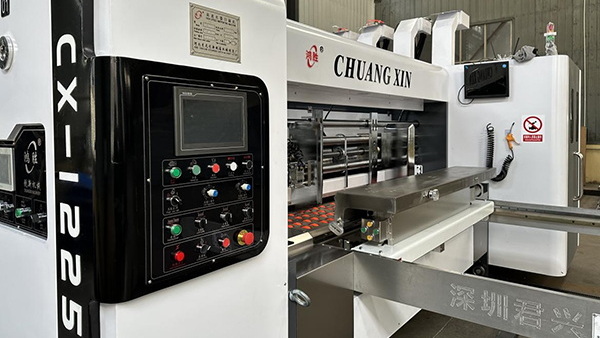
From a machine OEM and process engineer perspective, it is useful to define separate baseline pressure windows for three categories of board:
- High‑virgin content board (e.g., kraft liners with virgin softwood pulp)
- Can typically run with slightly higher blade loading before dust escalation, thanks to stronger fiber bonding and higher tear strength. [ippta]
- Mixed furnish board (virgin–recycled blends)
- Requires more cautious settings because the weakest zones (heavily recycled layers) define the actual limit for dust and fray. [pulmac]
- High‑recycled content board
- Needs lower normal force and very sharp blades; even small over‑loads tend to lift short fibers, causing visible edge fuzz and heavy lint. [bioresources.cnr.ncsu]
In practice, operators should treat these windows as grade recipes instead of chasing defects with random adjustments on the shop floor. [m.delishmachine]
When a plant shifts to higher recycled content, a structured adjustment method reduces guesswork:
1. Start with the lowest stable pressure that still maintains slit width and tracking.
2. Inspect the edges at slow speed, watching for fiber pull‑out, delamination and visible dust trails.
3. Increase pressure in small increments, holding line speed constant, and note the point where dust or fraying rises sharply.
4. Back off slightly from that threshold and lock this as the recycled‑grade baseline in the machine recipes.
5. Log the blade life and cleaning frequency, then refine the window based on dust data and downstream complaint records. [hykjgs]
This controlled approach helps avoid the typical pattern where operators continuously increase pressure to chase registration issues, only to trigger heavy dusting on recycled grades. [m.delishmachine]
With recycled‑rich board, blade condition becomes as critical as pressure because dull edges grab and tear rather than slice. [valmet]
Round thin blades with optimized bevel angles and frequent re‑grinding cycles reduce cutting energy and minimize the amount of fines released at the edge. [m.delishmachine]
Plants running high‑recycled furnishes often shift to shorter sharpening intervals and tighter wear limits; letting blades run too long increases dust exponentially even if pressure settings remain unchanged. [valmet]
Documented blade management, linked to specific fiber mixes and board grades, is a major factor in stabilizing slit quality across shifts. [m.delishmachine]
At higher speeds, the interaction time between blade and sheet decreases, which raises local stress and can amplify dust, especially on brittle recycled fibers. [ippta]
For sensitive grades, a moderate speed reduction during trials gives a clearer view of how much of the dust issue comes from pressure versus dynamic effects. [m.delishmachine]
Paper moisture also matters: recycled board that is too dry becomes stiffer and more crack‑prone, while slightly higher moisture improves flexibility and edge behavior under the blade. [ippta]
Balanced web tension and good guiding keep the sheet stable, preventing local over‑loads on one blade side that can cause asymmetric fraying. [valmet]
Consider a converter producing export cartons that moves from a mostly virgin kraft liner to a high‑recycled testliner to meet sustainability goals and reduce furnish cost. [twosides]
On unchanged thin‑blade settings, the plant reports a sudden rise in dust accumulation on machine guards, fuzzy edges on narrow slots, and more complaints of loose fibers in printed areas. [bioresources.cnr.ncsu]
An OEM‑supported audit reviews blade geometry, loading pressure, speed and tension across grades and finds that recycled liners are being slit at the same force and speed used for virgin‑based kraft. [m.delishmachine]
By lowering blade pressure, shortening sharpening intervals, and slightly reducing speed on the most sensitive grades, the plant brings dust levels and edge quality back within target ranges without sacrificing throughput on stronger board. [valmet]
The table below summarizes how each fiber type typically behaves at the slitter stand.
| Aspect | Recycled‑rich board behavior | Virgin‑dominant board behavior |
|---|---|---|
| Fiber length and damage | Shorter, more damaged fibers, higher fines generation (pulmac) | Longer fibers, less damage, lower fines generation (ippta) |
| Sheet strength and cohesion | Lower internal bonding, more sensitive to over‑pressure (pulmac) | Higher bonding and stiffness, more tolerant of loading changes (ippta) |
| Dust tendency at equal pressure | Higher dust and lint, especially at edges and flute tips (ippta) | Lower dust, smoother edges at comparable conditions (ippta) |
| Edge fraying and feathering | Frequent fiber pull‑out and fuzz if blade is dull or over‑loaded (pulmac) | Clean, glassy edges unless blade is severely worn (ippta) |
| Sensitivity to blade sharpness | Very high; dull blade quickly degrades quality (bioresources.cnr.ncsu) | Moderate; retains acceptable edges for longer intervals (bioresources.cnr.ncsu) |
| Sensitivity to moisture variations | High; dry sheets crack and dust more easily (ippta) | Lower; better tolerance to small moisture shifts (ippta) |
| Parameter stability over time | More variable due to inconsistent furnish and contaminants (pulmac) | More stable behavior across batches and shifts (ippta) |
This comparison highlights why operators should use different parameter recipes instead of assuming one pressure setting will work for all board types. [ippta]
To support machine crews running both recycled and virgin‑dominant boards on the same slitter, the following practical checklist can be embedded into work instructions:
- Identify the furnish type before setup and select the corresponding recipe (high‑recycled, mixed, or predominantly virgin).
- Set initial pressure at the low end of the defined window for recycled‑rich grades and gradually increase only as needed for edge definition.
- Check blade status and sharpening records; never start critical recycled jobs on a blade at the end of its life.
- Run a short trial at moderate speed, inspect slit edges and measure dust accumulation in designated sampling zones.
- Record final parameters (pressure, speed, tension, moisture) and link them to the specific board grade and supplier.
By making this checklist standard practice, plants reduce operator‑to‑operator variation and stabilize quality as fiber mixes change through the week. [m.delishmachine]
From the standpoint of a carton machinery manufacturer, several design features strongly support clean slitting on both recycled and virgin‑based boards:
- Fine‑resolution pressure regulators and load cells that allow small, repeatable adjustments across narrow ranges. [hykjgs]
- Stable web guiding and tension control, so operators do not compensate for mechanical instability with excessive blade loading. [valmet]
- Easy access for blade change and sharpening, encouraging shorter, more consistent blade life cycles on recycled grades. [bioresources.cnr.ncsu]
- Dust extraction and enclosure design around the slitter to keep airborne fines away from bearings, sensors and printing units. [ippta]
These elements make it easier for plants to maintain clean edges as their product mix evolves toward higher recycled content and more demanding print surfaces. [twosides]
For carton producers, switching between recycled‑heavy and virgin‑based board is no longer unusual, but the slitting strategy must reflect the real mechanical differences between these materials. [pulmac]
By pairing grade‑specific pressure windows with disciplined blade management and modern slitter design, plants can maintain low dust, sharp edges and stable downstream performance across their full fiber mix. [m.delishmachine]
For your own production lines, which board type currently causes more dust and edge fraying when you change orders on the thin‑blade slitter?
Q1: Why does dust increase so much when we switch to higher recycled content?
A1: Recycled fibers are shorter, more damaged and carry more fines and contaminants, so they break and chip more easily under the blade, especially if pressure and sharpness are not adapted. [pulmac]
Q2: Can the same thin‑blade geometry work for both recycled and virgin‑based boards?
A2: Yes, but recycled‑rich grades usually need sharper edges, shorter sharpening intervals and slightly lower loading to achieve comparable edge quality. [bioresources.cnr.ncsu]
Q3: How important is line speed compared with pressure in dust control?
A3: Both are important; high speed increases the dynamic stress at the cut, so many plants first optimize pressure at moderate speed, then increase speed while monitoring dust and fraying. [ippta]
Q4: Does moisture adjustment really help reduce edge fraying on recycled board?
A4: Within allowed limits, a slightly higher moisture level generally makes recycled board more flexible and less prone to cracking or dusting at the slitter. [bioresources.cnr.ncsu]
Q5: What data should we collect to improve our slitter recipes over time?
A5: Track fiber mix or supplier, board caliper, blade age, pressure, speed, tension, moisture and measured dust or complaint rates, then use this history to refine grade‑specific settings. [m.delishmachine]
1. Environmental Paper Network. "Comparing Recycled to Virgin Paper." [Link]
2. Pulmac. "Using Recycled Fiber Vs. Virgin Fibers – Challenges & Opportunities." 2022. [Link]
3. IPPTA. "Morphological Differences Between Virgin and Secondary Fibers." 2025. [Link]
4. Leeline Package. "Virgin vs. Recycled Pulp: Performance Guide." 2026. [Link]
5. IPPTA. "The Challenge of the Growth of Recycled Fiber Addition in Paper and Board." [Link]
6. Hubbe, M. "What Happens to Cellulosic Fibers During Papermaking and Recycling?" BioResources. [Link]
7. Delish Machine. "How to Reduce Raw Material Loss Through Slitter Parameter Adjustment?" 2025. [Link]
8. Valmet. "Make Slitter Adjustments Safely, Provide Better Paper Quality." 2020. [Link]
9. HYKJGS. "How to Adjust the Cutting Pressure of an Aluminum Slitter?" [Link]


