
Views: 264 Author: Ouye Carton Machinery Publish Time: 2026-07-01 Origin: Site


Content Menu
● Core Die Cutting Technologies and Their Accuracy
>> Rotary die cutting: Speed with high precision
>> Flatbed die cutting: Flexibility for thicker and complex jobs
>> Laser die cutting: Ultra-fine accuracy for intricate details
● Key Factors That Influence Cutting Accuracy
>> Material characteristics and board thickness
>> Die design, setup, and maintenance
>> Machine calibration and registration control
>> Production speed versus precision
● Why High Cutting Accuracy Matters for OEM and Brand Owners
>> Lower waste and better sustainability
>> Enabling complex and customized box designs
● Practical Steps to Improve Cutting Accuracy in Your Carton Plant
>> 1. Establish measurable tolerances and QA checkpoints
>> 2. Align machine speeds with board grade and complexity
>> 3. Standardize die maintenance and setup procedures
● Expert How Cutting Accuracy Influences Downstream Automation
● Frequently Asked Questions (FAQ)
When we talk about the cutting accuracy of an automatic die cutting machine, we are referring to how closely the actual cut matches the intended design dimensions on every box in the run. In carton converting, that accuracy is not just a metric on a spec sheet—it directly affects folding, gluing, stacking, and downstream packing efficiency. [chatterbuzzmedia]
For typical automatic die cutting machines used for corrugated and folding carton, the achievable tolerance is usually around 0.1–0.5 mm, depending on the technology (rotary, flatbed, or laser), board grade, and tooling condition. In practical terms, this means panel length, flap size, and slot positions stay within narrow limits even over long shifts, which is essential for OEM projects that require repeat orders and global shipping. [fonzy]
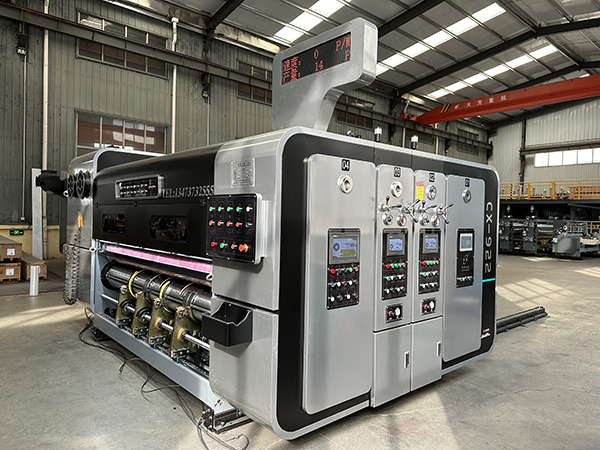
Rotary die cutting uses a cylindrical die mounted on a rotating drum to cut or crease the sheet as it passes through the nip. Because the motion is continuous and the web is supported throughout the cut, rotary systems are known for high speed and stable registration on long production runs. [magetop]
Typical cutting accuracy for modern rotary die cutters used on corrugated can be within about 0.1 mm under stable operating conditions. This is particularly important for high-volume packaging lines where line speed and repeat accuracy must be balanced—customers expect every batch of die-cut boxes to match previous orders exactly, especially when boxes feed automatically into case packers or palletizers. [quickcreator]
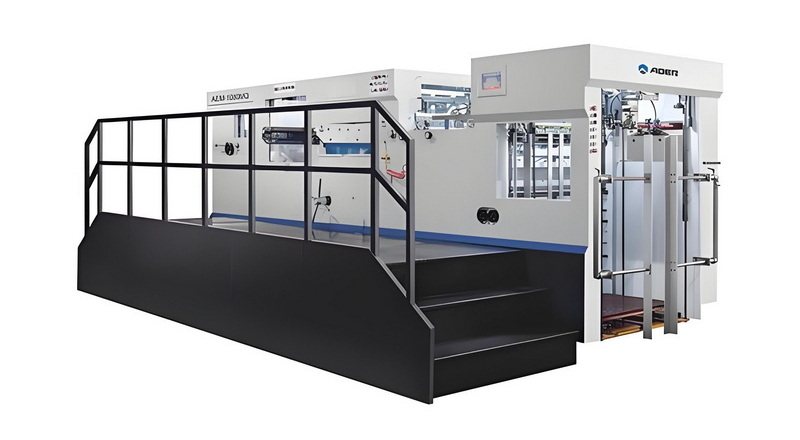
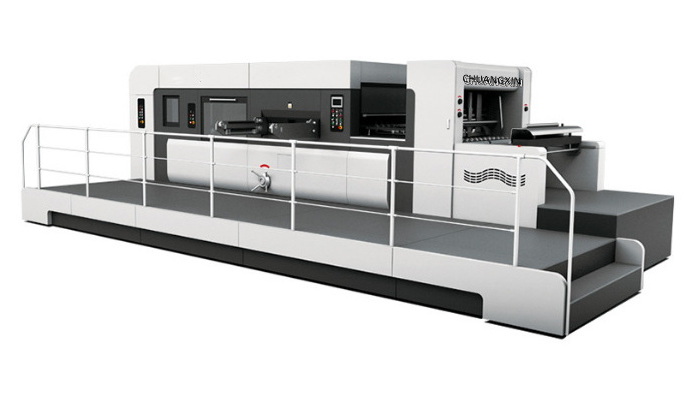
Flatbed die cutting uses a flat steel rule die pressed down against the sheet on a stationary bed. This technology is widely used for folding cartons, thicker corrugated boards, and jobs that require substantial pressure or complex combinations of cutting, creasing, and perforation. [quickcreator]
In production, flatbed automatic die cutters typically achieve tolerances around 0.2–0.5 mm, with the exact value depending on board thickness, die design, and press condition. For many box designs—especially retail-ready packs, display cartons, and multi-point glued boxes—this level of accuracy is more than sufficient to ensure smooth folding and neat edges. [chatterbuzzmedia]
Laser die cutting replaces physical tooling with a focused laser beam that cuts the sheet according to a digital design. The process is slower and usually more capital-intensive, but it is unmatched when you need extremely complex, intricate patterns or very tight tolerances. [quickcreator]
Well-configured laser systems can reach tolerances down to about 0.05 mm, allowing converters to produce unusual apertures, micro-perforations, and highly detailed branding elements on cartons. In practice, laser is chosen when design complexity or short-run flexibility outweighs the need for absolute top-end speed. [magetop]
Board grade and material thickness are among the most critical factors affecting cutting accuracy. Thicker corrugated boards or multi-layer constructions require more cutting pressure and are more sensitive to variations in flute consistency, moisture, and caliper. [quickcreator]
To maintain tight tolerances, experienced operators will usually:
- Adjust impression settings and cutting pressure based on board grade. [quickcreator]
- Monitor moisture content and storage conditions of sheets and blanks. [chatterbuzzmedia]
- Use appropriate make-ready materials and support plates to stabilize cutting.
Inconsistent thickness or warped sheets can easily push the real-world tolerance beyond the theoretical 0.1–0.5 mm range if not properly controlled. [quickcreator]
The condition and alignment of the die are central to precision. Over time, steel rules can wear, bend, or lose edge sharpness; wooden or composite die boards can swell or shrink; mounting points can loosen. [quickcreator]
For accuracy-focused plants, best practices typically include:
- Regular inspection of cutting rules, creasing rules, and nicks. [quickcreator]
- Precision alignment of the die on the chase or cylinder using calibrated tools. [quickcreator]
- Scheduled replacement of heavily used dies on critical SKUs, rather than waiting for visible defects. [chatterbuzzmedia]
Even a small misalignment or worn rule can cause cumulative deviations that show up as panel length errors, flap mismatch, or poor stacking. [quickcreator]
Automatic die cutting machines rely on precise calibration and registration systems to ensure that every sheet is presented to the die at the correct position and timing. Over long runs, minor drift in sensors, servo systems, or mechanical drives can erode accuracy. [chatterbuzzmedia]
To prevent this, operators typically:
- Perform calibration before major production runs, especially after format changes or maintenance. [quickcreator]
- Check sheet feeding systems (side lays, front lays, belts) for wear and contamination that may affect registration. [quickcreator]
- Use periodic sampling and measurement to confirm that dimensional tolerances remain within specification during the run. [fonzy]
Where available, modern automatic die cutters integrate digital controls and closed-loop feedback that help maintain stable registration at higher speeds. [magetop]
Increasing machine speed can boost output, but it also raises mechanical and dynamic stress on the sheet, die, and feeding system. At higher speeds, even small vibrations or sheet slippage can translate into dimensional variability. [quickcreator]
For quality-focused converters and OEM suppliers, the target is usually a balanced operating window:
- Fast enough to keep unit cost competitive.
- Slow enough to keep tolerance within the required 0.1–0.5 mm range and minimize rework. [fonzy]
From a customer's perspective, a slightly lower speed with stable accuracy is often preferred over maximum throughput with variable box geometry that might cause issues on automated packaging lines. [chatterbuzzmedia]
The most visible benefit of accurate die cutting is consistent box quality across batches and repeat orders. When tolerances are kept tight, flaps align properly, glue tabs overlap as designed, and assembled boxes hold their shape and stacking performance. [quickcreator]
For OEM customers and international brand owners, this consistency is critical because:
- Packaging must fit automated filling and packing equipment without frequent adjustments. [chatterbuzzmedia]
- Global shipments must arrive with cartons that meet agreed dimensions and stacking requirements. [fonzy]
- Visual quality—clean edges, straight folds, uniform print registration—impacts perceived brand value.
Precision die cutting reduces material waste, as sheet layout and nesting can be optimized with minimal allowance for mis-cuts. Over time, that means more usable boxes per tonne of corrugated board and fewer rejects. [quickcreator]
This supports both cost and sustainability goals:
- Lower waste disposal and rework costs for converters and factories. [quickcreator]
- Better utilization of fiber resources, reinforcing customers' sustainability and packaging efficiency narratives. [magetop]
As packaging becomes an extension of brand identity, many customers ask for complex shapes, windows, and structural features that stand out on shelf or improve logistics. High cutting accuracy allows converters to provide these advanced designs without trading off functional performance. [magetop]
Examples include:
- Display-ready cartons with built-in tear-off fronts and locking tabs.
- E-commerce boxes with safety locks, easy-open features, and integrated inserts. [fonzy]
- Multi-part packaging solutions where several die-cut components must fit together precisely.
From an on-the-floor perspective, there are several practical steps that operators and managers can take to maintain or improve die cutting accuracy.
Start by defining clear dimensional tolerances for each key box parameter—panel length, box height, flap length, slot position, and crease-to-cut distances. Document these tolerances on job cards and internal specifications. [quickcreator]
Then, build a simple QA routine:
1. Measure samples at machine start-up and after each major adjustment.
2. Record values and compare them to specified tolerances.
3. Stop and investigate if measurements drift beyond the defined range. [chatterbuzzmedia]
Consistent sampling helps detect issues early, before entire pallets of boxes need to be reworked or scrapped.
Avoid running every job at the maximum possible speed. Instead, set speed guidelines per board grade and job complexity. For fragile or high-precision jobs—such as complex die-cut displays or small-format boxes—run at slightly reduced speeds to keep tolerances stable. [quickcreator]
It is often helpful to:
- Note "recommended speed ranges" on job sheets for recurring SKUs.
- Capture operator feedback on how different grades behave at various speeds.
- Coordinate with planning teams to schedule critical accuracy jobs at times when maintenance and supervision are fully available. [chatterbuzzmedia]
Create a standard operating procedure (SOP) for die maintenance, setup, and storage. This might include: [quickcreator]
- Visual and dimensional inspection of rules and creases before each run.
- Cleaning and rust prevention for steel rules and back plates.
- Correct storage to prevent warping or mechanical damage. [quickcreator]
Companies that treat their tooling as a strategic asset typically see fewer deviations, less downtime, and more stable tolerances over time. [fonzy]
From a user-experience point of view in modern factories, high-precision automatic die cutting is an invisible but essential enabler of downstream automation. When boxes are dimensionally stable:
- Case packers and cartoners can operate at higher speeds with fewer jams or micro-stoppages.
- Robotic palletizers can rely on predictable box sizes for efficient stacking patterns and safe load stability.
- Warehouse and logistics teams can optimize pallet heights and container loading more confidently. [chatterbuzzmedia]
In contrast, poor cutting accuracy shows up indirectly:
- Operators spend more time tweaking guides and rails on filling and packing equipment.
- Mixed dimensional tolerances cause skewed stacks, bulging loads, and higher risk of damage.
- Quality teams receive more complaints from downstream users who are not even aware that die cutting is the root cause.
For OEM and brand-owner partnerships, demonstrating controlled cutting accuracy with documented tolerances and QA data is a powerful trust signal that supports long-term contracts and higher-value projects. [fonzy]
Automatic die cutting machines—whether rotary, flatbed, or laser—are capable of delivering precision in the 0.1–0.5 mm range for most carton and corrugated applications. Achieving and maintaining this accuracy requires attention to material selection, die design and maintenance, machine calibration, and a balanced approach to speed. [fonzy]
For OEM customers, brand owners, and packaging buyers, working with a factory that treats cutting accuracy as a measurable, controlled parameter is the key to stable quality, reduced waste, and reliable automation performance. If your current packaging supply chain struggles with dimensional consistency, it may be time to review your die cutting standards—or to partner with a plant that can demonstrate proven cutting accuracy and robust quality control. [chatterbuzzmedia]
If you are evaluating new carton packaging equipment or looking for a die-cut box OEM partner, consider visiting our factory, reviewing our sample boxes, and discussing your tolerance requirements with our engineering team—this is the fastest way to align equipment capability with your real production needs.
Q1: What cutting tolerance is acceptable for most corrugated shipping boxes?
For typical corrugated shipping boxes, tolerances in the range of 0.2–0.5 mm are usually acceptable and sufficient to ensure proper fit and stacking. [quickcreator]
Q2: When should I consider laser die cutting instead of rotary or flatbed?
Laser die cutting is most valuable for short runs, highly intricate designs, or ultra-fine apertures, where tolerances down to about 0.05 mm and complex shapes justify the higher cost. [quickcreator]
Q3: How often should die cutting machines be calibrated to keep accuracy stable?
Calibration frequency depends on production intensity, but many plants calibrate before major runs or after format changes, and perform a more comprehensive check on a weekly or monthly basis. [chatterbuzzmedia]
Q4: Can high machine speed always be combined with top-level accuracy?
Not always. Very high speeds can introduce vibration and sheet handling issues; precision-focused plants usually find an optimal speed window where throughput and dimensional stability are both acceptable. [quickcreator]
Q5: What data should converters share with OEM clients to prove cutting accuracy?
Converters can share tolerance specifications, QA sampling records, and dimensional measurement reports for representative batches, along with information about their die maintenance and calibration procedures. [fonzy]
1. Dongsheng Carton Machine – "What is the cutting accuracy of an automatic die cutting machine when making die-cut boxes?" (Jul. 22, 2025).
[https://www.dongshengcartonmachine.com/news/what-is-the-cutting-accuracy-of-an-automatic-die-cutting-machine-when-making-die-cut-boxes.html] [quickcreator]
2. Fonzy.ai – "SEO Playbook for Packaging Manufacturers."
[https://www.fonzy.ai/playbooks/seo/specialized-b2b/packaging-manufacturers] [fonzy]
3. Magetop – "How SEO Can Transform the Packaging Industry: A Guide for Manufacturers."
[https://www.magetop.com/blog/how-seo-can-transform-the-packaging-industry-a-guide-for-manufacturers/] [magetop]
4. ChatterBuzz Media – "Manufacturing SEO: The Complete Guide to Ranking for Industrial Manufacturers."
[https://www.chatterbuzzmedia.com/guide/manufacturing-seo/] [chatterbuzzmedia]
5. Google Search Central – "Creating Helpful, Reliable, People-First Content."
[https://developers.google.com/search/docs/fundamentals/creating-helpful-content] [developers.google]


