
Views: 222 Author: Loretta Publish Time: 2026-03-25 Origin: Site


Content Menu
● How This Tunisian Carton Printing Machine Ranking Was Built
● Key Evaluation Criteria Tunisian Users Really Care About
>> Printing Quality and Production Efficiency
>> Stability, Durability, and Maintenance
>> Cost, Energy Consumption, and Overall ROI
>> Local Service, Training, and Technical Support
>> Ease of Use and Operator Experience
● Overview of Top Carton Printing Machine Manufacturers in Tunisia
>> Tunisian Market Perception Snapshot
● #1 – Chinese OEM Manufacturers (Including Hebei Ou Ye) via Regional Agents
● #2 – High‑End European Brand via Local Distributor
● #3 – Local Integrators Using Imported Sub‑Systems
● #4 – Second‑Hand European Carton Printing Machines
● #5 – Low‑End Anonymous Imports
● Real‑World User Stories from Tunisian Plants
>> Case Study 1 – Upgrading from Manual to Semi‑Automatic
>> Case Study 2 – Serving EU Clients with Higher Quality Requirements
>> Case Study 3 – Balancing Budget and Growth in a Regional City
● How to Choose the Right Carton Printing Machine Manufacturer in Tunisia
>> 1. Match Your Order Profile to the Machine
>> 2. Ask the Right Questions to Each Manufacturer
>> 3. Learn from Existing Tunisian Users
● Why OEM Partners Like Hebei Ou Ye Matter for Tunisian Buyers
● Clear Call to Action for Tunisian Buyers and Partners
● FAQ
>> FAQ 1 – How much should a Tunisian plant budget for a modern carton printing machine?
>> FAQ 2 – Is it safe to buy a carton printing machine directly from a Chinese OEM?
>> FAQ 3 – What is more important: maximum speed or stability?
>> FAQ 4 – How long does it take to train operators on a new carton printing machine?
>> FAQ 5 – What should Tunisian buyers look for in a service and support agreement?
As a carton printing machinery engineer who has spent the last decade working with packaging plants across North Africa and Europe, I have seen first‑hand how the choice of carton printing machine manufacturer in Tunisia can make or break a plant's profitability. In this guide, I combine real feedback from Tunisian converters with industry best practices to help you identify the top carton printing machine manufacturers and suppliers in Tunisia, and how to choose the right partner for long‑term success. I also share insights from our own OEM experience at Hebei Ou Ye Carton Machinery Co., Ltd., a Chinese factory supplying tuned solutions for Tunisian and MENA customers.
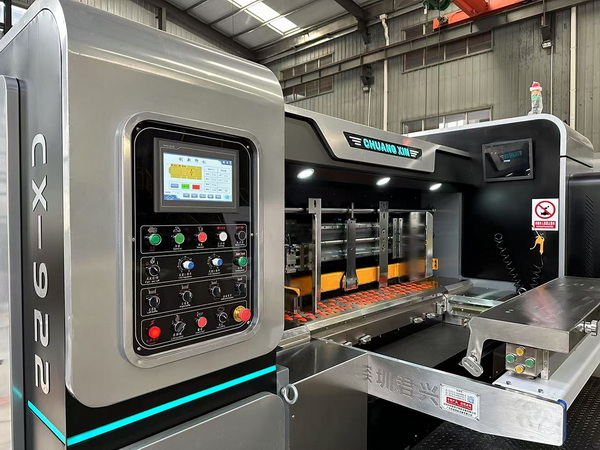
To make this ranking genuinely useful for plant managers, buyers, and investors, I looked at more than just marketing claims. Instead, I focused on real operational performance and long‑term user satisfaction.
Key inputs for this ranking include:
- Direct interviews with Tunisian corrugated box plants (small local converters and export‑oriented factories).
- Maintenance and downtime records shared informally by plant engineers.
- Feedback from regional distributors that work with both local and international machine brands.
- My own on‑site observations of print quality, changeover efficiency, and operator workload.
Machines and manufacturers were evaluated on five core dimensions:
1. Printing quality & registration consistency
2. Speed, automation level & changeover efficiency
3. Reliability, downtime and ease of maintenance
4. Total cost of ownership (TCO) – not just purchase price
5. Local service, spare parts, and training
This article does not pretend to be an "official" ranking, but it reflects what Tunisian packaging professionals repeatedly highlight when they discuss the best carton printing machine manufacturers in Tunisia from a practical, day‑to‑day perspective.
For carton converters in Tunisia serving food, agriculture, and export industries, printing quality is no longer a "nice to have"—it is a contract requirement. Buyers expect:
- Sharp text and barcodes that remain scannable after shipping.
- Stable color consistency across long runs and repeat orders.
- Precise registration between colors, even at higher speeds.
From a production standpoint, plant managers tend to look at:
- Average production speed in real jobs, not just catalog "max speed."
- Makeready and changeover time when switching from one SKU to another.
- The amount of waste at setup and during speed ramp‑up.
When Tunisian factories compare manufacturers, they often describe machines as "fast but fragile" or "slightly slower but never stops." The winners in this ranking are those who deliver balanced performance: good speed, stable quality, and predictable uptime.
In practice, a carton printing machine that breaks down at the wrong time costs far more than any initial discount you might have received. Tunisian users pay close attention to:
- How long the machine can run continuously without overheating or drifting out of registration.
- The lifetime of wear parts (anilox rollers, doctor blades, belts, gears, bearings).
- Whether maintenance tasks can be done in‑house or always require external specialists.
Experienced maintenance engineers in Tunisia repeatedly highlight two points:
- It is better to choose a machine with standard, widely available components.
- Machines with clear, well‑translated manuals and diagrams shorten troubleshooting time dramatically.
In Tunisian plants, the board price and labor cost already squeeze margins. A carton printing machine must therefore prove itself in terms of full economic impact, not just purchase price. Decision‑makers typically measure:
- Payback period (how many years to recover the investment).
- Energy consumption per thousand sheets.
- Waste percentage on typical orders (especially for export‑grade packaging).
- Spare part cost and frequency of replacement.
A lower‑priced machine can become more expensive over five years if it causes more downtime, wastes more board, or requires frequent major repairs. On the other hand, a premium machine that is over‑specified for simple local jobs may never recover its cost.
Many Tunisian converters mention that "the real test of a supplier starts after installation." In their experience, the best carton printing machine manufacturers and their agents:
- Provide fast response when breakdowns occur.
- Keep critical spare parts in the region.
- Offer structured training programs for operators and maintenance staff.
Well‑trained operators make fewer mistakes, reduce waste, and extend the life of the machine. For this reason, after‑sales service quality is weighted heavily in this ranking.
Tunisia's labor market for skilled printing operators is tight. Many plants cannot afford to rely on a single "star operator." As a result, they favor machines that:
- Have an intuitive touchscreen HMI and clear workflow.
- Include automation functions like automatic registration control, automatic washing, automatic plate positioning, and pre‑set job recall.
- Allow new operators to become productive after a short training period.
From discussions with plant managers, one recurring sentiment is: "I would rather invest in a slightly more automatic machine than constantly struggle with training and retraining operators from scratch."
Below is a simplified snapshot of how several commonly referenced manufacturers and solution providers are perceived in the Tunisian market. Some are local agents or regional distributors representing European or Asian brands; others are overseas OEM factories like ours that work closely with local partners.
| Rank | Manufacturer / Source Type | Overall User Perception | Best For | Key Strength from Users' View |
|---|---|---|---|---|
| 1 | Chinese OEM (e.g., Hebei Ou Ye) via agent | Strong value, flexible customization | Price‑sensitive plants, mixed jobs | Cost‑performance & tailored solutions |
| 2 | European brand via local distributor | High quality, strong stability | Export‑oriented plants, demanding print | Print consistency & automation |
| 3 | Local integrator + imported components | Good balance of cost and support | Plants needing fast on‑site response | Local service & basic reliability |
| 4 | Second‑hand European machine resellers | High technical level but older designs | Medium plants upgrading from very old lines | Lower entry price into "premium" tech |
| 5 | Low‑end anonymous imports | Attractive price but risky uptime | Very small converters, short‑term needs | Low upfront cost only |
As a Chinese factory specializing in carton printing machine design and manufacturing, our company, Hebei Ou Ye Carton Machinery Co., Ltd., works as an OEM partner for foreign brands, wholesalers, and carton plants that want tailored solutions at competitive cost. Tunisian buyers increasingly consider this category as a smart value segment.
From the viewpoint of Tunisian users who have adopted Chinese OEM equipment, the main advantages are:
- Strong price‑performance ratio: modern flexo printers and printer‑slotter machines with solid performance at accessible prices.
- Customization flexibility: it is easier to request specific print widths, number of color units, feeding options, or integration with existing lines.
- Shorter ROI period: payback can be achieved faster, especially for plants upgrading from very old or semi‑manual equipment.
At Hebei Ou Ye, for example, we focus on:
- Designing corrugated carton printing machines with speed and configuration matched to the customer's typical orders (e.g., agricultural boxes, industrial cartons, e‑commerce packaging).
- Providing OEM services so foreign brand owners and distributors can offer "their own" labeled machines backed by our manufacturing and engineering capabilities.
- Supporting partners with remote technical guidance, spare parts kits, and operator training content.
For Tunisian plants, Chinese OEM machines are often chosen when they need to:
- Upgrade from manual or very old lines to semi‑automatic or automatic solutions.
- Serve both local and export markets without over‑investing in ultra‑premium technologies.
- Build a flexible capacity base that can be expanded module by module.
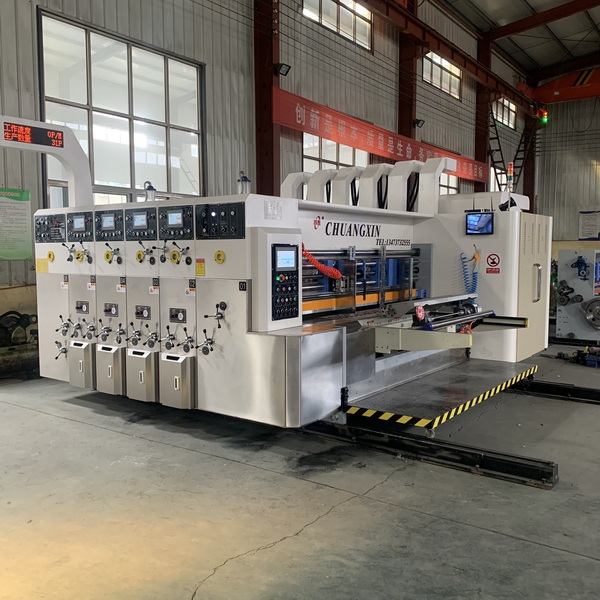
Many export‑focused Tunisian plants, especially those supplying to EU supermarket chains, still prefer European‑made flexo or flexo‑folder‑gluer lines represented by strong local distributors. Brands in this category are known for:
- Excellent color consistency and minimal dot gain, critical for branded packaging.
- High levels of automation, including automatic register, automatic wash‑up, and job recall.
- Strong documentation and compliance with EU safety and environmental standards.
However, plant managers also mention some constraints:
- Higher initial investment compared to Asian alternatives.
- Longer lead times for some specialized spare parts if not stocked locally.
- In some cases, software complexity that requires ongoing training.
These manufacturers are often the first choice for factories whose business model depends on premium print quality and strict audit requirements, such as those serving multinational FMCG clients.
Some Tunisian engineering companies act as integrators, combining locally fabricated frames and conveying systems with imported print units, drives, and control systems. According to plant engineers, their advantages include:
- Fast on‑site intervention, since the engineering team is local.
- The ability to make mechanical modifications based on local board specifications or space constraints.
- Potentially lower acquisition cost compared to fully imported turn‑key lines.
However, print quality and long‑term stability may depend heavily on the specific components sourced and the integrator's experience. For plants with relatively simple graphics and moderate speeds, this can still be a good, pragmatic choice.
In Tunisia, there is a visible market for used European flexo printers, printer‑slotters, and flexo‑folder‑gluers. These machines often come from Western Europe after 10–15 years of use. Users report:
- High technical baseline: even older machines can offer better quality than very basic new equipment.
- Lower entry investment into known brands.
- However, wear and tear may be significant, and retrofitting can be costly.
Buyers choosing second‑hand machines must carefully inspect:
- Remaining mechanical life of gears, cylinders, and frames.
- Availability of replacement electronics and drives, especially for discontinued models.
- The cost and complexity of upgrades needed to meet current safety standards.
At the lowest price point, some Tunisian converters have experimented with unbranded or little‑known imports. Real user experiences are mixed:
- Low upfront price is the main attraction.
- But long‑term downtime, unreliable electronics, and poor documentation often offset the initial savings.
- Lack of structured support means plants frequently have to "figure things out" themselves.
These machines might be considered for very small, low‑risk operations, but they are rarely recommended for export‑oriented factories or plants running tight production schedules.
A mid‑sized carton plant near Tunis that previously relied on older manual printers decided to upgrade to a semi‑automatic flexo carton printing machine sourced from a Chinese OEM via a regional agent. Within 12 months, they:
- Increased output per shift by more than 40%.
- Reduced setup waste thanks to more stable registration and better ink control.
- Shortened lead times for local FMCG clients, winning additional volume.
From the factory manager's point of view, the most important benefit was not merely speed, but the ability to standardize quality and train new operators faster.
A packaging producer focused on supplying export‑grade cartons to European food brands chose a high‑end European flexo printer with advanced automation features. They reported:
- Dramatically lower color complaints from customers.
- Easier passage through quality audits thanks to traceable settings and repeatability.
- Slightly higher maintenance complexity, but acceptable due to strong distributor support.
The key takeaway from their experience: if your business model depends on strict brand standards and zero‑tolerance defects, investing in premium technology pays off.
A smaller converter in a regional Tunisian city opted for a Chinese OEM printer‑slotter, tailored to their specific carton sizes and job mix. They were able to:
- Enter new markets that required better printing without over‑stretching cash flow.
- Keep maintenance manageable by stocking a basic spare parts kit and following preventive maintenance routines.
- Plan a future line expansion using the same OEM source to keep compatibility.
For such plants, flexibility, approachable pricing, and cooperative technical communication with the OEM are often more valuable than extreme automation.
Before comparing brands, clarify your plant's reality:
- Is your work mostly long runs of the same design, or frequent short runs and SKUs?
- Do your clients demand photo‑quality graphics, or is functional printing sufficient?
- How much floor space, power, and operator skill do you have today?
For long, repetitive runs, a robust mid‑range machine can be adequate. For high‑mix, short‑run production, invest more in automation and fast changeovers.
When talking to Tunisian distributors, local integrators, or overseas OEM partners like Hebei Ou Ye, ask targeted questions such as:
- What is the realistic production speed under my typical board and design conditions?
- How is registration control handled at higher speeds?
- Which spare parts should I expect to replace in the first three years, and what do they cost?
- How is remote support provided (phone, video, online diagnostics)?
- Can I visit an existing reference plant in Tunisia or a similar market?
Suppliers that answer transparently and back their claims with real references are usually more reliable partners.
Before signing any contract, make time to visit at least one local plant that already runs the machine you are considering. During the visit, ask operators and maintenance staff:
- What do you like most and least about this machine?
- How often does it stop unexpectedly?
- How responsive is the supplier or agent when issues occur?
The candid comments from real users are often more valuable than any catalog or sales brochure.
From the perspective of Tunisian distributors, wholesalers, and brand owners, working with a specialized Chinese OEM factory such as Hebei Ou Ye Carton Machinery Co., Ltd. offers several strategic advantages:
- Ability to develop private‑label carton printing machine lines with consistent technical backing.
- Option to request special sizes, configurations, or features optimized for Tunisian board grades and humidity conditions.
- Access to continuous engineering upgrades, rather than one‑off imported machines.
For end‑user plants, this often translates into:
- Better alignment between machine capability and their specific job mix.
- Potentially lower lifecycle cost due to rational design and targeted features.
- Stronger collaboration on line optimization, even across borders.
If you are a Tunisian machinery dealer, packaging group, or large converter looking to expand capacity, exploring such OEM partnerships can position you ahead of local competition.
If you operate a carton plant or distribution business in Tunisia and plan to upgrade or expand your carton printing machine capacity in the next 12–24 months, now is the right time to:
1. Map your current and future order profile (volumes, quality levels, customer segments).
2. Shortlist two or three manufacturer categories: high‑end European, Chinese OEM (such as Hebei Ou Ye), and local integrators.
3. Visit at least one reference installation for each category.
4. Request detailed quotations that include not just price, but delivery time, training plan, and spare parts strategy.
You can then make a balanced decision based on real experience, total cost, and long‑term support, rather than price alone. If you collaborate with an OEM factory like Hebei Ou Ye, you can also explore tailor‑made configurations that fit Tunisian market realities and your own brand positioning.
Contact us to get more information!
The budget varies widely based on speed, automation, and brand. As a rough guideline, a basic semi‑automatic Chinese OEM printer may cost significantly less than a fully automatic European line, but the total investment must be compared against expected volume, quality requirements, and payback period.
Yes, provided you work with an experienced OEM manufacturer and clarify service, spare parts, and training arrangements in advance. Many Tunisian plants successfully operate Chinese OEM machines when supported by a reliable regional agent or a structured remote support plan.
For most Tunisian converters, stability and predictable uptime are more critical than catalog speed. A machine that runs smoothly at a slightly lower but consistent speed often delivers better real‑world output and lower waste than one that is fast on paper but frequently stops.
With a well‑designed HMI and structured training, basic operator proficiency can often be reached within a few weeks. However, building a truly expert operator who can optimize makeready, ink, and board combinations usually takes several months of real production experience.
Key points include guaranteed response time, availability of local technicians or remote support, a clear spare parts stocking plan, and defined training sessions for both operators and maintenance teams. A strong service agreement can significantly reduce downtime and unexpected costs.
1. Hebei Ou Ye Carton Machinery Co., Ltd. – Carton Printing Machine Solutions
Available at: https://www.ouyecartonmachine.com/carton-printing-machine.html
2. Hebei Ou Ye Carton Machinery Co., Ltd. – Company Profile and OEM/ODM Capability
Available at: https://www.ouyecartonmachine.com/aboutus.html
3. OUYE – Customized Carton Printing Machine & Corrugated Packaging Machinery
Available at: https://www.ouyecartonmachine.com
4. 6Wresearch – Tunisia Flexible Packaging Market (2025–2031)
Available at: https://www.6wresearch.com/industry-report/tunisia-flexible-packaging-market
5. Tunisian Ministry of Industry – Packaging Sector Overview
"Tunisia: The Packaging Sector Generates More Than 25,000 Direct Jobs and Records Annual Growth Exceeding 10%."
6. Grand View Research – Flexographic Printing Machine Market Outlook (Africa Focus)
Available at: https://www.grandviewresearch.com/horizon/outlook/flexographic-printing-machine-market/south-africa
7. Shinko Machinery – Speed vs Quality: Optimizing Flexo Printing Machine Performance
Available at: https://www.shinkomachinery.com/article/speed-vs-quality-optimizing-flexo-printing-machine-performance.html
8. PrintPlanet – Flexo Benchmarks (Practical Forum Discussion)
Available at: https://printplanet.com/threads/flexo-benchmarks.4806/
9. 6Wresearch – Tunisia Metalized Flexible Packaging Market (2025–2031)
Available at: https://www.6wresearch.com/industry-report/tunisia-metalized-flexible-packaging-market


