
Views: 222 Author: Ouye Carton Machinery Publish Time: 2026-06-08 Origin: Site


Content Menu
● Understanding Telescope-Style Heavy-Duty Boxes
● What Is an Integrated Slotting Die-Cutting Workflow?
● What Is a Secondary Cutting Workflow?
● Where Integrated Lines Shine for Telescope-Style Boxes
>> Dimensional accuracy and registration
>> Throughput and cost efficiency
>> Structural integrity for heavy-duty use
● Where Secondary Cutting Still Plays a Role
>> Existing equipment constraints
● Integrated vs Secondary: Key Workflow Differences
● Industry Data: Why Integration Is Rising
● Expert Workflow Framework for Telescope-Style Boxes
>> 1. Analyze structural risk and load
>> 2. Assess volume and SKU stability
● How Hebei Ou Ye's Machines Fit the Picture
● Practical Setup Example: Integrated Line for Telescope Boxes
● UX Perspective: Line Operators and End Users
● Recommended CTA for Hebei Ou Ye
● FAQs
Integrated slotting die-cutting is usually the best workflow for complex telescope-style heavy-duty boxes because it minimizes handling, preserves dimensional accuracy, and shortens lead times, while secondary cutting still makes sense for ultra-complex structures, very short runs, or lines with legacy constraints. For a plant like Hebei Ou Ye Carton Machinery Co., Ltd., the optimal strategy is often a hybrid: design around integrated printer–slotter–die-cutter capability, then reserve secondary cutting for niche, high-mix jobs where flexibility outweighs throughput. [dongshengcartonmachine]
Telescope-style heavy-duty boxes are multi-piece corrugated structures where one tray or shell telescopes over another to provide double- or triple-wall stacking strength and edge protection. They are widely used for industrial spare parts, automotive components, large appliances, and export shipments that face repeated handling and long transit cycles. [gentlever]
Because the top and bottom pieces must mate precisely, their print registration, slot positions, and die-cuts must be tightly controlled across multiple machine passes. Even small dimensional drift can cause interference during telescoping, leading to deformation, poor palletization, or returns. [soonpak]
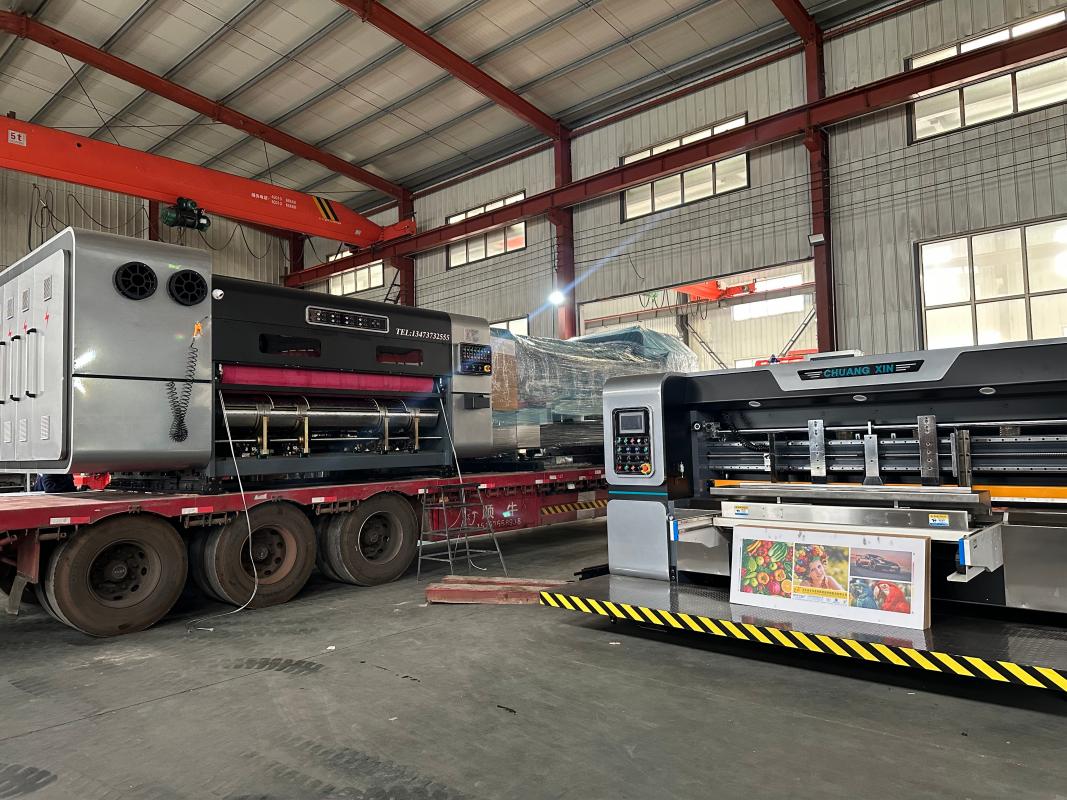
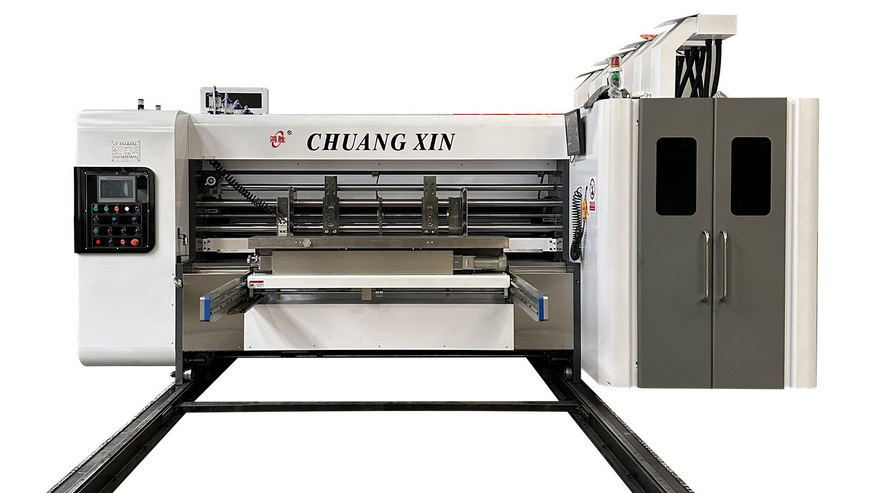
In an integrated workflow, a carton printing, slotting, and die-cutting machine performs printing, slotting, creasing, and die-cutting in a single in-line pass on corrugated sheets. These machines are often referred to as printer–slotter–die-cutter systems or complete corrugated converting lines. [futuremarketinsights]
Material enters as printed or unprinted board and exits as finished, slotted, and die-cut blanks ready for folding and gluing, minimizing intermediate storage and manual transfer. Many modern lines combine flexo printing, rotary die-cutting, and advanced slotter sections, allowing both standard RSC and complex die-cut boxes to be produced on the same machine. [sunautomation]
Secondary cutting means that printing and basic slotting occur on a primary machine, while complex shapes and finishing are done later on a separate die-cutter or flatbed press. In this route, blanks may be stacked, moved, and re-registered before final cutting or perforation operations. [gentlever]
Secondary steps can include flatbed die-cutting, digital cutting tables, or offline rotary systems dedicated to specific designs or low-volume runs. This layered approach is common in plants with a mix of legacy equipment, very varied job profiles, or specialized post-processing (e.g., large apertures, hand holes, vents). [customboxeslane]
For telescope-style heavy-duty boxes, integrating slotting and die-cutting with printing offers several structural and economic advantages. Below is a practitioner-oriented breakdown from an E-E-A-T perspective. [dongshengcartonmachine]
- A single pass reduces cumulative tolerance stack-up between printing, slotting, and die-cutting, which is critical for mating top and bottom pieces. [soonpak]
- Rotary die-cutting in-line with flexo printing can maintain consistent repeatability across long runs, ensuring each lid fits its base with minimal variation. [bwpapersystems]
- Integrated machines reduce material touches, WIP inventory, and re-handling time, improving OEE and line throughput. [ocmeusa]
- With fewer setups and transfers, cost per thousand boxes drops, especially in medium-to-high volume telescope box programs. [futuremarketinsights]
- Because creasing and cutting happen under stable tension and alignment, the risk of crushed flutes or misaligned scores—common failure modes for heavy-duty export boxes—is reduced. [bwpapersystems]
- Inline quality control systems can reject defective sheets immediately, avoiding costly rework once boxes are formed. [ocmeusa]
Despite clear benefits, secondary cutting remains relevant for certain telescope-style box scenarios. [gentlever]
- Ultra-deep cutouts, removable inserts, or variable-depth telescoping features can be too complex to combine with standard in-line slotting, especially on older integrated lines. [customboxeslane]
- Flatbed or digital cutters give designers more freedom for structural innovation without compromising the main line's stability. [soonpak]
- For short runs, setting up an integrated line for highly unique designs can be inefficient, making a dedicated offline die-cutter more economical. [gminsights]
- Secondary cutting provides flexibility for frequent design changes or pilot projects while the main integrated line handles core SKUs. [lantech]
- Many plants still operate with standalone printing presses and slotters, complemented by separate die-cutters; in such cases, a phased approach using secondary cutting avoids major capex shocks. [gminsights]
- When board formats or thicknesses exceed the integrated machine's optimal window, secondary lines tuned for heavy board can handle those niche jobs. [bwpapersystems]
Operational comparison for telescope-style heavy-duty boxes
| Dimension | Integrated slotting & die-cutting | Secondary cutting workflow |
|---|---|---|
| Number of passes | Single in-line pass for print, slot, die-cut (dongshengcartonmachine) | Multiple passes across different machines (soonpak) |
| Registration risk | Lower, all processes synchronized (dongshengcartonmachine) | Higher due to stacking and refeeding (soonpak) |
| Throughput | High, ideal for repeat programs (dongshengcartonmachine) | Moderate to low, depends on handling (soonpak) |
| Setup flexibility | Strong for defined SKU families (dongshengcartonmachine) | Strong for experimental or custom designs (gentlever) |
| Labor intensity | Reduced manual handling and WIP (ocmeusa) | Higher labor for transfer and QC (ocmeusa) |
| Capex profile | Higher upfront, lower per-unit cost (futuremarketinsights) | Lower incremental capex, higher per-unit cost for volume (gminsights) |
| Box strength protection | Better control of creases and flutes (bwpapersystems) | More risk of board damage from extra handling (soonpak) |
Global data shows a structural trend toward integrated converting solutions in corrugated packaging. [futuremarketinsights]
- The corrugated box printer slotter machine market was valued around USD 1.40 billion in 2025 and is projected to reach approximately USD 2.27 billion by 2036, with a CAGR near 4.5%. [futuremarketinsights]
- Broader die-cutting equipment markets are also projected to grow from about USD 1.9 billion in 2026 to roughly USD 3.0 billion by 2035, reflecting continued investment in advanced converting lines. [gminsights]
At the same time, niche demand for flexible, often digital, secondary die-cutting systems persists, especially for custom packaging and short-run campaigns. This reinforces the idea that the future-proof strategy is not either/or, but a calibrated mix of integrated and secondary capability. [customboxeslane]
From a plant engineering and UX-oriented perspective, a practical decision framework helps you pick the right workflow for each SKU family. [ocmeusa]
- For high stacked-load requirements, export shipments, or multi-use industrial boxes, prioritize workflows that protect flute integrity and minimize manual handling. [bwpapersystems]
- Boxes that will be re-opened, resealed, or reused benefit from consistent crease depth and slot geometry, which integrated lines deliver more reliably. [soonpak]
- Stable, repeat telescope designs with annual volumes above a defined threshold (e.g., >50,000 sets) are strong candidates for integrated in-line production. [dongshengcartonmachine]
- Experimental, seasonal, or highly customized SKUs may be better suited to secondary cutting, especially in plants with diverse product portfolios. [customboxeslane]
- Poorly fitted telescope boxes lead to higher packing time, rework, and ergonomic issues on the packing line. [lantech]
- A smoother telescoping action reduces operator fatigue and error, improving both ergonomics and perceived product quality. [ocmeusa]
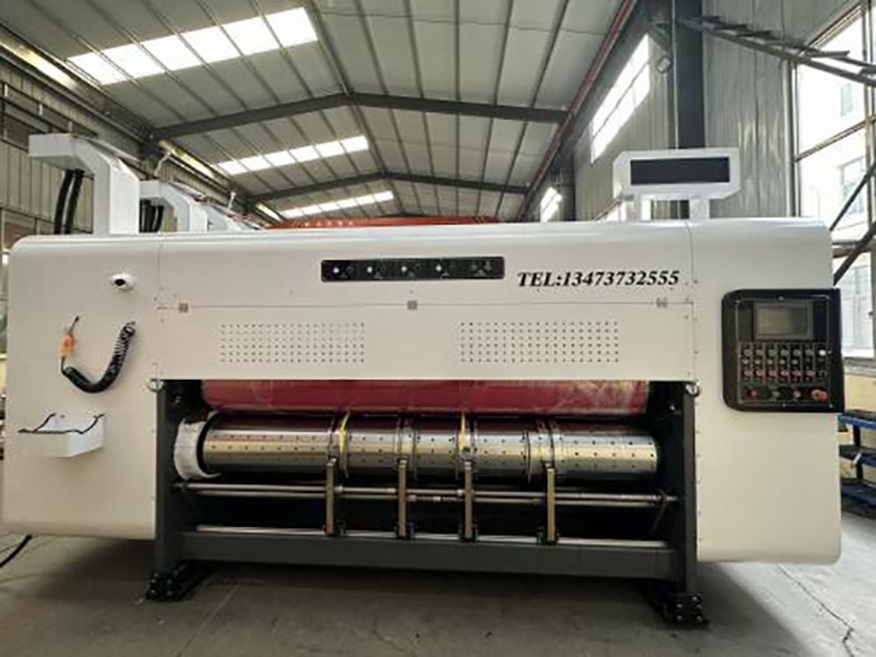
As a dedicated carton machinery manufacturer, Hebei Ou Ye Carton Machinery Co., Ltd. supplies intelligent, high-speed carton printing, slotting, and die-cutting machines used by modern corrugated plants. Case studies show customized integrated lines delivered to customers in regions like Shandong, tailored for high-speed, high-precision corrugated box production. [ouyecartonmachine]
By combining flexo printing units, advanced slotter sections, and rotary die-cut modules, these systems can handle both standard RSC and complex die-cut boxes, positioning them well for telescope-style heavy-duty applications. In practice, many customers deploy these lines as the primary engine for high-volume programs, while retaining older or specialized equipment for secondary cutting when required. [ouyecartonmachine]
Below is a simplified, UX-driven setup scenario for a telescope-style heavy-duty box program on an integrated line. [dongshengcartonmachine]
1. Design and dieline alignment
- Align top and bottom dielines so critical dimensions (length, width, telescoping overlap) are built around the integrated line's repeat and slotting capability. [soonpak]
- Verify board grade and flute combinations meet stacking and compression requirements for target markets. [bwpapersystems]
2. Machine configuration
- Configure flexo units for required branding and handling marks, using registration controls to match top and bottom pieces. [sunautomation]
- Set slotter and die-cutter sections to maintain consistent panel sizes and corner cutouts for smooth telescoping. [dongshengcartonmachine]
3. Trial runs and UX validation
- Produce a pilot batch and run real packing-line simulations, capturing operator feedback on telescoping ease, hand access, and edge safety. [lantech]
- Use results to fine-tune crease depth, slot width, and minor panel lengths, then lock optimal parameters into the machine recipes. [dongshengcartonmachine]
4. Scale and standardize
- Once validated, embed the program into standard operating procedures and training for line crews, emphasizing quick changeover and repeatability. [lantech]
- For rare variants or customizations, add secondary cutting routes rather than continuously disrupting integrated line scheduling. [customboxeslane]
From a user experience angle, both line operators and end customers interact with the outcomes of your workflow choice. [shopify]
- Operators benefit when boxes telescope smoothly, require fewer adjustments, and have consistent crease behavior; integrated workflows support this by reducing variation. [ocmeusa]
- End customers perceive quality through easy opening, re-closing, and structural reliability during storage, which is enhanced by accurate, integrated cutting and slotting. [shopify]
Thoughtful choices around handle cutouts, lid grip areas, and printed instructions also leverage die-cutting capability to create more intuitive packaging UX. [shopify]
Within or at the end of your article, a focused CTA aligned with buyer intent will convert readers into leads. [shopify]
- Place a bold CTA after the comparison table: "Evaluate your telescope-style box workflow with our engineering team." [ocmeusa]
- Link this CTA to a form where users can upload current box specs, volumes, and pain points, prompting a free line assessment or ROI simulation based on integrated vs secondary routing. [ouyecartonmachine]
You may offer optional incentives such as a sample design optimization report or a virtual factory walk-through focused on your carton printing, slotting, and die-cutting machines. [ouyecartonmachine]
1. What is the main difference between integrated slotting die-cutting and secondary cutting?
Integrated slotting die-cutting combines printing, slotting, and die-cutting in a single in-line pass, while secondary cutting uses an additional downstream machine for complex shapes or finishing. [soonpak]
2. Are integrated lines always better for telescope-style heavy-duty boxes?
They are usually better for stable, high-volume telescope programs due to superior registration and throughput, but secondary cutting can be more economical for highly customized, low-volume jobs. [customboxeslane]
3. How do integrated workflows improve structural performance?
By reducing manual handling and aligning all cutting and creasing operations, integrated workflows preserve flute strength and crease accuracy, which directly supports stacking strength and fit. [bwpapersystems]
4. Can existing plants transition gradually toward integration?
Yes, many plants adopt a hybrid model, adding integrated printer–slotter–die-cutter lines for core products while retaining secondary cutting equipment for special projects and legacy SKUs. [gminsights]
5. What should I look for in a carton printing, slotting, and die-cutting machine supplier?
Look for proven case studies, strong after-sales support, flexible machine configurations, and the ability to customize lines for telescope-style box requirements and export-grade heavy-duty packaging. [ouyecartonmachine]
1. BW Papersystems – "Understanding Heavy-Duty Rotary Die Cutters: Benefits and Uses." Available at: https://www.bwpapersystems.com/ [bwpapersystems]
2. SUN Automation – "The Past, Present, and Future of Corrugated Die Cutting." Available at: https://sunautomation.com/ [sunautomation]
3. Gentlever – "What is Die Cutting in Packaging? A Guide to Die Cut Boxes." Available at: https://gentlever.com/die-cutting-in-packaging/ [gentlever]
4. GWPG – "All About the Die-Cutting Process in Packaging." Available at: https://gwpg.com/ [gwpg]
5. Dongsheng Carton Machine – "How does Carton Slotter work together with printing, die-cutting and other equipment." Available at: https://www.dongshengcartonmachine.com/ [dongshengcartonmachine]
6. Market Outlook – "Paper Die Cutting Machine Market Growth Outlook 2026–2033." Available via LinkedIn: https://www.linkedin.com/ [linkedin]
7. Hebei Ou Ye Carton Machinery Co., Ltd. – Case Studies. Available at: https://www.ouyecartonmachine.com/case.html [ouyecartonmachine]
8. Shopify China – Available at: https://www.shopify.com/zh/blog/ecommerce-packaging [shopify]
9. SoonPak – "The Die Cutting Process in Packaging." Available at: https://soonpak.com/the-die-cutting-process-in-packaging/ [soonpak]
10. Future Market Insights – "Corrugated Box Printer Slotter Machine Market." Available at: https://www.futuremarketinsights.com/ [futuremarketinsights]
11. OCME – "How Machine Packaging Improves Efficiency & Reduces Labor Costs." Available at: https://www.ocmeusa.com/ [ocmeusa]
12. CSDN – Available at: https://blog.csdn.net/ [blog.csdn]
13. Custom Boxes Lane – "Types & Benefits of Die-Cutting Process in Packaging." Available at: https://customboxeslane.com/ [customboxeslane]
14. Global Market Insights – "Die-Cutting Machine Market Statistics, 2026–2035." Available at: https://www.gminsights.com/ [gminsights]
15. Lantech – "Efficiency and Automation: The Technological Basis of Modern Packaging Lines." Available at: https://www.lantech.com/ [lantech]


