
Views: 222 Author: Ouye Carton Machinery Publish Time: 2026-06-09 Origin: Site


Content Menu
● What Is a Cardboard Flexographic Printing Machine?
● Core Concepts – Top-Printing vs Bottom-Printing
>> How Top-Printing Flexo Machines Work
>> How Bottom-Printing Flexo Machines Work
● Direct Comparison – Which Setup Simplifies Waste Removal?
>> Comparison Table – Top vs Bottom Printing in High-Speed Lines
● Why Waste Removal Matters So Much in Cardboard Flexo Printing
>> Impact on Print Quality and Die-Cutting
>> Influence on Folding-Gluing Stability
● Expert Perspective – When Bottom-Printing Is the Better Choice
● When Top-Printing Still Makes Sense
>> Operator Visibility and Lower Initial Investment
>> Hybrid and Top–Bottom Printing Solutions
● Practical Engineering Steps to Simplify Waste Removal
>> Step-by-Step Optimization Checklist
● Industry Trends – Why This Choice Matters More in 2026
>> Growth of High-Speed and Eco-Friendly Flexo
>> Asia-Pacific and Chinese OEM Advantages
● How Hebei Ou Ye Can Position Its Cardboard Flexographic Printing Machines
>> Design Emphasis for Export-Focused Lines
● Which Setup Should You Choose for Your Plant?
● CTA – Talk to Hebei Ou Ye About Waste-Optimized Flexo Lines
● FAQ
Cardboard packaging producers today are under pressure to run faster lines, deliver higher print quality, and cut waste handling costs at the same time. In that context, choosing between a top‑printing and bottom‑printing cardboard flexographic printing machine is not just a technical decision; it is a strategic decision that affects maintenance, uptime, scrap rates, and downstream folding–gluing efficiency. [linkedin]
From my experience working with corrugated plants and reviewing high‑speed lines in Asia and North America, I see more factories re‑evaluating their legacy top‑printing layouts in favor of bottom‑printing or hybrid top–bottom solutions when they scale to e‑commerce and FMCG volumes. As a Chinese OEM like Hebei Ou Ye Carton Machinery Co., Ltd. grows in overseas markets, having a clear technical story around this choice is essential for procurement teams and plant engineers. [researchandmarkets]
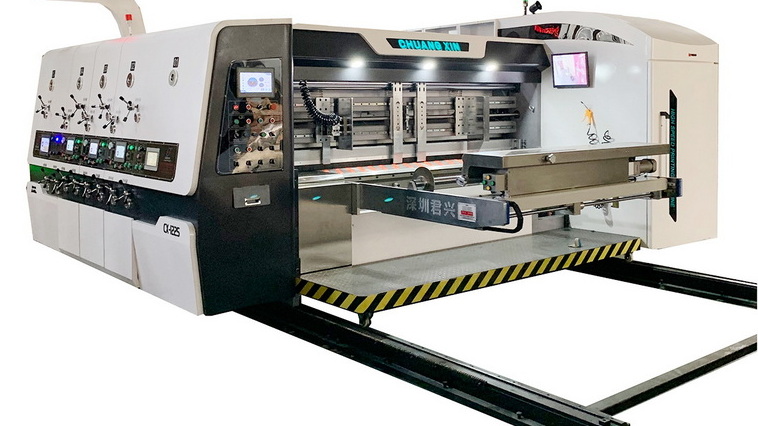
A cardboard flexographic printing machine uses flexible relief plates and low‑viscosity inks to print directly onto corrugated board at high speed. Unlike offset, where the image transfers via an intermediate cylinder, flexo plates transfer ink straight onto the substrate, making it ideal for corrugated cartons, kraft board, and other packaging grades. [blog.luminite]
Modern corrugated flexo lines are typically integrated as flexo folder gluers or modular printing–slotting–die‑cutting systems, where printing is only one step in a tightly synchronized process. Key buying factors include: [jotamachinery]
- Line speed (often 200–400 sheets/min on advanced machines). [shinkomachinery]
- Number of colors and registration stability. [jotamachinery]
- Automation for plate change, register, and defect inspection. [researchandmarkets]
- Waste handling and dust extraction around the printing and die‑cutting stations. [sunautomation]
In a top-printing flexo folder gluer, the print units are positioned above the board path, and the plate cylinder prints downwards onto the upper surface of the sheet. The printed side faces upward as the sheet proceeds to slotting, die‑cutting, folding, and gluing. [linkedin]
This configuration has several implications:
- Easier operator viewing of print quality at a glance because graphics face up. [shinkomachinery]
- More straightforward access to plates and doctor blades for manual interventions. [sunautomation]
- A higher tendency for loose dust and trim to remain on the board surface and travel into downstream units if extraction is not optimized. [sunautomation]
In a bottom-printing machine, the print units sit below the board path, and the plate cylinder prints upward onto the underside of the sheet. The board then usually flips or transitions so the printed side is correctly oriented for further converting or stacking. [linkedin]
This layout changes the physics of dust and waste:
- Gravity naturally pulls dust, ink mist, and tiny trims away from the printing nip, often down into extraction zones. [youtube]
- The board surface that faces upward towards slotters or die‑cutters is cleaner, which helps registration and reduces marking. [sunautomation]
- Operators must rely more on cameras or inspection systems to monitor print because the printed face is not always visible on top. [shinkomachinery]
Below is a practical comparison based on typical corrugated plant conditions:
| Dimension (High-Speed Folding Line) | Top-printing flexo machine | Bottom-printing flexo machine |
|---|---|---|
| Sheet orientation through printer | Printed face up through most of the line (sunautomation) | Printed face down during printing, then flipped later (sunautomation) |
| Natural dust and waste behavior | Dust tends to sit on the printed surface and travel downstream (sunautomation) | Dust and loose fibers fall away from print nip due to gravity (sunautomation) |
| Ease of manual inspection | Operators see print directly; convenient for quick visual checks (sunautomation) | Requires cameras or pull‑sheet checks; less visible in motion (sunautomation) |
| Risk of contamination at folding–gluing | More risk of dust transferring into creases and glue flaps (sunautomation) | Cleaner board surfaces entering folder gluer, less contamination (sunautomation) |
| Waste extraction design complexity | Needs strong overhead extraction or additional blowers (sunautomation) | Extraction often more efficient as waste falls towards ducts (sunautomation) |
| Machine cost and mechanical complexity | Generally lower cost, simpler structure in many designs (linkedin) | 8–15% higher cost vs. top printing in comparable specs (linkedin) |
| Suitability for heavy ink coverage | Good, but ink mist can settle on machine surfaces and board (sunautomation) | Often better with strong extraction because mist drops away (sunautomation) |
From a pure waste‑removal perspective, bottom‑printing usually has the advantage, especially when you integrate well‑designed extraction ducts below the print units and in the folding–gluing section. However, top‑printing can still be competitive if your line uses advanced vacuum transfer, air knives, and dedicated dust removal before folding. [youtube]

In high‑speed cardboard flexographic printing, uncontrolled dust and trim lead directly to:
- Dot bridging and dirty screens when fibers settle on plates or anilox. [infomachinery]
- Registration issues when debris affects sheet stability through the nip. [jotamachinery]
- Poor die‑cut edge quality as trimmed waste recirculates into rotary dies. [shinkomachinery]
Given that global demand for printed corrugated packaging continues to grow, with flexographic printing markets projected to expand steadily through 2031, every incremental gain in quality translates into meaningful commercial value. Clean sheet paths keep brand graphics sharper and reduce the reprint risk on premium packaging jobs. [mordorintelligence]
In a high‑speed folder gluer, even minor contamination can cause:
- Glue skip or weak bonds on flaps due to dust on glue lines. [sunautomation]
- Misfolds when small trim pieces ride into folding belts and guides. [sunautomation]
- Increased stoppages to clean belts, guide rails, and squaring systems. [sunautomation]
Because bottom‑printing encourages dust and particles to fall away earlier in the process, many plants find their folding sections run more smoothly with fewer unplanned stoppages when using this configuration. For a factory like Hebei Ou Ye serving export customers, this performance difference becomes a clear selling point in ROI discussions. [instagram]
Drawing on common project scenarios with B2B packaging buyers, bottom‑printing tends to be the better fit when:
- You run high‑coverage graphics (large solids, heavy color) where ink mist and dust are significant. [blog.luminite]
- Your converting line is configured for very high speeds and long continuous runs. [mordorintelligence]
- You integrate inline die‑cutting, waste stripping, and folding–gluing in a single pass. [shinkomachinery]
In these environments, the combination of gravity‑assisted waste drop‑off and strategically located extraction ducts under the print section noticeably simplifies waste control. The result is cleaner machinery, fewer stoppages for wash‑ups, and more stable folding for e‑commerce and FMCG cartons. [psmarketresearch]
However, bottom‑printing does ask more of your automation and inspection systems: because the print is not always fully visible from the top, plants typically rely on installed cameras, stroboscopes, and automatic register control to keep defects under control. [shinkomachinery]
Top‑printing remains a strong option, especially for factories that:
- Prioritize direct operator visibility over automated inspection. [sunautomation]
- Handle a mix of jobs with moderate coverage and shorter runs. [infomachinery]
- Want to reduce capital expenditure; bottom‑printing machines can cost about 8–15% more than top‑printing equivalents in comparable configurations. [linkedin]
In smaller or mid‑size carton plants, the ability for skilled operators to visually judge color, registration, and defects on the fly is still highly valued. These plants often implement targeted dust removal at the die‑cutter and folder gluer instead of redesigning the entire print section architecture. [shinkomachinery]
The market also offers top–bottom flexo printing machines that can print both faces of the board in a single pass, aimed at complex packaging and higher graphic demands. These lines are more capital‑intensive but give advanced converters the flexibility to align print orientation, waste extraction, and finishing in a way that fits their mix of SKUs. [shinkomachinery]
For a manufacturer like Hebei Ou Ye positioning itself as a comprehensive corrugated machinery supplier, offering configurable top-printing, bottom-printing, and combined top–bottom modules gives overseas buyers a clear migration path as their volumes and quality requirements increase. [youtube]
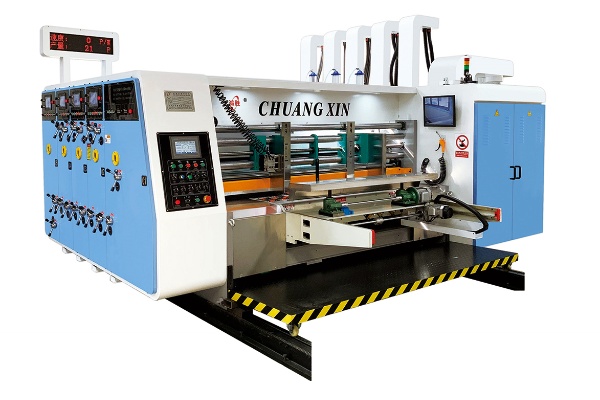
Even before you choose top vs bottom printing, a few engineering practices make a big difference to waste control on any cardboard flexographic printing machine line. [shinkomachinery]
1. Map your dust sources
Identify where dust is generated most: pre‑feeder, lead edge feeder, printing nip, slotter, die‑cutter, and folder gluer. [shinkomachinery]
2. Upgrade sheet cleaning before printing
Integrate vacuum sheet cleaners or brush systems ahead of the first print unit to remove loose fibers and board dust. [sunautomation]
3. Optimize extraction around print units
For top‑printing, position ducts above or beside the print zone; for bottom‑printing, use ducts below the deck, where gravity carries dust downward. [youtube]
4. Protect folding and gluing sections
Add local vacuum points where waste tends to accumulate near creasing and gluing, especially for micro‑flute or heavy die‑cut products. [sunautomation]
5. Monitor with inline inspection
Use camera systems and defect logs to correlate waste spikes with specific sections of the line, adjusting extraction performance accordingly. [shinkomachinery]
When this process is combined with a bottom-printing architecture, it often delivers the cleanest overall solution for high‑speed folding lines, especially in export‑oriented plants pushing OEE targets. [researchandmarkets]
Flexographic printing machines are seeing steady global growth, driven by e‑commerce packaging, sustainability demands, and the shift toward fully automatic, high‑speed presses. Market analyses point to increased adoption of smart, connected machines, with strong growth expected through 2030 and beyond. [psmarketresearch]
At the same time, brands are pushing for water‑based inks and recyclable substrates, which can generate different types of dust and waste compared with traditional materials. This puts additional pressure on line designers and OEMs to provide configurations—often bottom‑printing or hybrid—that manage waste more efficiently while maintaining print quality and sustainability credentials. [psmarketresearch]
Asia‑Pacific is projected to hold a leading share of the flexographic printing market, supported by rapid expansion of packaging and e‑commerce sectors. Chinese machinery makers, including corrugated specialists like Hebei Ou Ye, benefit from this trend by offering cost‑efficient but technically advanced flexo lines to global buyers. [instagram]
By demonstrating clear expertise in top vs bottom printing architecture and its impact on waste removal and folding stability, such manufacturers can move from simple equipment vendors to long‑term engineering partners for overseas corrugated plants. This aligns directly with buyers' expectations for E‑E‑A‑T: practical experience, technical authority, and trusted long‑term support. [researchandmarkets]
As a comprehensive carton machinery factory offering design, development, manufacturing, and sales, Hebei Ou Ye Carton Machinery Co., Ltd. has the foundation to tailor top‑printing and bottom‑printing systems to each plant's reality. To address waste removal in high‑speed folding lines, product positioning can emphasize: [youtube]
- Bottom-printing flexo options for customers prioritizing dust control and long, high‑speed runs. [youtube]
- Smart integration of sheet cleaning, vacuum transfer, and extraction as standard modules. [shinkomachinery]
- Optional camera‑based inspection packages to offset visibility challenges in bottom‑printing layouts. [sunautomation]
This way, the machine is not just described as a "cardboard flexographic printing machine," but as a complete waste‑optimized printing and converting cell for modern corrugated plants. [instagram]
From an expert and plant‑level perspective, the choice breaks down as follows:
- Choose bottom-printing if your priority is maximizing waste removal efficiency, cleanliness around the folding–gluing section, and high‑speed stability on long runs. [youtube]
- Choose top-printing if you value lower capital cost, simpler mechanical layout, and high operator visibility, and your product mix does not generate extreme dust or heavy ink mist. [linkedin]
- Consider hybrid or top–bottom printing when you manage premium, multi‑graphic packaging lines and want maximum configuration flexibility for different customers and SKUs. [shinkomachinery]
For many high‑throughput corrugated plants expanding into e‑commerce and FMCG packaging, bottom‑printing flexo machines increasingly provide the cleaner, more scalable platform—especially when combined with the waste‑optimized engineering practices described above. [mordorintelligence]
If you are planning a new corrugated plant or upgrading an existing line, the most effective next step is to benchmark your current waste profile and map it against top‑printing and bottom‑printing options. Hebei Ou Ye Carton Machinery Co., Ltd. can work with your engineering team to configure a cardboard flexographic printing machine line—top, bottom, or hybrid—that minimizes dust, simplifies waste removal, and keeps your high‑speed folding lines running cleaner and longer. [instagram]
Reach out with your current sheet sizes, speed targets, and typical print coverage, and request a custom layout proposal that includes recommended waste extraction points, inspection systems, and ROI estimates across a 3–5 year horizon. [mordorintelligence]

Q1: Does bottom-printing always reduce waste handling costs compared with top-printing?
Not always, but in many high‑speed lines, gravity‑assisted dust fall‑off and better‑placed extraction ducts in bottom‑printing machines reduce cleaning stops and unplanned downtime. Actual savings depend on job mix, materials, and how well the extraction system is engineered. [youtube]
Q2: How much more expensive is a bottom-printing flexo machine?
Industry sources indicate that bottom‑printing machines of similar specification can cost around 8–15% more than top‑printing equivalents, mainly due to more complex structures and handling systems. This premium can be offset by higher uptime and lower waste‑handling labor over the machine's life. [researchandmarkets]
Q3: Can I retrofit a top-printing line to behave more like a bottom-printing machine for waste?
You cannot change the printing orientation easily, but you can retrofit sheet cleaners, improved extraction, and targeted vacuum points to significantly reduce dust traveling into folding and gluing sections. This is often the best short‑term strategy for plants not ready to invest in a new machine. [researchandmarkets]
Q4: Do top–bottom flexo machines complicate waste management?
Top–bottom machines introduce additional print units and sheet handling, but with well‑designed extraction, web guidance, and inspection, they can handle waste efficiently while offering dual‑side print capability. They are typically used by advanced converters with strong technical teams and stable, high‑value orders. [shinkomachinery]
Q5: What role do smart/connected features play in waste reduction?
Newer flexographic printing machines increasingly include real‑time monitoring, predictive maintenance, and inline inspection, which help detect when dust buildup affects print or folding performance. Over time, such data‑driven systems allow plants to fine‑tune extraction settings and cleaning schedules to minimize waste. [mordorintelligence]
1. Sun Automation – "Top Print vs Bottom Print Flexo Folder Gluer: 3 Pros & Cons". [sunautomation]
2. Shinko/Keshenglong – "Top-Bottom Flexo Printing Machines: A Buyer's Comprehensive Guide" and related content. [shinkomachinery]
3. LinkedIn article – "Differences between Bottom Printing & Top Carton Machines". [linkedin]
4. Jota Machinery Academy – "Different Types of Flexo Printing Machines". [jotamachinery]
5. Luminite – "Comparison Points for Digital vs. Flexo Printing". [blog.luminite]
6. ResearchAndMarkets – "Flexographic Printing Machine Market Report 2026". [researchandmarkets]
7. Mordor Intelligence – "Flexographic Printing Machine Market Size & Share Analysis". [mordorintelligence]
8. PS Market Research – "Flexographic Printing Market Size and Growth Report, 2032". [psmarketresearch]
9. Focus Label – "Flexo vs. Offset Printing (The 3 Main Differences Explained)". [blog.focuslabel]
10. Infomachinery – "Difference Between Flexo and Digital Printing: Ultimate 2025". [infomachinery]
11. Hebei Ou Ye / Ouye carton machinery – Company and product media. [youtube]
12. YouTube – "Bottom Printing Flexo Folder Gluer Advantage Corrugated Carton Packaging Machine Selection". [youtube]


