
Views: 222 Author: Ouye Carton Machinery Publish Time: 2026-06-06 Origin: Site


Content Menu
● How We Evaluated "Top" Chinese Suppliers
● Technical Essentials of Used Rotary Die Cutting Machines
● Top 10 Used Rotary Die Cutting Machine Manufacturers in China (2026 Update)
>> 1. Hebei Ou Ye Carton Machinery Co., Ltd. (Cangzhou, Hebei)
>> 2. DGM Technology (China) Co., Ltd. (Guangdong)
>> 3. Cangzhou Jialong Packaging Machinery Co., Ltd. (Hebei)
>> 4. Zhejiang Weigang Technology Co., Ltd. (Zhejiang)
>> 5. Ruian Loyal Machinery Co., Ltd. (Zhejiang)
>> 6. Hangzhou Depai Machinery Co., Ltd. (Hangzhou)
>> 7. Wenzhou Daba Machinery Co., Ltd. (Wenzhou)
>> 8. Ruian Jiaming Machinery Co., Ltd. (Ruian)
>> 9. Cangzhou Quanheng Imp & Exp Trade Co., Ltd. (Hebei)
>> 10. Hebei Dongguang North Pack Co., Ltd. (Hebei)
● Snapshot Comparison of Key Chinese Suppliers
● How to De‑Risk Sourcing Used Rotary Die Cutting Machines from China
>> 1. Verifying factory and certification claims
>> 2. Practical sample and FAT (Factory Acceptance Test) process
>> 3. Logistics and installation considerations
>> 4. Common industry pitfalls and how to avoid them
● "Insider" Avoid‑Pit Guide That People Rarely Say Publicly
● Industry Context, Data and Clusters
● Conclusion and Recommended Next Steps (CTA)
● FAQ: Advanced Questions Procurement Managers Often Ask
● Suggested external references
China remains the world's most active hub for corrugated carton machinery, supported by mature industrial clusters in Hebei–Cangzhou, Guangdong–Dongguan, and the Yangtze River Delta. Rotary and flat die cutting systems are showcased every year at major packaging exhibitions such as China Packaging Container Expo (PACKCON), where Chinese suppliers launch higher‑speed, more automated models for domestic and export markets. [sphericalinsights]
Global demand for rotary die cutting machines is growing steadily as part of the broader die‑cutting and automatic die‑cutting equipment market, driven by e‑commerce packaging, FMCG, and intelligent manufacturing trends. For procurement managers, this makes the Chinese secondary (used) equipment market attractive: you can access robust machines with proven field performance at 40–60% of the cost of new imported lines, provided you choose the right partner. [gminsights]
This guide looks specifically at used rotary die cutting machines from Chinese manufacturers that also design and build new corrugated and converting lines. The focus is on factories that:
- Understand export compliance and CE‑aligned safety requirements.
- Have in‑house machining, QC and rebuild capabilities.
- Are experienced in OEM/ODM work for overseas carton plants.
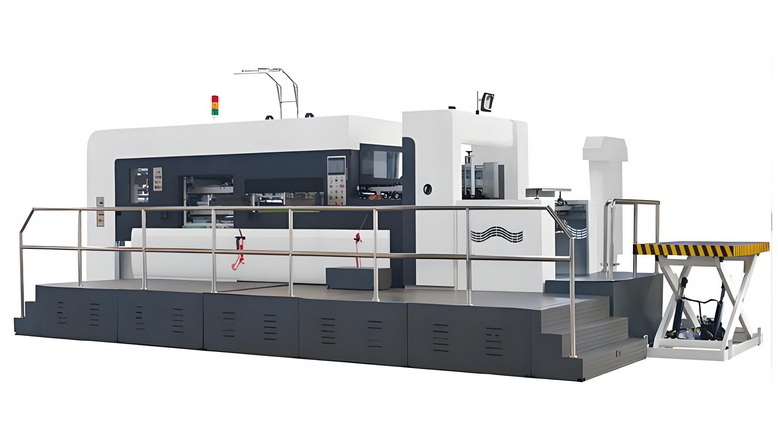
Before listing manufacturers, it is important to clarify how a "top" used rotary die cutting supplier was defined in this article. The goal is not hype, but to mirror how an experienced industrial buyer would carry out due diligence.
Core selection criteria
- Factory qualifications and certifications
- Availability of ISO 9001:2015‑based quality management and documented process control for design, machining, assembly and acceptance tests. [huayucartonmachinery]
- Ability to provide CE‑conformity documentation, electrical safety and guarding that align with EU standards, even when selling used lines.
- Engineering and R&D capability
- Independent design and continuous improvement of carton machinery rather than simple trading.
- Upgrades offered for used lines (e.g. servo registration, improved vacuum transfer, automatic anilox cleaning).
- QC and refurbishment process for used machines
- Documented incoming inspection, tear‑down, replacement of critical wear parts (bearings, gears, cylinders), re‑alignment and dry‑run tests.
- Capability to retrofit safety interlocks, guarding and modern HMI/PLC before export.
- Delivery reliability and lifecycle support
- Stable export track record with on‑time shipment and the ability to reserve critical spares.
- Remote commissioning support and after‑sales teams familiar with overseas site conditions.
- OEM/ODM flexibility and communication
- Experience supplying private‑label machines or co‑branded equipment to foreign distributors.
- English‑speaking sales/technical teams and clear documentation (layouts, foundation drawings, wiring diagrams).
The companies below are selected based on public information about their product scope, certifications, export presence and positioning in the corrugated and converting equipment value chain, complemented with typical criteria used by international corrugated groups when auditing Chinese suppliers. [ouyecartonmachine]
Understanding the technical baseline makes it easier to compare offers from Chinese factories and refurbishers.
Key configuration parameters
- Working width and maximum sheet size
- Common export widths range from 1200–2200 mm for corrugated board, with typical rotary die cutting repeats designed for F, E, B, C and BC flutes.
- Speed and drive system
- Standard used lines operate between 6,000–10,000 sheets/hour; upgraded servo‑drive models can exceed this, but only if the vacuum transfer and stacker can match the speed.
- Material and build quality
- Frames are usually fabricated from high‑grade welded steel with stress relief; precision parts such as cylinders use alloy steel with surface hardening to withstand long‑term compression cutting.
- Registration and printing integration
- Many rotary die cutters in the Chinese market are combined printing‑slotting‑die cutting lines; check for side‑register controls, anilox specifications, and whether registration is mechanical or servo‑based.
Compliance and environmental considerations
- For exports to the EU and many large brands, CE‑aligned machine safety (emergency stops, interlock switches, guarding) is now expected even on used equipment. [huayucartonmachinery]
- Larger buyers also ask for RoHS‑related declarations for electrical components and paints, particularly when machines are installed in food packaging environments.
- Chinese automatic die‑cutting and rotary die‑cutting segments have been growing at around mid‑single to high‑single‑digit CAGR, pushed by automation and smart manufacturing, which means newer used machines often already embed energy‑saving and safety features that were absent a decade ago. [gminsights]
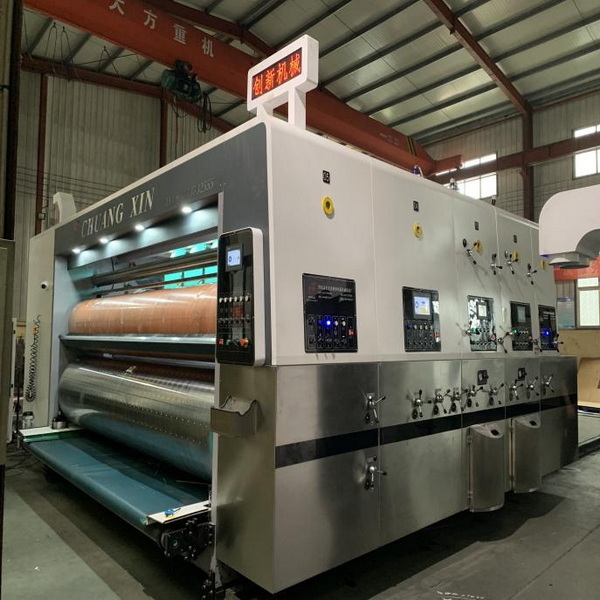
Below is a curated list of 10 Chinese manufacturers frequently considered by overseas buyers when sourcing used rotary die cutting machines, especially for corrugated carton production. Descriptions emphasize their suitability for OEM/ODM and long‑term cooperation rather than short‑term price only.
Hebei Ou Ye Carton Machinery is an intelligent factory specializing in carton packaging machinery, integrating design, production, sales and after‑sales service. The company focuses on modernizing existing corrugated equipment with higher automation, high‑speed operation and energy‑efficient designs, which also informs how it refurbishes and upgrades used rotary die cutting lines for export. [masterworkgroup]
Why Hebei Ou Ye is attractive for used rotary die cutters
- High cost‑performance for SME brands: Ou Ye's positioning emphasizes competitively priced solutions with solid build quality, making its used and rebuilt rotary die cutters suitable for small and mid‑sized carton converters that cannot immediately invest in premium European lines. [masterworkgroup]
- Strong customization and OEM/ODM support: The factory openly promotes tailored solutions and full‑line customized carton packaging machinery, offering modifications to fit different plant layouts, board specifications, and printing requirements. [masterworkgroup]
- Global export experience: Ou Ye's equipment is supplied to more than 20 countries and regions including Russia, the UK, Brazil, Australia, Mexico, South Korea, Dubai, Iran, Spain, Canada, Turkey, Malaysia, Thailand and Vietnam, which indicates familiarity with export procedures and cross‑border service expectations. [masterworkgroup]
- Service and communication: The company highlights fast delivery, attentive service and a "customer first" philosophy, supported by English‑language communication channels and responsive technical support from consultation through after‑sales. [masterworkgroup]
For buyers looking for a flexible, R&D‑driven partner who can integrate used rotary die cutting machines into a broader corrugated production line and provide deep OEM customization, Hebei Ou Ye is a strong candidate.
DGM is a well‑known Chinese brand in die cutting, folding‑gluing and related post‑press packaging machinery, with significant export presence. The company manufactures high‑spec rotary and flat die cutting systems and has a network of agents in Europe, the Americas and Asia, which also creates a secondary market for pre‑owned units. [dgm-global]
- Strengths: Advanced automation, higher running speeds, and good compatibility with international safety and electrical standards, making used DGM rotary die cutters attractive to global converters.
- OEM/ODM capability: DGM frequently cooperates with overseas distributors and can provide re‑badged or customized configurations for specific territories. [dgm-global]
Located in the Cangzhou corrugated machinery cluster, Jialong focuses on flexo printers, slotters and die cutters for corrugated cartons. [ouyecartonmachine]
- Strengths: Good balance between price and configuration for high‑volume corrugated plants, with many machines in service across China and developing markets, feeding a steady used‑equipment pool.
- Used machine suitability: Familiarity with carton plants in emerging markets makes Jialong's used rotary die cutters a realistic choice when power quality and operator experience are mixed.
Weigang is recognized in label and narrow‑web printing and die cutting, and also supplies rotary die cutting equipment suitable for higher‑precision work. [ouyecartonmachine]
- Strengths: Strong in R&D, servo control and registration accuracy, making its used rotary die cutting machines popular with buyers who need tighter tolerances, such as specialty packaging and labels.
- Certifications: Typically aligned with ISO and CE requirements due to its export‑oriented product line.
Ruian Loyal manufactures a range of packaging and die cutting machinery aimed at export markets. [ouyecartonmachine]
- Strengths: Competitive pricing and willingness to configure machines for non‑standard sizes, which also applies when they rebuild used rotary die cutters to order.
- Markets: Strong presence in Asia, the Middle East and Latin America, where many buyers actively seek used and reconditioned lines.
Depai supplies printing and die cutting equipment and has built a reputation for stable performance and good value. [ouyecartonmachine]
- Strengths: Solid mechanical structure and conservative design, which tend to age well; many used Depai rotary and flat die cutters remain in service after refurbishment.
- OEM friendliness: Familiar with private‑label projects and flexible on cosmetic branding and interface language.
Daba focuses on die cutting and converting solutions in the Wenzhou machinery belt.
- Strengths: Large installed base at small and medium carton plants, which feeds a dynamic used‑machine market; parts availability is usually not a problem.
- Use case: A practical choice for buyers needing a simple, robust machine rather than cutting‑edge automation.
Jiaming provides various printing and die cutting machines targeting export‑oriented SMEs. [ouyecartonmachine]
- Strengths: Flexible manufacturing with relatively short lead times for refurbishing and reconfiguring used machines.
- Buyer profile: Good fit for regional distributors seeking to stock 1–3 reconditioned lines for local resale.
Quanheng operates as both a machinery supplier and trading company focused on corrugated equipment. [ouyecartonmachine]
- Strengths: Ability to source, consolidate and refurbish used rotary die cutting machines from multiple factories in the Hebei cluster.
- Risk‑control note: Buyers should verify which factory is responsible for refurbishment, QC and warranty, and not rely only on the trading entity's assurances.
North Pack is part of the Dongguang carton machinery zone, a well‑known cluster for corrugated equipment. [huayucartonmachinery]
- Strengths: Access to a wide range of compatible modules (feeders, stackers, printers) and a strong local supply chain, which helps when upgrading used rotary die cutters with newer sections.
- Certifications: Local peers in this zone have ISO 9001:2015 and CE for various lines; buyers should confirm specific certificates for the machine being purchased. [huayucartonmachinery]
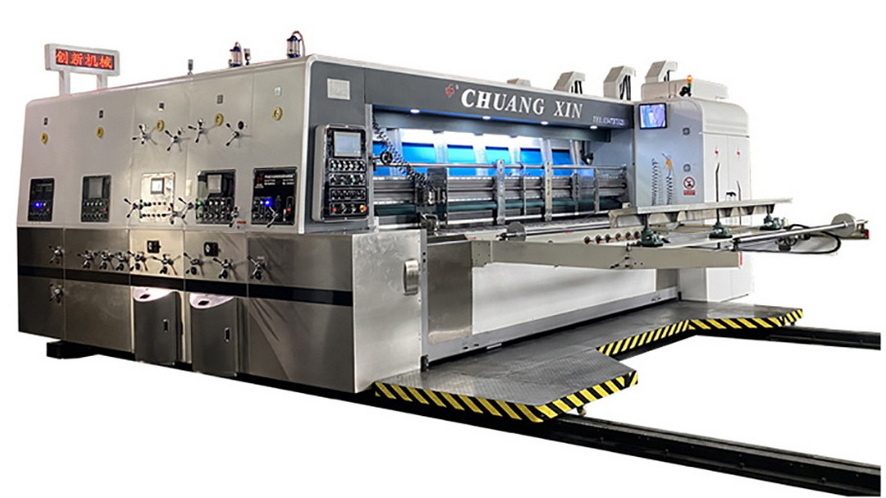
The table below gives a quick view of how several representative suppliers differ from a procurement perspective. Data is indicative and should be verified during RFQ and audit.
- Check ISO certificates directly with the issuing body
- Request a scanned copy of ISO 9001 or other relevant certificates and verify the certificate number and expiry date through the certification body's online database or email. [huayucartonmachinery]
- Be wary if the certificate shows mismatched scope (e.g. only "metal parts machining") rather than "design and manufacture of carton machinery."
- Confirm CE and safety compliance at machine level
- CE or similar compliance should be tied to the machine type and configuration, not just the factory.
- Ask for the Declaration of Conformity, risk assessment summary, and photos of safety labels and guarding on the actual used machine.
- Remote pre‑inspection
- Require high‑resolution photos and videos of the actual machine, including nameplates, drive sections, cylinders, electrical cabinets and operator interface.
- Ask the factory to run the machine at realistic speed with your board specifications if possible.
- On‑site FAT checklist
- Measure sheet feeding accuracy, die cutting tolerance, waste removal, stacking neatness and noise levels.
- Inspect wear parts: cylinders, anilox (if printing units are included), bearings, gears, and vacuum fans; confirm which have been replaced during refurbishment.
- Packing, loading and rust‑prevention
- For used machines, request full shrink‑wrap or tarping, internal bracing in containers and rust‑preventive coatings on machined surfaces.
- Foundation and utilities
- Ensure the supplier provides detailed layout, foundation drawings, and utility requirements (air, power, vacuum) so that civil works are completed before the machine arrives.
Pitfall 1 – "Cosmetic refurbishment" only
- A frequent complaint is that some used machines are only sand‑blasted and repainted without meaningful mechanical overhaul.
- Mitigation: Include a clause that specifies replacement of key components (bearings, belts, seals) and alignment checks, backed by a detailed refurbishing report and photos before shipment.
Pitfall 2 – Under‑specified electrical components
- Cheaper contractors may downgrade contactors, drives or safety relays when rebuilding, which later leads to unstable performance or compliance issues.
- Mitigation: Specify brands and minimum ratings for major electrical components in the contract; request cabinet photos before and after refurbishment.
Pitfall 3 – Hidden alignment issues
- Over time, frames can warp and shafts can go out of parallel, causing registration problems and uneven die cutting pressure.
- Mitigation: During FAT, run full‑width jobs at production speed and inspect cutting depth across the sheet; insist that the supplier documents realignment work with measurement records.
One widely known but rarely written rule among experienced corrugated buyers is this: never finalize a used rotary die cutting machine purchase until you know who actually dismantles and reassembles it, and where that work is done.
In China, it is common for:
- The original manufacturer to be different from the refurbisher, and a third company to handle only export trading.
- Local dismantling teams to take shortcuts on tagging cables, marking shafts and documenting timing positions when removing the machine from the original site, which later causes chronic registration and drive issues after reassembly.
For that reason:
- Always request the organizational chart of the project showing which company is responsible for dismantling, refurbishment, factory testing, installation supervision and warranty.
- Ask for the name and experience of the chief mechanic or engineer who will lead dismantling and reassembly.
- If a trading company is involved, insist that the original factory signs at least the technical annex or commissioning protocol, even if commercial terms are handled through the trader.
This one step often decides whether a "cheap and good‑looking" used rotary die cutter becomes a stable long‑term asset or a source of constant downtime.
The global die‑cutting machine market was valued at around USD 1.8 billion in 2025, with rotary die cutting machines accounting for about 39% of this segment due to their efficiency in continuous packaging production. Related automatic die‑cutting machinery reached around USD 1.8 billion in 2024 and is projected to grow to about USD 3.1 billion by 2034, with the rotary die‑cutting segment growing at roughly 6.5% CAGR from 2025 onward. [gminsights]
Asia‑Pacific, and especially China, represents the largest regional market, with an estimated USD 600 million market size in 2025 for die‑cutting machines, driven by strong manufacturing clusters and booming e‑commerce packaging demand. China's packaging industry is actively promoted through national‑level industry associations and exhibitions, such as China Packaging Federation and PACKCON, which bring together corrugated equipment manufacturers, exporters, and end‑user brands. [sphericalinsights]
These clusters—like Dongguang in Hebei, parts of Zhejiang and Guangdong—create a dense ecosystem of OEM manufacturers, component suppliers and refurbishers, which is why buyers sourcing used rotary die cutting machines will often find multiple competitive offers within the same city or industrial zone. [sphericalinsights]
China's industrial clusters provide a deep pool of used rotary die cutting machines backed by manufacturers with real design and export capabilities, but the value you capture depends on your selection rigor and how you structure refurbishment and acceptance. Factories such as Hebei Ou Ye Carton Machinery Co., Ltd. are particularly suitable for buyers seeking a high‑value, flexible OEM partner who can integrate used rotary die cutting machines into a complete corrugated packaging line and support long‑term expansion. [sphericalinsights]
If you are currently preparing an RFQ or shortlist for used rotary die cutting machines, the most impactful next step is to define your acceptance and refurbishment specification in writing and share it with 3–5 candidate suppliers—including Hebei Ou Ye—for a structured technical and commercial comparison. Would you like a detailed, RFQ‑ready technical specification template tailored to 1200–2200 mm rotary die cutting lines?
1. How can I verify if a supplier's ISO 9001 certificate is genuine and not expired?
Ask for a scanned copy of the ISO certificate showing the registration number, issuing body and expiry date, then check this number on the certification body's official website or by emailing them directly. Many certification bodies maintain searchable online databases where you can confirm scope, location and validity. [huayucartonmachinery]
2. Can a used rotary die cutting machine still be CE‑compliant?
Yes, but CE conformity must be evaluated against the current configuration, not just the original build. The supplier should perform or update a risk assessment, provide a Declaration of Conformity, and ensure guarding, emergency stops and safety circuits align with the applicable EU directives for the refurbished machine.
3. What is a realistic warranty expectation for a refurbished rotary die cutter from China?
For used rotary die cutting machines, a common structure is 6–12 months on critical mechanical parts and 6 months on electrical components, counting from commissioning or B/L date, depending on the agreement. Some factories may offer extended warranties for machines they originally manufactured and are now rebuilding.
4. How can I compare total cost of ownership (TCO) between a used Chinese machine and a new European one?
Beyond purchase price, consider: expected uptime, local availability and cost of spare parts, power consumption, operator training, and the cost of any retrofits needed to meet your group's safety standards. In many cases, a used Chinese machine with solid local service can deliver a favorable 3–5 year TCO, especially for standard corrugated shipper cartons.
5. What is the best way to structure payment terms to manage risk?
Common terms include 30% advance and 70% before shipment, but for used equipment, many buyers negotiate milestones tied to FAT and third‑party inspection. For example: 30% advance, 40% after successful FAT and inspection, 30% after installation or against performance test, with documentary evidence.
- China Packaging Federation official site – industry policies and association information. [sphericalinsights]
- China Packaging Container Expo (PACKCON) – exhibitor lists and cluster insights. [sphericalinsights]
- Global Market Insights – Die‑Cutting Machine Market Statistics 2026–2035. [gminsights]
- Global Market Insights – Automatic Die‑Cutting Machine Market 2025–2034. [gminsights]


