
Views: 222 Author: Ouye Carton Machinery Publish Time: 2026-05-25 Origin: Site


Content Menu
● What Is a Corrugated Box Making Machine?
● Why Corrugated Boxes Still Dominate Packaging
● Main Types of Corrugated Box Making Machines
● Key Components and How They Work Together
● From Board to Box: Step-by-Step Production Process
● Benefits of Automated Corrugated Box Making
● How Fast Can a Corrugated Box Making Machine Run?
● Selecting the Right Corrugated Box Making Machine
● Maintenance, Training, and Safety Best Practices
● Future Trends in Corrugated Box Making
● Expert Insight: OEM Perspective from Hebei Ou Ye
● Practical Checklist: Preparing to Invest in a Corrugated Box Making Machine
● Call to Action: Partner with a Specialized OEM
● Suggested FAQ for Corrugated Box Making Machines
A corrugated box making machine is the backbone of modern packaging lines, transforming flat corrugated board into customized shipping cartons with speed, precision, and consistency. For manufacturers, wholesalers, and brand owners, choosing the right machine—and the right OEM partner—directly impacts packaging cost, product protection, and operational efficiency. [gushwork]
A corrugated box making machine is an integrated packaging machine that converts corrugated cardboard sheets into finished boxes by cutting, creasing, slotting, folding, and gluing in a continuous process. In a typical production line, sheets are fed into the machine, printed or coded if needed, then precisely formed into regular slotted cartons (RSC), die-cut boxes, or specialty cartons.
From my experience working with global packaging buyers, the key value of these machines is repeatable quality at scale—every box leaves the line with consistent dimensions, strength, and branding. This is critical when you are supplying to export customers, 3PL warehouses, or large retailers with strict packaging specifications. [athenaswc]
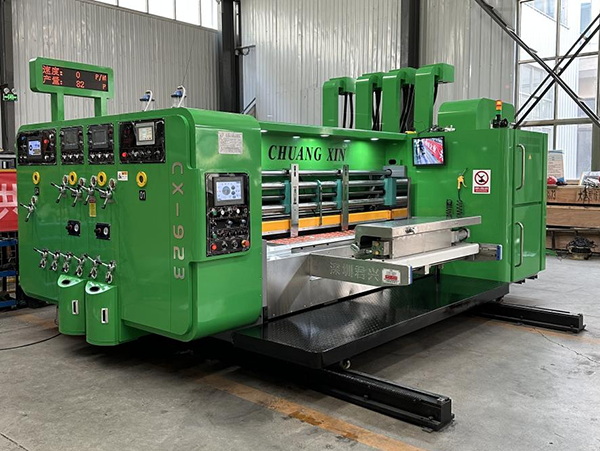
Corrugated boxes remain the most widely used transport packaging because they balance protection, cost, and sustainability better than most alternatives. According to recent market studies, the corrugated box making machine market exceeded USD 2.8 billion in 2024 and is expected to grow steadily at around 4.5% CAGR, driven by e‑commerce, FMCG, and industrial exports. [gminsights]
Key advantages of corrugated cartons include:
- High strength-to-weight ratio, protecting products while keeping freight weights low.
- Custom sizing, which reduces void fill and damage in transit. [paccurate]
- Recyclability and renewability, supporting brand sustainability goals and regulatory pressures. [gminsights]
- Printability, allowing brands to use boxes as moving billboards in retail and e‑commerce.
For OEM customers, investing in the right corrugated box making machine is not just a capex decision; it is a strategic lever for lowering total packaging cost and improving customer satisfaction. [gushwork]
Different machine types handle different steps of the box manufacturing process. Understanding these helps you design the right line for your production volume, SKU mix, and printing needs. [sourceready]
- Single Facer
Produces single‑face corrugated board by combining fluted medium with one liner; forms the base for further converting.
- Flexo Folder Gluer (FFG)
Performs printing, slotting, folding, and gluing in one pass; ideal for high-volume RSC carton production with inline branding.
- Rotary or Flatbed Die-Cutter
Cuts complex shapes and hand holes for specialty boxes, e‑commerce mailers, and retail-ready packaging. [paccurate]
- Slitter-Scorer / Slitting Machine
Slits and scores board to the required width and creasing positions, directly influencing fold accuracy and box strength.
- Slotting Machine
Cuts slots for flaps to create standard RSC or half-slotted containers, preparing sheets for folding and gluing.
- Integrated Box Making Machine
Combines feeding, printing, slitting, slotting, die cutting, folding, and gluing in one line, often with quick order changeover and digital controls.
Even if you are not an engineer, it helps to understand the core sections of a modern corrugated box making machine. This is often what your technical and procurement teams will evaluate during OEM selection. [sourceready]
- Feed Section
Automatically feeds corrugated sheets at a controlled speed and alignment to avoid misprints and skewed boxes.
- Printing Section (Flexo or Digital)
Applies logos, handling marks, barcodes, and marketing messages; consistent registration is critical for export compliance and brand image. [ecomengine]
- Slitting and Scoring Section
Cuts sheets to width and adds crease lines; precise scoring ensures clean folding and maintains the compression strength of the box.
- Slotting Section
Cuts out flap slots according to box style; poor slotting can cause overhang or gaps that compromise stacking.
- Die-Cutting Section (Optional)
Adds special shapes, handles, and ventilation holes; widely used in agriculture cartons, appliance packaging, and e‑commerce mailers. [paccurate]
- Folding and Gluing Section
Folds flaps and applies glue to form the box; reliable gluing is essential to avoid open seams in transit.
By integrating these modules, a corrugated box making machine can deliver fully finished cartons in a single pass, reducing manual handling and line changeovers. [athenaswc]
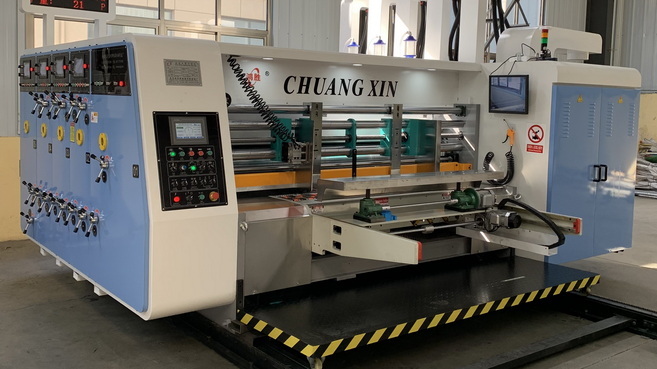
A typical corrugated box manufacturing process on an automated line follows a predictable sequence. Understanding this helps you optimize staffing, layout, and quality checkpoints. [twikit]
1. Board Feeding – Corrugated sheets are stacked and loaded onto the feed table, then automatically fed into the machine at the programmed speed.
2. Printing (Optional) – Logos, product information, and regulatory marks are printed on the outside (and sometimes inside) panels. [ecomengine]
3. Slitting and Scoring – The machine slits the sheet to width and scores the fold lines according to the chosen FEFCO style.
4. Slotting / Die Cutting – Slots and cut-outs for flaps, handles, or ventilation are created.
5. Folding – The scored panels are folded into the box shape.
6. Gluing – Side seams are glued, pressed, and cured to form a rigid, finished box.
7. Stacking and Bundling – Finished boxes are counted, stacked, and strapped or bundled for palletizing.
At each stage, modern machines use sensors and PLC controls to monitor dimensions, glue application, and print registration, improving process capability and reducing waste. [paccurate]
Moving from manual to automated or semi‑automatic box making delivers measurable business gains. In our OEM projects for overseas customers, three benefits come up most often. [athenaswc]
- Higher Productivity and Throughput
Automated lines run at much higher speeds than manual setups, supporting long runs and peak season demand. [gminsights]
- Consistent Quality and Fewer Defects
Automated cutting, scoring, and gluing dramatically reduce human error, resulting in fewer rejects and customer complaints.
- Lower Total Operating Cost
While capex is higher, automation reduces direct labor, improves material utilization, and stabilizes energy and maintenance costs over time. [gushwork]
In addition, automated on‑demand box making—where machines are set up to produce custom sizes quickly—allows shippers to reduce inventory of pre‑made cartons and adapt to changing order profiles. [paccurate]
Production speed is one of the first questions buyers ask, as illustrated by a user comment asking, *"What is the speed this machine produce corrugated cardboard box mat?"* on an existing article. While exact speed depends on machine model, box size, and board grade, typical flexo folder gluers run from 100 to over 250 boxes per minute in high-volume setups. [gminsights]
However, speed alone can be misleading:
- For short-run, multi‑SKU orders, changeover time can be more critical than maximum meters per minute. [twikit]
- For heavy or large-format cartons, lines often run slower to protect board integrity and ensure folding accuracy.
- For export cartons, many customers cap speed to maintain stable compression and edge crush values. [sourceready]
When comparing machines, always evaluate effective output under your real mix of orders, not just catalog speeds.
Choosing a corrugated box making machine is a strategic decision that should align with your current and future business model. As an OEM serving international buyers, we typically guide customers through a structured evaluation. [toprankmarketing]
- Box Range and Applications
What sizes, FEFCO styles, and industries (e‑commerce, food, appliances, industrial) will you serve? [paccurate]
- Volume and Order Profile
Do you run long, repetitive orders or high-mix, short runs? This will determine whether quick changeover or top-speed output matters more. [twikit]
- Printing Requirements
Simple one-color shipping marks or multi-color branding? Flexo vs digital printing modules will affect capex and complexity. [ecomengine]
- Automation Level and Integration
Consider integration with upstream corrugators, downstream strappers, palletizers, and MES/ERP systems. [gushwork]
- Budget and Total Cost of Ownership
Factor in spare parts availability, service support, energy use, and training, not just the initial price. [sourceready]
A well-scoped requirement document and factory acceptance test (FAT) plan help ensure the machine you choose truly fits your production reality. [stellarcontent]
Even the best corrugated box making machine will underperform without disciplined maintenance and operator training. From a UX perspective, clear procedures and intuitive interfaces also reduce accidents and downtime. [semrush]
Best practices include:
- Preventive Maintenance Plans – Regular checks on belts, bearings, knives, and glue systems; scheduled lubrication and calibration.
- Operator Certification – Formal training on start-up, shutdown, changeovers, and troubleshooting; refreshers when upgrades are installed. [semrush]
- Safety Interlocks and Guards – Light curtains, emergency stops, and guarding around moving parts, with clear signage and lockout/tagout protocols. [toprankmarketing]
Well-maintained machines not only deliver higher uptime but also extend service life and resale value. [sourceready]
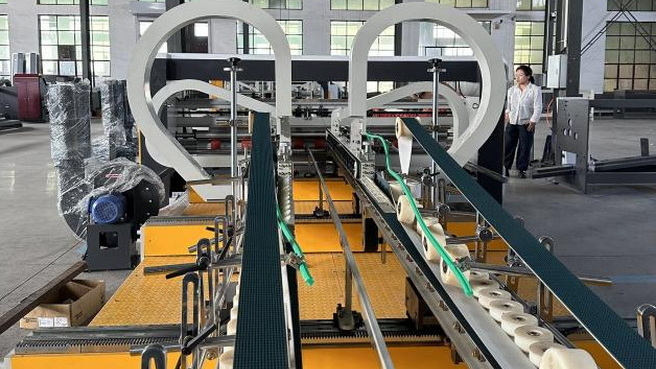
The corrugated box making sector is evolving in step with broader Industry 4.0 and sustainability trends. Market reports highlight several emerging directions. [gushwork]
- Smart and Connected Machines
IoT sensors and machine learning support predictive maintenance, automatic quality adjustments, and better integration with warehouse and order systems. [toprankmarketing]
- On-Demand Customization
More plants are adopting digital printing and highly flexible converters to offer small-batch, highly branded boxes for D2C and subscription brands. [twikit]
- Greener Operations
Equipment vendors are optimizing for reduced energy usage, less waste, and compatibility with lightweight and recycled board grades. [gminsights]
For packaging buyers, partnering with an OEM who actively invests in these technologies ensures your packaging lines stay competitive over the long term. [toprankmarketing]
As a China-based carton packaging equipment manufacturer and OEM partner, Hebei Ou Ye Carton Machinery Co., Ltd. works closely with overseas brands, wholesalers, and producers to tailor corrugated box making solutions to their regional market requirements. Drawing on projects for customers in logistics, food, household goods, and industrial products, several lessons stand out. [athenaswc]
- Start with your customer's packaging specs, not just your internal production targets; this ensures your boxes meet retailer and logistics requirements from day one. [baywaterpackaging]
- Design for future SKU complexity, as e‑commerce and omnichannel models drive smaller orders and more frequent design changes. [twikit]
- Insist on transparent OEM documentation—including electrical layouts, spare parts lists, and maintenance guides—to support local teams after installation. [stellarcontent]
By taking an OEM plus consultative approach, factories can move beyond simply buying machines to building resilient, scalable packaging systems aligned with their long-term export strategy. [athenaswc]
To make this guide actionable, use the following checklist before contacting suppliers. [stellarcontent]
1. Define your top 5 current box sizes and FEFCO styles, plus projected new SKUs.
2. Estimate monthly and peak-season volume requirements by SKU.
3. Decide on printing requirements (colors, inside/outside print, barcodes).
4. Map available factory space, power, and upstream/downstream equipment.
5. Set a realistic budget range, including installation, training, and spare parts.
6. Shortlist 3–5 qualified OEMs and request detailed technical and commercial proposals.
7. Plan a factory visit or virtual audit, including sample box tests and FAT.
Taking time to complete this homework significantly increases the likelihood that your investment will deliver the expected ROI and quality improvements. [stellarcontent]
If you are planning to upgrade or expand your packaging line, now is the right moment to evaluate a corrugated box making machine that fits your current and future needs. By working with an OEM such as Hebei Ou Ye Carton Machinery Co., Ltd., you can customize machine configurations, box styles, and automation levels to match your market and budget. [sourceready]
We invite you to:
- Share your current packaging specifications and production targets.
- Request a tailored machine recommendation and layout proposal.
- Arrange a virtual or on-site factory tour to see live production.
With the right partner and equipment, you can turn corrugated box making from a cost center into a competitive advantage in your supply chain. [toprankmarketing]
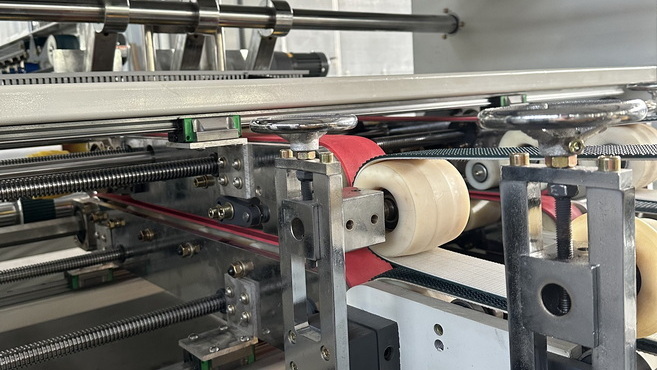
1. What is a corrugated box making machine used for?
A corrugated box making machine converts corrugated board sheets into finished shipping cartons through automated cutting, creasing, slotting, folding, and gluing operations.
2. How fast can a corrugated box making machine run?
Typical industrial machines run from about 100 up to more than 250 boxes per minute, depending on box size, board quality, and machine configuration. [gminsights]
3. What factors affect the quality of corrugated boxes?
Box quality depends on board grade, precision of scoring and slotting, glue application, and process control; well-maintained machines with trained operators produce more consistent cartons. [toprankmarketing]
4. Is automation necessary for smaller plants?
Even for smaller plants, semi‑automatic or on‑demand box making improves consistency, reduces manual labor, and allows faster response to changing orders. [gushwork]
5. How do I choose between different box making machine models?
Compare models based on your box range, volume, printing needs, changeover speed, available space, and total cost of ownership, then validate performance through trials and OEM references. [stellarcontent]
1. Aopack. "What is a corrugated box making machine?"
<https://www.aopackmachine.com/what-is-a-corrugated-box-making-machine/>
2. Global Market Insights. "Corrugated Box Making Machine Market Size & Share 2025."
<https://www.gminsights.com/industry-analysis/corrugated-box-making-machine-market> [gminsights]
3. Paccurate. "How to Get Box-Making Machines Working Smarter."
<https://paccurate.io/posts/how-to-get-box-making-machines-working-smarter> [paccurate]
4. Gushwork AI. "Proven Digital Marketing Strategies for Packaging Manufacturers."
<https://www.gushwork.ai/blog/digital-marketing-packaging-manufacturers> [gushwork]
5. SEMrush. "Google E-E-A-T: What It Is & How It Affects SEO."
<https://www.semrush.com/blog/eeat/> [semrush]
6. TopRank Marketing. "E-E-A-T and SEO: Optimizing for Google's Guidelines."
<https://www.toprankmarketing.com/blog/eeat-seo-google-guidelines-experience-expertise-authority-trust/> [toprankmarketing]
7. Twikit. "Most important elements of a high-converting product page."
<https://twikit.com/what-are-the-most-important-elements-of-a-high-converting-product-page/> [twikit]
8. EcomEngine. "How to Create High-Converting Product Pages."
<https://www.ecomengine.com/blog/high-converting-product-pages> [ecomengine]
9. Athena SWC. "SEO for Packaging Manufacturers: Why Industry-Specific Expertise Drives Results."
<https://www.athenaswc.com/resources/blog/seo-for-packaging-manufacturers-why-industry-specific-expertise-drives-results/> [athenaswc]
10. Stellar Content. "The Complete Guide to Google E-E-A-T."
<https://www.stellarcontent.com/blog/seo/the-complete-guide-to-google-e-a-t-what-is-it-why-is-it-and-how-do-you-create-it/> [stellarcontent]


