
Views: 222 Author: Ouye Carton Machinery Publish Time: 2026-04-17 Origin: Site


In the packaging industry, "cardboard" usually means paperboard or corrugated board used to make boxes, not just any thick paper. For shippers, buyers and machine operators, that distinction is critical: [goberkley]
- Paperboard (solid board): Single, dense sheet, ideal for small retail cartons.
- Corrugated cardboard (corrugated board): Fluted (wavy) medium sandwiched between one or two flat liners, used for shipping boxes and heavy‑duty packaging. [imperialpaper]
From a packaging engineer's point of view, corrugated board matters because it offers a rare combination of:
- Strength vs. weight: High stacking strength with low material weight. [goberkley]
- Cost efficiency: Cheaper than wood and many plastics for equivalent protection. [imperialpaper]
- Machine compatibility: Can be cut, slotted, creased, printed and glued on automated carton packaging machines with high precision. [pinlongmachinery]
- Sustainability: High recycling rates and fiber recovery in most markets. [upac.co]
Historians often trace "cardboard‑like" materials back several centuries, but modern cardboard and corrugated boxes are essentially a 19th‑century invention. [erdie]
- Early 1600s – China: Fabric‑based, stiff packaging materials similar to primitive cardboard appear in China, made using rags and early papermaking techniques. [erdie]
- 15th–18th centuries – Europe & Asia: Stiffer papers and boards are gradually used for book covers, small containers and protective wraps, but there is no standardized "cardboard box" yet. [packsize]
- Early 1800s – England: The first cardboard boxes are produced commercially in England and used for lightweight items such as hats and playing cards. [atticstorage.co]
- These boxes are flat, non‑corrugated – useful but limited in stacking strength and cushioning. [imperialpaper]
In 1856, English inventors Edward C. Healey and Edward G. Allen patent corrugated paper as a lining for tall hats, providing ventilation and cushioning. [goberkley]
At this point, corrugated paper is not yet used for boxes – but the idea of fluted paper for shock absorption has been born. [erdie]
In 1871, Albert L. Jones of New York patents single‑face corrugated board, originally used as a wrap for glass and bottles. [goberkley]
This is a crucial turning point:
- Corrugated is now applied to packaging rather than clothing.
- Its cushioning properties make it ideal for fragile products.
- It sets the foundation for corrugated shipping boxes.
By the late 1800s, manufacturers in the United States and Europe begin using corrugated board not only as wrap, but as full transportation boxes. [atticstorage.co]
By 1920, double‑wall corrugated cardboard is introduced, dramatically increasing strength and enabling larger, heavier loads. [packsize]
Corrugated boxes did not dominate packaging overnight. Their rise is closely tied to war‑time logistics and industrialization.
- World War I: Corrugated boxes account for only about 20% of transport packaging, with wooden crates still widely used. [packsize]
- World War II: Corrugated cardboard boxes surge to around 80% of transport packaging, largely because they are lighter, cheaper, and easier to mass‑produce, reduce shipping costs, and can be quickly standardized. [imperialpaper]
From an industry insider's vantage point, this shift was driven by four practical advantages:
1. Cost reduction: Corrugated cartons are often around 30% cheaper than wooden boxes of similar size, significantly lowering operating and shipping costs. [packsize]
2. Weight savings: Lighter packaging means more product per truck or container, reducing freight cost per unit. [goberkley]
3. Improved handling: Boxes are simpler to palletize, label, and move using mechanized equipment. [imperialpaper]
4. Machine automation: Wooden crates require more manual work, while corrugated boxes can be fully processed on carton packaging machines. [advanceddynamics.co]
Today, corrugated cartons are the default global solution for transport packaging across e‑commerce, food, electronics, and industrial goods. [upac.co]
From the floor of a carton plant, the manufacturing process follows a highly standardized sequence that must match both board specifications and machine capabilities. [pinlongmachinery]
Typical inputs for corrugated board include:
- Paper liners and fluting medium
- Adhesive system, often based on starch with additives such as:
- Starch and water (base)
- Alkali flakes
- Borax
- Polyacrylic acid ammonium salt dispersants
- Urea‑formaldehyde resin (for strength and bonding)
Sheets are produced on a corrugated board production line:
1. The medium is heated and passed through corrugating rolls to form the flutes.
2. Starch‑based adhesive is applied to flute tips.
3. One or two liners are bonded to create single‑face, single‑wall, double‑wall or triple‑wall board.
4. The board is dried, cut to length and stacked for downstream converting. [goberkley]
The produced board is precisely cut in machine direction and cross direction to meet required blank sizes. Correct cutting is vital to:
- Avoid waste on forming equipment.
- Ensure dimensionally stable boxes that fit automated lines.
Next, the blanks pass through printing machines (flexo, digital, or offset‑laminated). At this stage, plants may:
- Print branding, barcodes, and regulatory information.
- Apply anti‑abrasive agents to improve surface durability.
The final box‑making stage usually includes:
1. Slotting and creasing to define flaps and fold lines.
2. Folding the blank into a carton shape.
3. Gluing or stitching (nailing) the manufacturer's joint.
4. Delivery as knocked‑down flat (KDF) bundles for space‑efficient shipping.
High‑end carton packaging machines integrate multiple processes in a single pass, minimizing manual touchpoints. [advanceddynamics.co]
From daily engineering practice, the advantages of corrugated packaging over wood are not just theoretical – they show up in cost reports, damage claims, and production metrics.
1. Cost Savings
- Corrugated cartons can be around 30% cheaper than equivalently sized wooden boxes, directly lowering packaging cost per unit.
2. Product Protection and Cushioning
- The fluted structure provides excellent shock absorption and buffering performance, protecting precision products during transportation and stacking. [imperialpaper]
3. Water and Moisture Resistance (with Proper Board)
- Special corrugated board grades with appropriate coatings or liners can offer good moisture resistance, especially for export shipping. [goberkley]
4. Light Weight and Easy Handling
- Corrugated cartons are much lighter than wooden crates, which:
- Reduces manual handling strain.
- Allows more units per pallet or container. [imperialpaper]
5. Reusability and Recycling
- Corrugated boxes are reusable, and the material is widely recyclable, supporting circular‑economy packaging strategies. [upac.co]
6. High Compatibility with Automation
- Boxes are easy to form, erect, seal and palletize on automatic carton packaging lines, improving throughput and reducing labor intensity. [pinlongmachinery]
> Practical note: Corrugated's main weakness is moisture sensitivity – when cartons are exposed to water, their physical performance can drop sharply, so controlling humidity and storage conditions is essential. [goberkley]
The history of cardboard is also the history of how we pack faster, smarter and more precisely. As an OEM carton machinery factory, we've seen (and contributed to) several key waves of change.
- Primitive machines could fold and glue cartons, but with limited speed and precision. [pinlongmachinery]
- Most work was manual; box sizes were few and highly standardized.
- Semi‑automatic machines emerged, increasing production speeds and improving quality. [advanceddynamics.co]
- Rotary equipment with continuous feeding systems made folding and gluing faster and more consistent. [pinlongmachinery]
Modern computer‑controlled carton packaging machines radically changed what factories can offer:
- Quick order changeovers for small and medium runs.
- Automated adjustment of scores, slots, and print layouts.
- Integration with ERP/MES systems for real‑time production data. [advanceddynamics.co]
This evolution directly supports e‑commerce, "ship‑in‑own‑container (SIOC)" concepts, and on‑demand box making to reduce inventory and void fill. [upac.co]
From our work with overseas OEM customers, three trends stand out:
1. SKU explosion: Brands handle hundreds or thousands of SKUs, each requiring slightly different box sizes.
2. Sustainability pressure: Shippers need to cut excess air, reduce filler, and optimize pallet loads.
3. Labor constraints: Many markets face rising labor costs and skill shortages on the packaging floor.
This is where modern on‑demand carton box making machines become strategic assets rather than just equipment.
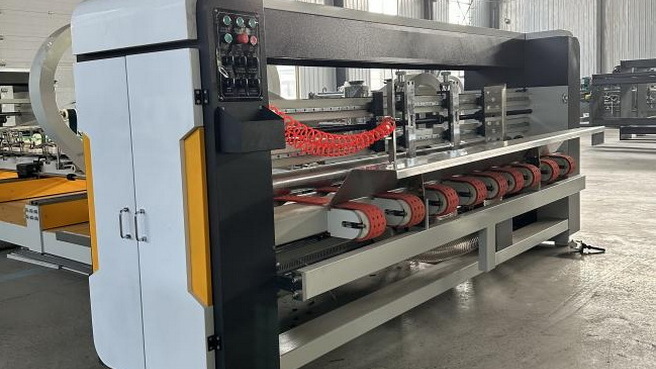
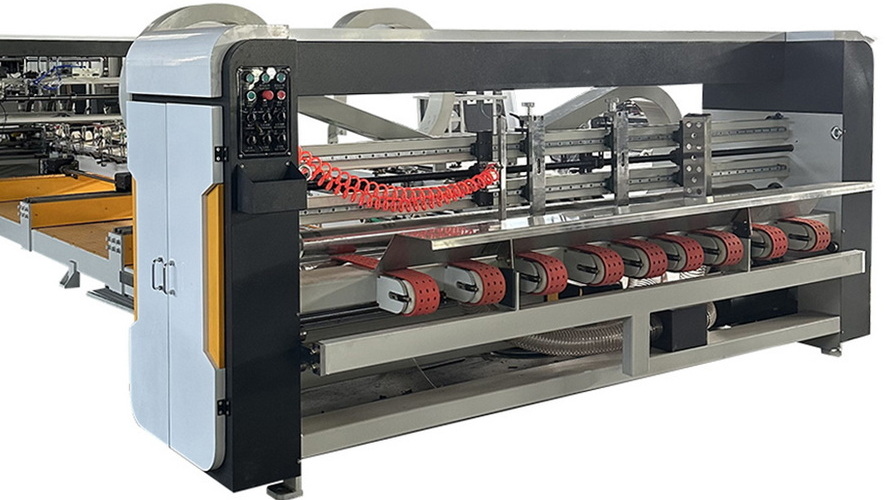
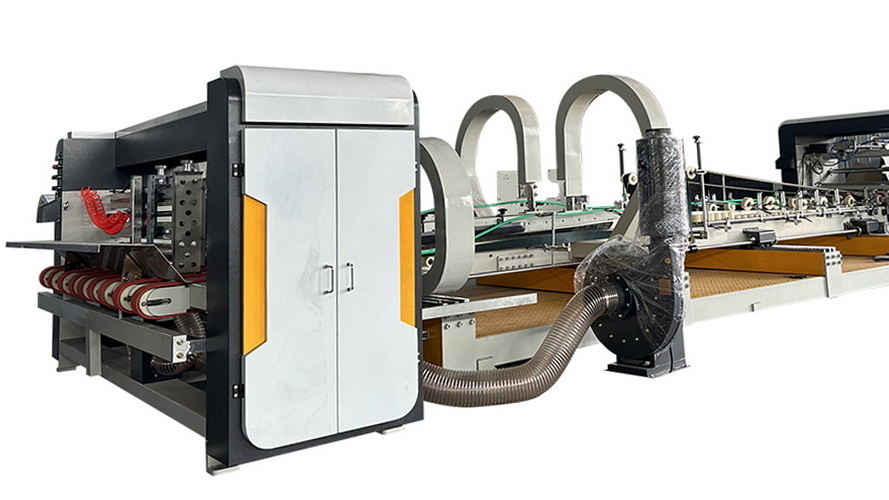
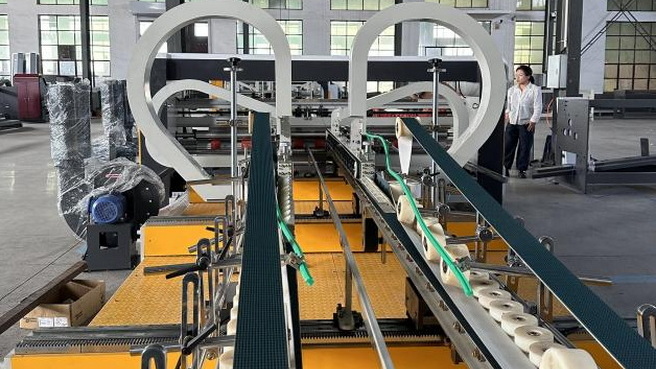
A representative example of modern equipment is the BM2508‑Pro, designed as an innovative, versatile cardboard box making machine.
- Supports 150+ box styles without needing dedicated cutting dies or molds.
- Can process oversized carton boxes in one pass, ideal for furniture, appliances, long or bulky products.
- Effectively combines the functions of:
- Slitter
- Slotter
- Gluer
- Sample maker
into one integrated machine, reducing floor space and capital expenditure.
- Tailored for scattered orders and low‑to‑medium volume box production, a common profile for e‑commerce and contract packers.
For OEM clients, this means you can offer short‑run, custom‑size packaging without relying on external box suppliers or tying up cash in box inventory.
The BM3000‑HD is engineered for heavy‑duty corrugated cardboard.
- Processes from E flute to AAA flute, covering 3‑ply to 7‑ply boards.
- Maximum cardboard width: 3000 mm, with no limit on length, suitable for long or large‑format packaging.
- Slotting width range: 7–21 mm, with glue flap crush, auto knife sharpener, and inconsistent creasing functions.
- 1–6 second order changeover time, ideal for low‑to‑medium volume but high‑mix production.
This configuration is especially valuable for industrial, automotive, and export heavy goods, where box failures are costly.
The BM1800 represents a compact, fully automatic multifunctional corrugated box making machine.
- Independent motor control and approx. 1–6 s order changeover enable rapid response to changing orders.
- Maximum width of 1800 mm with virtually unlimited length.
- Supports customized box styles and inconsistent creasing in a single pass.
- Its compact footprint helps factories upgrade to automation even when space is tight.
For packaging engineers, machines like BM1800 offer an ideal balance between flexibility, speed and floor space utilization.
When brand owners or converters ask us for recommendations, we walk them through a few key questions:
1. What board grades and flutes do you use most?
- Light e‑commerce boxes → flexible single‑wall capable equipment.
- Heavy industrial loads → machines compatible with double/triple‑wall and thick flutes like AA/AAA. [goberkley]
2. What is your order structure?
- Many short runs with many sizes → prioritize quick changeover and multi‑style capability (e.g., BM2508‑Pro, BM1800). [pinlongmachinery]
- Fewer SKUs with long runs → high‑speed dedicated lines may suffice. [advanceddynamics.co]
3. Do you need oversized or special‑size cartons?
- Furniture, doors, solar panels, or long goods → wide machines like BM3000‑HD and on‑demand cutting are key.
4. What is your automation level and labor cost?
- Consider integration with upstream corrugators and downstream packing lines to minimize manual intervention. [advanceddynamics.co]
5. What sustainability goals do you have?
- On‑demand machines reduce over‑sized boxes and extra void fill, lowering material usage and transport emissions. [atticstorage.co]
From its invention in the 19th century to its dominance in 20th‑century logistics and its current role in data‑driven, automated packaging lines, cardboard remains the most practical, scalable, and sustainable transport packaging solution we have. [atticstorage.co]
As carton machinery engineers and OEM partners, we see that the real competitive advantage for modern brands lies in three things:
1. Choosing the right corrugated structures for protection and cost.
2. Investing in flexible carton packaging machines to respond quickly to changing orders.
3. Aligning packaging decisions with sustainability and automation strategies.
If you are planning to upgrade to on‑demand carton production, expand your carton range, or develop your own private‑label packaging line, partnering with an experienced carton packaging equipment manufacturer in China can significantly shorten your learning curve and investment payback time. [youtube]
1. When exactly was corrugated cardboard invented?
Corrugated paper was patented in 1856 in England for hat linings, but corrugated board for packaging was patented in 1871 by Albert L. Jones in the United States. [erdie]
2. Why did corrugated boxes replace wooden crates?
They are lighter, cheaper (often ~30% lower cost), easier to handle, compatible with automation, and still provide strong protection, especially after double‑wall grades were introduced in the early 20th century. [packsize]
3. Are cardboard boxes environmentally friendly?
Yes. Corrugated cardboard is recyclable, often made with a high content of recovered fiber, and widely accepted in recycling systems, making it one of the most sustainable mainstream packaging materials. [upac.co]
4. What is the main weakness of corrugated cardboard?
Its primary weakness is moisture sensitivity. When cartons are exposed to water or very high humidity, their stacking strength and impact resistance can drop significantly, so proper storage and board selection are important. [goberkley]
5. What kind of machine do I need for custom‑size cartons in small batches?
You need a flexible, computer‑controlled box making machine with quick order changeovers, multi‑style capability, and wide format options—similar to the BM2508‑Pro, BM3000‑HD or BM1800 configurations described above. [pinlongmachinery]
1. Packsize – "How Was Cardboard Invented?"
<https://www.packsize.com/blog/how-was-cardboard-invented> [packsize]
2. Berkley – "The History of Corrugated (Cardboard)"
<https://www.goberkley.com/blog/the-history-of-corrugated-cardboard/> [goberkley]
3. Erdie – "Cardboard History | Ancient Chinese Boxes to Mailing Tubes"
<https://erdie.com/blogs/news/cardboard-history> [erdie]
4. Imperial Paper – "The History of Boxes: From Wood to Cardboard"
<https://imperialpaper.com/blog/the-history-of-boxes-from-wood-to-cardboard/> [imperialpaper]
5. Attic Storage – "When Was Cardboard Invented & Other Trivia"
<https://www.atticstorage.co.uk/blog/the-history-of-the-cardboard-box/> [atticstorage.co]
6. Upac – "The Evolution of Cardboard: From Humble Beginnings to the Thriving Industry of 2023"
<https://www.upac.co.uk/2023/10/16/the-evolution-of-cardboard-from-humble-beginnings-to-the-thriving-industry-of-2023/> [upac.co]
7. Pinlong Machinery – "The Evolution of Carton Packaging Machines Over the Decades"
<https://www.pinlongmachinery.com/article/detail/the-evolution-of-carton-packaging-machines-over-the-decades.html> [pinlongmachinery]
8. Advanced Dynamics – "70 Years of Packaging Machinery: The Timeline"
<https://advanceddynamics.co.uk/news/packaging-machinery-evolution-timeline> [advanceddynamics.co]
9. Aopack – "When Was Cardboard Invented?" (original article and process description)
<https://www.aopackmachine.com/when-was-cardboard-invented/>
10. Ouye / ChuangXin Carton Machinery – YouTube Channel (company and machine background)
<https://www.youtube.com/channel/UCfovkcpVxSAzMd9QrCqwFCg/videos> [youtube]


