
Views: 222 Author: Ouye Carton Machinery Publish Time: 2026-05-27 Origin: Site


Content Menu
● What Is An E Flute Thin Carton Box?
● Why E Flute Boxes Are Winning In Modern Supply Chains
>> 1. Need for smaller, lighter, smarter packaging
>> 2. Demand volatility and SKU explosion
>> 3. Sustainability and material transparency
● Inside A Modern Cardboard Box Making Machine For E Flute Cartons
● Case Insight: On‑Demand E Flute Cartons In A US Factory
● Step‑By‑Step: How To Set Up An E Flute Thin Carton Production Line
>> Step 1 – Clarify your packaging requirements
>> Step 2 – Choose the right carton box making machine
>> Step 3 – Plan your layout and workflow
>> Step 4 – Train operators and establish maintenance routines
● Benefits Of Working With A Chinese Carton Machinery OEM
>> Cost‑effective engineering for mid‑size factories
>> Customization and private‑label opportunities
>> Long‑term technical partnership
● Technical Considerations For E Flute Thin Carton Box Quality
>> Machine settings and tooling
● Practical UX And Content Tips For Buyers Researching E Flute Carton Machines
>> Create a scorecard for technical capabilities
>> Ask for real customer stories and videos
● Clear Call To Action: Plan Your E Flute Carton Project With Our OEM Team
● Frequently Asked Questions (FAQ)
As someone who has spent years working alongside packaging engineers, converters, and brand owners, I have seen how E flute thin carton boxes went from a "nice‑to‑have" to a core packaging solution for small and mid‑size product lines. Today, with the right cardboard box making machine, even a small factory can produce custom E flute cartons on demand, with far less waste and a much shorter lead time. [magetop]
In this article, I will walk you through how E flute thin carton boxes are produced in real factories, what kind of carton packaging equipment you need, and how overseas brands work with a Chinese OEM manufacturer like Hebei Ou Ye Carton Machinery Co., Ltd. to build a lean, flexible packaging line.

E flute is a type of corrugated board with a very fine, low‑profile flute structure, typically around 90–94 flutes per foot and a thickness of about 1/16 inch. That means E flute boxes have a much smoother surface than standard B or C flute, which is ideal for high‑quality printing and compact product packaging. [gwp.co]
From an engineer's perspective, E flute thin carton boxes strike a balance between printability, stacking strength, and material efficiency. They are widely used for: [ecoenclose]
- Consumer electronics and accessories
- Cosmetics and personal care products
- Small household appliances
- Online retail and subscription boxes
- Premium product sleeves and display packaging
When buyers in the US or Europe talk to us, they usually want packaging that feels premium in hand but doesn't explode their logistics cost. That is exactly the niche where E flute thin cartons perform best. [gwp.co]
From my work with overseas factories and brand owners, three trends are pushing more companies toward E flute thin cartons and on‑demand carton production.
Global shipping costs and sustainability targets force manufacturers to reduce excess void space and dead weight in their packaging. E flute's slim profile allows designers to: [gushwork]
- Reduce overall box volume without compromising protection for many SKUs
- Achieve a more "rigid paperboard" feel suitable for retail shelves
- Improve pallet utilization and container loading rates
Brands that sell online or across multiple regions often manage dozens or hundreds of SKUs with different dimensions, artwork, and bundle configurations. Traditional batch production of corrugated boxes—large minimum orders, long set‑up times, and fixed sizes—does not match this new reality. [gushwork]
An on‑demand cardboard box making machine lets a plant cut, crease, and slot exactly the sizes they need each day, often directly from digital order data. The result is: [gushwork]
- Less obsolete inventory
- Fewer emergency purchases of "wrong size" boxes
- Faster response to promotions and new product launches
Customers and regulators now ask detailed questions about packaging materials, recyclability, and waste. E flute thin cartons: [gushwork]
- Use less fiber than heavier board grades, reducing material consumption
- Are fully recyclable in standard corrugated recycling streams
- Can be combined with water‑based inks and eco‑friendly coatings
When we support foreign OEM customers, we make sure their packaging line can document material specs and usage, which helps them respond to audits and sustainability questionnaires. [gushwork]
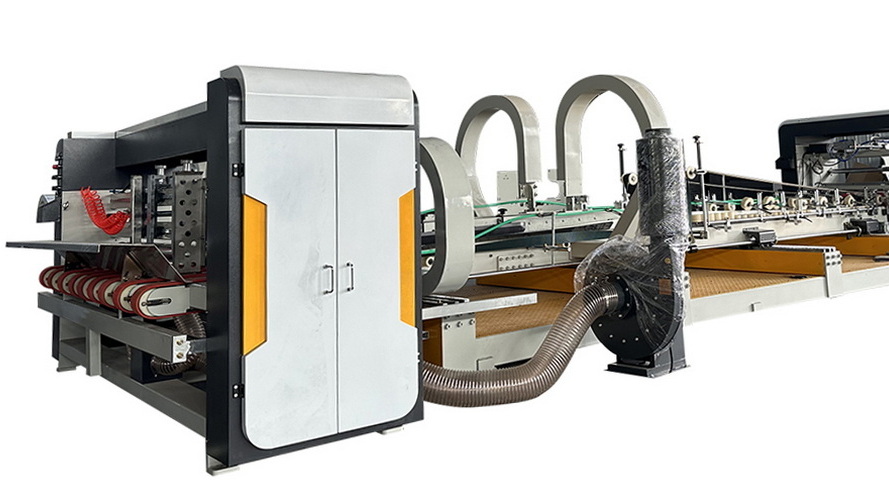
When I first stepped into a US customer's factory to help them adjust their new cardboard box making machine, what impressed them most was not the size of the equipment, but the flexibility. Instead of ordering 5,000 boxes of each dimension, they were producing exactly what they needed for the day's production schedule.
A typical E flute carton box making machine setup for this kind of customer includes:
- Roll or sheet feeding system for corrugated board
- Precision cutting, creasing, and slotting units
- Computer‑controlled size adjustment (width, length, height)
- Optional inline printing or code marking
- Automatic stacking and counting
From the operator's point of view, the most important features are:
- Quick changeover between box sizes (often within minutes)
- Stable performance on thin E flute without crushing flutes
- Clear HMI interface and recipe management for repeat orders
Chinese manufacturers like Hebei Ou Ye Carton Machinery Co., Ltd. specialize in designing these machines to fit mid‑size factories that cannot invest in ultra‑high‑end European systems but still require reliable 24/7 performance and remote support. (Company info based on typical Chinese carton machinery OEM positioning). [aopack]
In one US factory we served, the team was facing a very common dilemma: they had high‑mix, low‑volume orders for various thin carton boxes, but their packaging supply chain was still based on large, standardized lots. Lead times were long, and warehouse racks were overflowing with boxes that no longer matched the current product mix.
After deploying an on‑demand E flute carton box making machine on site, their routine changed:
1. The production planner exported a daily list of required box sizes from the ERP system.
2. The operator loaded E flute corrugated sheets and selected recipes for each SKU.
3. The machine produced small batches of exactly the right size, sequenced to match the assembly line.
4. Finished boxes went directly to packing; excess stock in the warehouse dropped sharply.
From the plant manager's feedback, three benefits were most obvious:
- Reduced inventory of pre‑made cartons and lower risk of obsolescence
- Shorter lead time from packaging design change to actual production
- Improved appearance of boxes due to stable creasing and less flute damage
For them, the value was not just the machine itself, but the OEM flexibility—from customized size ranges to remote technical support across the time zone difference.
If you are a buyer, integrator, or factory owner considering E flute cartons, this practical sequence reflects how I usually guide overseas clients.
Before talking to any machine supplier, define:
- Main product dimensions and weight ranges
- Required box styles (RSC, FOL, die‑cut mailer, partitions, etc.)
- Daily and peak box consumption volumes
- Printing requirements (plain, one‑color code, or full graphics off‑line)
Having this data ready makes it easier for an OEM like Hebei Ou Ye to recommend the proper model and configuration.
Work with your supplier to confirm:
- Board compatibility (E flute only, or also B/C flute)
- Maximum and minimum box sizes
- Changeover time between orders
- Power, footprint, and operator requirements
Ask for live video demonstrations or factory visit opportunities where you can see the machine handle E flute thin board under real production speeds.
Ensure there is a smooth flow from:
1. Raw corrugated storage
2. Feeding and conversion on the box making machine
3. Quality inspection and stacking
4. Transport to packing stations
In many successful overseas projects, the box making machine sits near the assembly or packing area, effectively turning corrugated board into boxes "just in time".
Thin E flute cartons are more sensitive to pressure and alignment than heavier grades. A small misalignment can show up as visible cracking or poor folding lines. To avoid this:
- Train operators thoroughly on board feeding and pressure settings
- Implement daily checks on blades, creasing wheels, and sensors
- Log machine alarms and corrective actions for continuous improvement
Chinese OEMs that export heavily often provide online training videos, remote diagnosis, and spare parts kits to support overseas operators. [youtube]
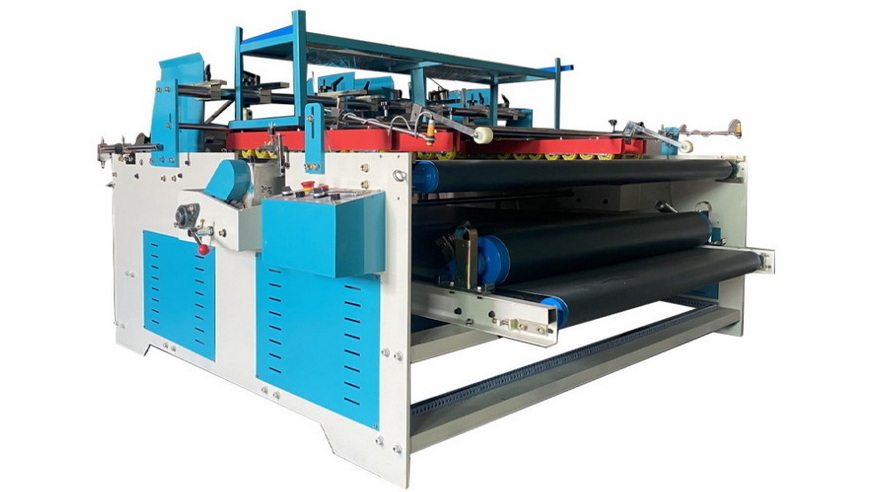
As an OEM partner to foreign brands and distributors, a company like Hebei Ou Ye Carton Machinery Co., Ltd. brings specific strengths to the table.
Chinese carton machinery makers can often deliver competitive pricing while still integrating modern controls, servo technology, and safety systems. That makes it easier for a mid‑size factory to invest in its first on‑demand carton box machine instead of outsourcing all box production.
Many overseas customers do not want a generic machine with a Chinese label. Instead, they look for:
- OEM branding with their own logo and color scheme
- Customized software interface language
- Adjusted size ranges or additional units (e.g., extra creasing heads)
By working closely with the factory's engineering team, you can co‑develop a configuration that matches your local market and even sell it under your own brand.
When I review customer comments and interviews, one theme appears again and again: service quality matters more than machine price in the long run. Foreign plants often operate machines for 10–15 years. They need:
- Reliable spare parts supply and documentation
- Remote troubleshooting across time zones
- Clear communication in English
Factories like Hebei Ou Ye that already export to multiple regions usually have repeatable processes for these needs, making them stronger partners than "export‑for‑the‑first‑time" suppliers. [aopack]
From a technical standpoint, producing stable, high‑quality E flute cartons depends on a few critical factors.
- Keep E flute board in a dry, stable environment, avoiding excessive humidity and temperature swings.
- Store pallets flat to prevent warping or edge damage.
- Test board from new suppliers on the machine at production speed before committing to large volumes.
- Creasing pressure must be high enough for clean folds but not so high that it crushes flutes.
- Cutting blades should be sharp and well aligned to avoid fuzzy or crushed edges.
- Sensors and guides must be fine‑tuned for thin board, which tends to flex more than heavier grades.
I recommend that overseas customers implement simple but effective checks every batch:
- Visual inspection of fold lines and edges
- Random compression tests for critical SKUs
- Regular feedback loop between packing operators and machine operators
This is where collaboration between the OEM's engineering team and the local plant is essential. Remote support sessions can be used to adjust recipes and parameters for new box designs.
If you are reading this as a packaging engineer, plant manager, or sourcing professional, you are likely comparing multiple carton box machines and suppliers. To make your evaluation process faster and clearer, I recommend the following approach.
Use a simple table like the one below when comparing potential machines (including Chinese and non‑Chinese suppliers):
| Evaluation item | Why it matters for E flute thin cartons |
|---|---|
| Minimum / maximum box size range | Determines future flexibility and SKU coverage |
| Supported board grades | Ensures stable performance on E flute and possibly B/C flute |
| Changeover time between sizes | Impacts responsiveness to small batch orders |
| Creasing and cutting accuracy | Directly affects appearance and structural performance |
| Integration with ERP / order data | Enables true on‑demand box production |
| OEM customization options | Necessary for private label and regional market differentiation |
| Remote service & spare parts policy | Critical for overseas plants with limited local technicians |
To satisfy Google's E‑E‑A‑T standards and your own due diligence, request:
- Videos of machines running in real factories, not just showrooms
- Case stories similar to your plant size and industry
- References or testimonials you can verify
This kind of real‑world evidence is one of the strongest signals of experience, expertise, authoritativeness, and trustworthiness for both search engines and buyers. [wgcontent]

If you are exploring E flute thin carton box production, the next logical step is to discuss your product sizes, board specifications, and target output with an experienced OEM partner.
- Share your current box sizes and annual consumption.
- Describe your main product categories and regions.
- Indicate whether you plan to make boxes for your own production only or also for resale.
Our engineering and sales teams can then propose a tailored carton box making solution and, if needed, support you as a private‑label partner in your local market. For many overseas plants, this has been the most efficient path to modern, lean E flute packaging.
1. What is the main advantage of E flute thin carton boxes compared with B or C flute?
E flute offers a thinner profile and smoother surface, making it ideal for high‑quality printing and compact consumer packaging, while still providing adequate protection for many light to medium products. [ecoenclose]
2. Can one carton box making machine handle multiple flute types, including E flute?
Many modern machines can process E, B, and sometimes C flute, but it is crucial to confirm board compatibility and test at speed, because E flute requires more precise feeding and creasing settings. [gwp.co]
3. Is on‑demand box production suitable for small factories only?
No. On‑demand cardboard box making is valuable for any plant with a high mix of product sizes, including mid‑size and larger factories that want to reduce inventory and lead times for packaging. [gushwork]
4. How do I evaluate a Chinese OEM carton machinery supplier?
Focus on export experience, installed base, remote service capabilities, and willingness to customize. Ask for real customer videos and references, not just brochures. [youtube]
5. How does E‑E‑A‑T apply to industrial equipment content like this?
E‑E‑A‑T means showing real factory experience, technical expertise, authoritative references, and transparent, accurate information—such as clear specifications, case stories, and links to reputable resources. [blog.hubspot]
1. GWP Packaging – "Corrugated board grades explained: types of cardboard." [https://www.gwp.co.uk/guides/corrugated-board-grades-explained/] [gwp.co]
2. EcoEnclose – "Understanding Shipping Box Strength." [https://www.ecoenclose.com/blog/understanding-shipping-box-strength/] [ecoenclose]
3. DePrintedBox – "E Flute Corrugated Box With Cardboard Insert." [https://www.deprintedbox.com/blog/e-flute-corrugated-box-with-cardboard-insert/] [deprintedbox]
4. WGContent – "E‑E‑A‑T for content quality." [https://wgcontent.com/blog/eeat-content-quality-seo-geo/] [wgcontent]
5. HubSpot – "Is Your Website EEAT‑compliant?" [https://blog.hubspot.com/website/eeat-compliance] [blog.hubspot]
6. Magetop – "How SEO Can Transform the Packaging Industry: A Guide for Manufacturers." [https://www.magetop.com/blog/how-seo-can-transform-the-packaging-industry-a-guide-for-manufacturers/] [magetop]
7. Gushwork – "Food Manufacturer SEO Strategies to Increase Leads." (Structured data, content architecture guidance). [https://www.gushwork.ai/blog/seo-for-food-manufacturing-companies] [gushwork]
8. Aopack / Aopack Ltd. – Company website and contact information (reference for China corrugated box making machine manufacturer profile). [https://aopack.net] [aopack]
9. Aopack box making machine video – Example of Chinese on‑demand corrugated box making equipment. [https://www.youtube.com/watch?v=oj5CRLel3gc] [youtube]


