
Views: 222 Author: Amanda Publish Time: 2025-10-22 Origin: Site


Content Menu
● The European Market Landscape
● Leading Strapping Machine Manufacturers and Suppliers in Europe
>> Signode (Germany/International)
>> STRAPACK (Japanese-based with European Presence)
>> Other Notable Manufacturers and Suppliers
● Technological Trends Shaping the Industry
>> Automation and Industry 4.0 Integration
>> Eco-Friendly Strapping Materials and Sustainable Solutions
>> Modular and Scalable Machine Designs
● Market Segmentation by Industry Application
● Challenges and Opportunities
● FAQ
>> 1. What distinguishes European strapping machine manufacturers from others?
>> 2. How is sustainability integrated in European strapping solutions?
>> 3. Which industries use strapping machines the most in Europe?
>> 4. Are there known trends in automation within the European market?
>> 5. Can small and medium-sized enterprises benefit from the latest machinery?
The strapping machineindustry continues to experience significant growth driven by the evolving demands of e-commerce, logistics, manufacturing, and sustainable packaging solutions. Europe stands as a prominent hub for innovative, high-quality, and technologically advanced strapping machine manufacturers and suppliers. This article provides a comprehensive overview of the leading companies in Europe, trending technological innovations, market dynamics, and a future outlook for the industry.
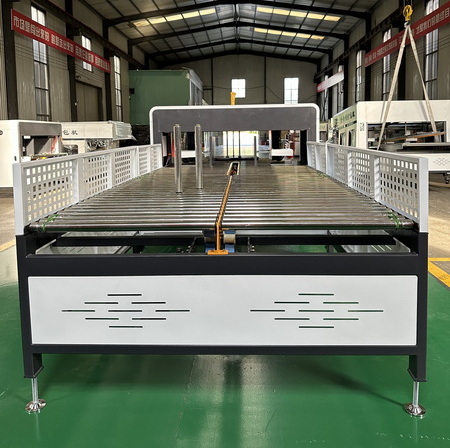
Europe's strapping machine market generated substantial revenue in recent years and is poised for steady expansion, with forecasts indicating a growth rate of around 4-6% CAGR through the next decade. This growth is primarily fueled by e-commerce's rapid expansion and logistics needs for faster, automated packaging solutions capable of managing increased parcel volumes and strict sustainability requirements.
Major economics such as Germany, France, and the United Kingdom lead the way due to their mature industrial infrastructure and high adoption of automation technologies. Meanwhile, emerging economies in Eastern and Southern Europe are accelerating industrialization, creating new demand and investment opportunities for strapping machine manufacturers and suppliers.
The evolving regulatory landscape in Europe, particularly EU directives focused on environmental responsibility and waste management, drives manufacturers to innovate in eco-friendly materials like recyclable PET and biodegradable polypropylene straps. Machines are increasingly designed with features supporting those materials, integrating ultrasonic sealing and digital diagnostics for superior reliability and minimal environmental impact.
Mosca is a flagship German manufacturer and a top-tier player recognized for pioneering ultrasonic sealing technology (SoniXs®) and Industry 4.0 integration in strapping machines. Their products span manual, semi-automatic, and fully automatic machines engineered to enhance efficiency, quality, and sustainability.
Mosca machines feature advanced servo-driven tension controls, modular designs for seamless production line integration, and energy-saving functions that align with Europe's eco-conscious manufacturing ethos. They serve diverse sectors including automotive, consumer goods, and logistics, providing scalable and adaptable strapping solutions.[2][11]
Signode combines decades of industry expertise with modern innovations to supply robust, high-performance strapping machines worldwide, including across Europe. Their technology emphasizes modular automation platforms that facilitate easy upgrades and flexible customization for various packaging needs—from lightweight consumer goods to heavy industrial materials.
With an emphasis on eco-friendly features and automation, Signode offers solutions that comply with CE safety certifications and meet demands of multi-shift operations. Their portfolio includes both belt-driven and battery-operated mobile machines, providing versatility for decentralized applications.[12][2]
Though headquartered in Japan, STRAPACK commands a strong market presence throughout Europe, known for reliability and simplicity. Their semi-automatic and automatic strapping machines prioritize ease of maintenance, intuitive operation, and compact designs ideal for space-limited environments such as warehouses and distribution centers. These products accommodate polypropylene and polyester straps frequently used in European markets.[12]
- FROMM (Switzerland): Known for battery-operated portable strapping machines and mobile solutions catering to construction, agriculture, and logistics.
- MJ Maillis Group (Greece): Provides advanced strapping and palletizing systems often customized for client-specific industrial applications.
- Steenks Service (Netherlands) and TART (Czech Republic): Both providers focus on integrated packaging solutions with strong local market influence.[13][14][2]
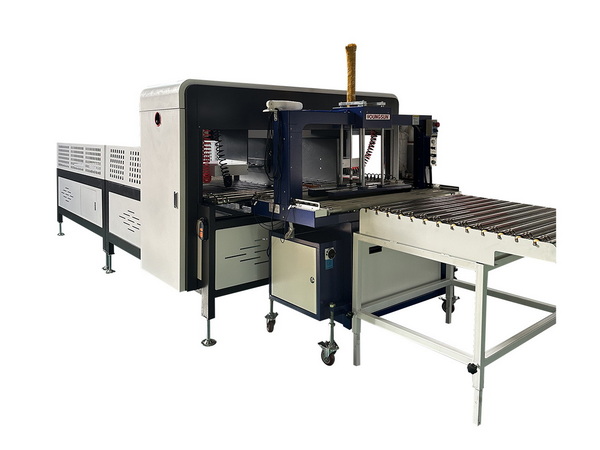
European manufacturers lead the market by adopting cutting-edge technologies that improve operational efficiency, cost-effectiveness, and environmental sustainability.
Smart, connected machines equipped with IoT sensors enable real-time status monitoring, predictive maintenance, and remote diagnostics. These advancements maximize uptime and reduce unexpected downtime, significantly improving productivity in high-volume packaging environments.
To meet stringent EU environmental regulations, manufacturers have shifted from traditional steel strapping to recyclable PET and biodegradable polypropylene. These materials reduce carbon footprints and align with corporate ESG objectives. Machines are increasingly designed to optimize strap use and minimize waste.
Modularity allows manufacturers and end-users to upgrade components, tension controls, and sealing mechanisms incrementally without replacing entire systems. This adaptability supports investments spread over time and customization tailored for fluctuating production requirements.
The European strapping machine market serves a diverse range of industries with specific packaging requirements:
- E-commerce and Logistics: The largest driver, requiring automated machines that handle increasing parcel volumes with speed and reliability.
- Consumer Goods: Electronics, household appliances, and retail products rely on efficient strapping for secure transit.
- Food and Beverage: Highly regulated for hygiene and safety, this sector demands machines compatible with cleanroom and wet conditions, often using corrosion-resistant components.
- Industrial & Construction: Heavy-duty strapping systems for building materials, automotive parts, and industrial pallets.
- Agriculture: Mobile and battery-powered machines for decentralized strapping applications in farming and produce packaging.
While the market shows robust growth, manufacturers face challenges such as workforce shortages, rising raw material costs, and the need to balance automation costs with economic efficiency, particularly for small and medium enterprises (SMEs).
However, these challenges also present opportunities including:
- Upgrading legacy packaging lines with energy-efficient servo motors and modular automation.
- Expansion into emerging European markets with cost-effective, semi-automatic machinery.
- Continued innovation in smart packaging supported by EU Industry 4.0 initiatives and Horizon Europe funding.
- Producing low-carbon, lightweight strapping materials to meet stricter regulations and achieve customer sustainability goals.
The European market for strapping machines is vibrant and evolving, led by manufacturers like Mosca and Signode who push the envelope with Industry 4.0, sustainability, and high-quality engineering. This sector is critical to the packaging ecosystem that supports Europe's booming e-commerce, logistics, manufacturing, and consumer goods industries.
Future growth hinges on innovations that combine automation, sustainability, and adaptability, offering scalable solutions to a wide customer base, from SMEs to multinational corporations. As regulatory pressure for greener packaging intensifies and digital transformation accelerates, European strapping machine manufacturers and suppliers are poised to remain industry frontrunners globally.
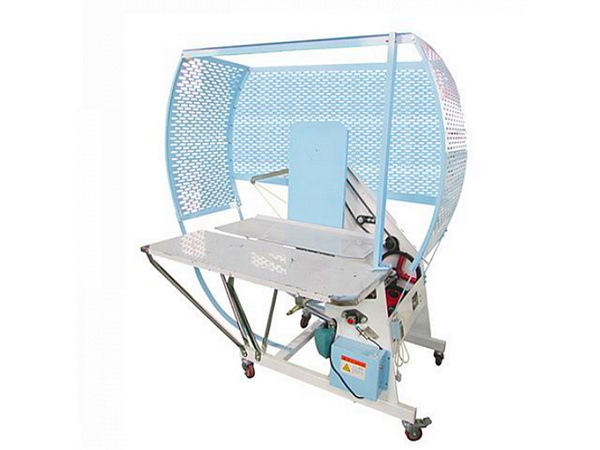
European manufacturers focus on precision engineering, advanced sealing technologies such as ultrasonic sealing, modular design for automation integration, and sustainable materials aligned with EU regulations.[11][2]
Manufacturers adopt recyclable PET and biodegradable polypropylene straps, energy-efficient servo motors, and eco-friendly sealing technology to minimize waste and carbon footprint.[2]
E-commerce, logistics, consumer goods, food and beverage, and industrial sectors are the primary users, given their need for secure, durable, and efficient packaging solutions.[3]
Yes, smart IoT-connected systems, predictive maintenance, remote diagnostics, and machine learning-based operational optimization are prominent trends enhancing efficiency.[5][2]
Absolutely, many manufacturers offer semi-automatic, modular, and energy-efficient machines compliant with CE standards, suitable for SMEs aiming to optimize operations without heavy investments.[2]
[1](https://www.grandviewresearch.com/horizon/outlook/strapping-machine-market/europe)
[2](https://www.researchandmarkets.com/reports/6175052/europe-strapping-machine-market-outlook)
[3](https://www.marketresearchfuture.com/reports/europe-strapping-market-65759)
[4](https://www.futuremarketinsights.com/reports/strapping-machine-market)
[5](https://www.linkedin.com/pulse/europe-strapping-machine-market-outlook-key-trends-growth-bnerf)
[6](https://www.fortunebusinessinsights.com/strapping-machine-market-109501)
[7](https://www.technavio.com/report/strapping-machine-market-industry-analysis)
[8](https://www.factmr.com/report/4883/automatic-strapping-machines-market)
[9](https://www.grandviewresearch.com/horizon/outlook/strapping-machine-market/germany)
[10](https://messersi.com/en/news-eventi/among-top-5-vendors-strapping-machine-market/)
[11](https://www.mosca.com/en)
[12](https://www.plantservices.com/management/materials-handling/article/55136107/4-top-strapping-machine-manufacturers-in-2024)
[13](https://www.steenks-service.com/strapping-machine-supplier/)
[14](https://www.tart.eu/en/products/packaging-machines/strapping-machines/)


