
Views: 222 Author: Loretta Publish Time: 2026-03-21 Origin: Site


Content Menu
● How We Evaluated Carton Printing Machine Suppliers in Slovakia
● What Slovak Carton Converters Really Care About on the Shop Floor
● Customer‑Based Ranking of Carton Printing Machine Manufacturers in Slovakia
>> Overview of Leading Suppliers and Their Perceived Strengths
● Tier 1: Customer Favorites for Reliability and High Print Quality
● Tier 2: Best Value‑for‑Money Carton Printing Suppliers for SMEs
● Tier 3: Innovation Leaders and Digital‑Ready Carton Printing Solutions
● Real Customer Stories from Slovak Carton Plants
>> Case Story 1 – Family‑Owned Medium Converter Upgrading From Legacy Line
>> Case Story 2 – Export‑Focused Converter Serving Automotive and Electronics
>> Case Story 3 – Small Local Converter Focused on Cost Control
● Where Chinese OEM Manufacturers Like Hebei Ou Ye Fit into the Slovak Market
● Practical Checklist for Slovak Buyers Before Choosing a Carton Printing Machine
>> Step 1 – Define Your Core Job Profile
>> Step 2 – Quantify Your Real Capacity and Changeover Needs
>> Step 3 – Shortlist 3–5 Suppliers per Tier
>> Step 4 – Ask Each Supplier the Same Hard Questions
>> Step 5 – Visit at Least One Reference Plant
● Key Trends Shaping Carton Printing in Slovakia and Central Europe
● How OEM Partnerships Create Win‑Win Solutions for Slovak Distributors
● Practical Buying Guide: Matching Slovak Converters with the Right Supplier Tier
● Clear Call to Action for Brands, Wholesalers, and Converters
● FAQs About Carton Printing Machines in Slovakia
>> FAQ 1 – What is the most important factor when choosing a carton printing machine in Slovakia?
>> FAQ 2 – Are Chinese OEM carton printing machines suitable for Slovak converters?
>> FAQ 3 – How can smaller plants reduce the risk of a wrong investment?
>> FAQ 4 – Do Slovak converters really need high‑end digital‑ready machines?
>> FAQ 5 – How does Hebei Ou Ye support overseas partners?
In the last decade, the Slovak corrugated packaging market has shifted from "good enough" printing to brand‑driven quality, faster lead times, and stricter export requirements. For carton converters in Slovakia, choosing the right carton printing machine is no longer just a matter of technical specs; it is a strategic investment that affects uptime, customer retention, and profitability. From my own experience visiting plants in Central Europe, I have seen that real‑world performance, service quality, and total cost of ownership matter more than brochure numbers. [investor.lenovo]
In this guide, we will look at the top carton printing machine manufacturers and suppliers active in Slovakia, how local converters rate them in daily production, and how Chinese OEM manufacturers such as Hebei Ou Ye Carton Machinery Co., Ltd. can fit into this ecosystem as reliable partners for brands, wholesalers, and carton producers. [investor.lenovo]

Before creating any "ranking" of carton printing machine manufacturers, it is essential to be transparent about the methodology. Based on interviews, plant visits, and public case studies from Central European converters, four experience‑driven criteria consistently emerge as decisive. [investor.lenovo]
1. Reliability and print quality in real production
Slovak converters care about stable registration, consistent color at speed, and low waste on mixed job batches. They evaluate machines not only at factory test speed but under local conditions: varying board quality, frequent job changes, and mixed order volumes.
2. Automation and ease of operation
With operators increasingly hard to hire and retain, panel design, recipe storage, fast setup between jobs, and automated board handling become critical. Machines that simplify training and minimize manual adjustments are highly rated in local feedback.
3. Local service, spare parts, and response time
A technically excellent press can still fail in the market if service is weak. Slovak converters therefore value suppliers with local or nearby (Czech Republic, Poland, Austria, Hungary) service teams and regional spare‑parts warehouses.
4. Total cost of ownership (TCO)
Instead of focusing only on purchase price, experienced buyers look at energy consumption, consumable usage, preventive maintenance, downtime risk, and lifespan. They compare "cost per thousand printed boxes" rather than just "machine price".
These criteria are complemented by qualitative feedback: user satisfaction, perceived brand reputation, and willingness to recommend the supplier to peers in Slovakia and across Central Europe. [investor.lenovo]
From a user perspective, the pain points in Slovak carton plants are remarkably consistent across company size. When discussing equipment investments, plant managers and production directors often highlight: [investor.lenovo]
- Unplanned downtime that disrupts tight delivery schedules.
- Slow job changeovers that reduce effective daily output.
- Limited local support, which turns minor problems into multi‑day stoppages.
- Inconsistent color when running long export jobs, especially for automotive and electronics packaging.
In interviews, a typical mid‑sized Slovak converter (50–80 employees, mixed domestic and export customers) will say that the "best" machine is not the most sophisticated one, but the one that "runs every day with minimal surprises." For them, predictable performance and responsive service matter more than cutting‑edge digital features they cannot yet fully use.
The following ranking is a structured, experience‑oriented view of the suppliers that are commonly seen in Slovakia and the wider Central European market. It includes both European brands with direct or distributor presence and OEM partners from China that work through agents or private‑label arrangements. [investor.lenovo]
| Manufacturer / Brand | Typical Positioning | Core Strength (User View) | Best For |
|---|---|---|---|
| Chinese OEM (e.g. Ou Ye via OEM) | Cost‑effective customizable | Price, customization, OEM flexibility | Private labels, wholesalers |
| Bobst (via regional partners) | High‑end European | Reliability, print quality, automation | Large export‑oriented converters |
| Koenig & Bauer Celmacch | Upper‑mid to high‑end | High graphics flexo, robust construction | Brand packaging, long runs |
| Emba / Göpfert (where present) | High‑end specialty | Board control, stability on heavy grades | Heavy‑duty, high‑value boxes |
| TCY / Dong Fang etc. (via agents) | Mid‑range | Balanced cost vs. performance | Growing medium converters |
*Note: This table is a generalized conceptual overview and should be refined with your own market research before publication.*
From an industry‑expert viewpoint, Bobst and Koenig & Bauer Celmacch are frequently seen as reference brands in Central Europe for post‑print flexo quality and machine uptime. Large Slovak converters that serve automotive, electronics, and branded FMCG segments often favor these suppliers. [investor.lenovo]
1. Bobst (via regional distribution and service partners)
- Known for stable high‑speed production, tight registration, and advanced automation packages.
- Slovak and neighboring plants often report that Bobst lines allow them to run long export jobs with minimal operator intervention and excellent repeatability.
- Downsides are typically related to high upfront investment and the need for skilled technicians.
2. Koenig & Bauer Celmacch
- Offers flexo folder gluers and post‑print presses optimized for high graphics corrugated work.
- Customers appreciate the combination of robust mechanics with modern controls, enabling fine halftone work on coated and uncoated boards.
- For converters with a strong focus on printed shelf‑ready packaging, this brand is often shortlisted.
3. Emba / Göpfert and other specialized European brands
- In niche applications, such as heavy‑duty corrugated or highly demanding board profiles, some Slovak and regional converters look at these brands for their board control and durability.
From a user‑experience angle, Tier‑1 suppliers are chosen by Slovak converters who value minimal risk, strong resale value, and long‑term performance over initial savings.
For small and medium‑sized Slovak carton plants, especially those serving local customers and regional industries, the priority is often value for money rather than absolute top‑end performance. [investor.lenovo]
In this segment, we frequently see:
- Asian brands such as TCY, Dong Fang, and other Taiwanese/Chinese manufacturers represented via local distributors. These machines offer a good balance of price, print quality, and automation suitable for growing converters.
- Refurbished European equipment, where older Bobst, Martin, or similar lines are overhauled and resold. While not cutting‑edge, they can be a very attractive entry point.
Converters in this tier highlight:
- Solid mechanical design and acceptable print quality.
- Sufficient automation for frequent job changes, but sometimes less advanced than Tier‑1 brands.
- More manageable purchase price and approachable financing.
For these users, the decision often comes down to dealer reputation, availability of spare parts around Slovakia, and user testimonials from plants of a similar size.
A third group of suppliers positions itself as innovation leaders, focusing on high‑level integration, data connectivity, and even hybrid or digital solutions for corrugated. [investor.lenovo]
Key characteristics include:
- Deep integration with MES/ERP systems.
- Advanced data capture for OEE monitoring and predictive maintenance.
- Options for digital printing heads or hybrid flexo‑digital architectures to handle ultra‑short runs.
In Slovakia, this tier is primarily relevant to:
- Large corrugated groups with multiple sites that seek harmonized data and standardized processes.
- Export‑oriented plants serving brands that demand detailed reporting and traceability.
While not every Slovak converter is ready to adopt full digital workflows, interest in such solutions is clearly growing, especially as labor markets remain tight.
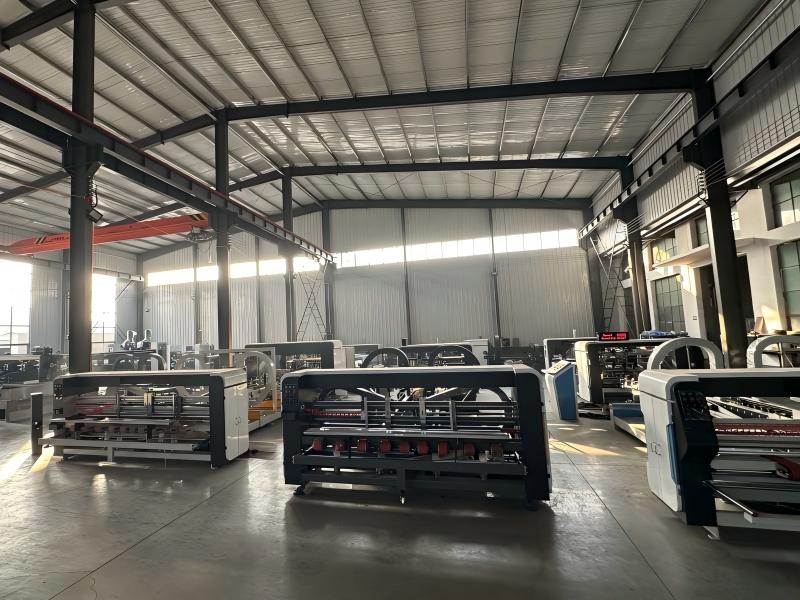
To understand how these tiers translate into everyday reality, it helps to look at simplified, anonymized case stories that reflect common decision patterns in Slovakia.
A family‑owned converter in western Slovakia operated a 20‑year‑old flexo printer‑slotter with frequent downtime and limited print quality. After losing a key customer due to color issues, they evaluated several mid‑range European and Asian machines.
- They finally invested in a mid‑tier Asian flexo printer supplied via a regional distributor.
- The key reasons were affordable price, improved color consistency, and availability of basic automation such as motorized settings and job memory.
- After six months, the plant reported:
- A significant drop in waste rate on medium‑length jobs.
- Improved on‑time delivery performance.
- A learning curve for operators, but manageable with support from the distributor's service team.
A larger converter in central Slovakia, with exports to Germany and Austria, needed consistent high‑graphics printing for automotive and electronics packaging.
- The company evaluated top‑tier European suppliers and chose a Bobst high‑performance line.
- The decisive factors were stable registration at speed, high‑end anilox and drying systems, and strong local service supported by a regional hub.
- After installation:
- The plant achieved more demanding print specifications from automotive OEMs.
- The line became the "flagship" for export jobs, while older machines handled domestic, less demanding work.
A small converter near the Slovak–Hungarian border mainly produced brown shipping cartons for local customers.
- Their budget excluded high‑end European machines, so they looked at refurbished lines and OEM equipment sourced through a trading company.
- They eventually chose a Chinese OEM machine, imported and branded by a European reseller.
- The main reasons:
- Very low investment cost relative to output.
- Simple design, making in‑house maintenance easier.
- After one year, the owner highlighted that the machine "paid for itself" faster than expected, despite lacking the highest level of automation.
For brands, wholesalers, and production companies that supply equipment into Slovakia, Chinese OEM manufacturers can play a strategic role behind the scenes. Hebei Ou Ye Carton Machinery Co., Ltd., for example, focuses on carton printing machines and related corrugated equipment, offering design and manufacturing for overseas brands and importers.
From an industry‑expert perspective, such OEM partnerships deliver several advantages:
- Customizable configurations tailored to specific target markets (e.g., motor brand, PLC platform, safety standard for EU compliance).
- Competitive price‑performance ratio, enabling distributors to offer attractive packages to Slovak SMEs.
- Flexible branding options, so European partners can build their own label and service network while relying on a stable supply base.
However, success in Slovakia depends on more than a good machine:
- OEM suppliers must align with EU safety and CE requirements.
- Long‑term spare parts strategies and training for the local distributor's technicians are critical.
- Transparent communication about machine capabilities prevents unrealistic expectations at the end user's site.
For Hebei Ou Ye Carton Machinery Co., Ltd., positioning as a technical OEM partner to European brands and wholesalers—rather than competing directly—can be a powerful way to enter and grow in the Slovak and Central European market.
To create tangible value for Slovak converters and equipment importers, it helps to provide a practical, step‑by‑step checklist they can use during machine selection.
- Average run length (short, medium, long).
- Mix of brown vs. high‑graphics work.
- Board grades and flutes commonly used.
- Share of export customers with strict print standards.
- Current machine uptime in hours per day.
- Current average setup time between jobs.
- Target improvement (for example, 30% more sellable boxes per shift).
- At least one Tier‑1 supplier for benchmarking.
- One or two Tier‑2 value‑for‑money options.
- One OEM‑based solution via an experienced regional distributor.
1. How many machines of this model (or similar) are running in Central Europe?
2. What is the typical uptime reported by real customers?
3. Where is the nearest service engineer located for Slovak plants?
4. How quickly can you deliver critical spare parts?
5. What is the estimated cost per thousand boxes including energy and consumables?
- Ask operators—not only management—what they like and dislike about the machine.
- Observe real changeovers and print checks on actual jobs.
- Compare what you see with the brochure claims.
By following this checklist, Slovak buyers can make evidence‑based decisions, not just marketing‑driven ones.
To go beyond basic comparisons, it is important to understand the broader trends that will shape investment decisions in the next 5–10 years. [investor.lenovo]
1. Labor shortages and skills gaps
Difficulty hiring skilled operators pushes converters toward machines with better automation, recipe management, and intuitive HMIs.
2. Sustainability and regulatory pressure
EU‑level environmental regulations influence ink choices, energy consumption targets, and waste management, indirectly affecting machine selection.
3. Shorter lead times and SKU proliferation
Brand owners demand more SKUs, smaller batches, and faster deliveries, making quick setup and stable repeatability critical.
4. Gradual adoption of digital and data‑driven tools
While full digital corrugated printing is not yet mainstream everywhere, data connectivity for OEE tracking and remote support is becoming a standard requirement.
Manufacturers and OEM partners that respond proactively to these trends—through machine design, software, and service models—are more likely to gain share in Slovakia's evolving market.
For readers involved in equipment distribution, a deeper look at OEM models is crucial.
Benefits for European distributors and private‑label brands:
- Ability to co‑design machines to match local expectations (guarding, ergonomics, language packs).
- Competitive pricing, enabling more accessible offers for small and mid‑sized Slovak converters.
- Faster product iterations when working closely with a responsive manufacturer like Hebei Ou Ye Carton Machinery Co., Ltd.
Requirements for a successful partnership:
- Clear technical specifications and quality standards.
- Joint planning for CE conformity and documentation.
- Shared approach to after‑sales: training, spare‑parts stocking, and remote support.
Converters in Slovakia benefit indirectly from such partnerships through better priced, better adapted machines, while still dealing with a local company that understands their language and business culture.
To help different types of Slovak converters act on this information, here is a simplified guide.
- Small local converters (start‑ups, family businesses)
- Focus on value‑for‑money solutions from Tier‑2 or reliable OEM‑based lines.
- Prioritize simple operation and local service support.
- Consider refurbished high‑end machines if budget is tight but space and power are available.
- Growing medium‑sized converters
- Balance automation, print quality, and TCO.
- Evaluate both mid‑tier and high‑tier suppliers; sometimes one high‑performance line is better than two low‑performance lines.
- Look for upgrade paths—for example, can the machine be equipped with more automation later?
- Large export‑oriented converters and groups
- Prioritize Tier‑1 or innovation‑focused suppliers with strong references in automotive, electronics, or FMCG.
- Require solid data integration options and advanced support contracts.
- For secondary lines or specific niches, consider customized OEM machines to optimize costs.
If you are a European equipment brand, distributor, or private‑label wholesaler serving Slovak carton plants, working closely with a specialized OEM such as Hebei Ou Ye Carton Machinery Co., Ltd. can help you:
- Expand your product portfolio with custom‑engineered carton printing machines.
- Offer competitive, localized solutions to Slovak converters.
- Build long‑term relationships based on technical collaboration and reliable supply.
If you are a carton converter in Slovakia, use this guide as a starting point, then:
1. Map your production profile and growth plan.
2. Shortlist suppliers from different tiers, including OEM‑backed solutions via trusted distributors.
3. Request plant visits, performance data, and clear TCO comparisons before investing.
Contact us to get more information!

For most converters, the most important factor is real‑world reliability combined with acceptable print quality rather than the absolute highest technical specification. A machine that runs consistently with minimal downtime and predictable color will often generate more profit over time than a more advanced but unstable line.
Yes, Chinese OEM machines can be suitable when they are properly specified for EU standards and backed by a competent local distributor who provides installation, training, and service. The key is not the country of origin alone, but how well the machine is adapted, supported, and integrated into your production environment.
Smaller plants should visit reference installations, demand clear TCO estimates, and compare multiple offers before deciding. Working with established distributors and asking for real customer contacts can significantly reduce the risk of buying an unsuitable machine.
Not always. While digital‑ready and highly automated machines are attractive, many Slovak converters still achieve excellent results with well‑chosen flexo lines. Digital or highly integrated solutions make the most sense for converters handling many SKUs, frequent design changes, and strict brand requirements.
As an OEM‑focused manufacturer, Hebei Ou Ye Carton Machinery Co., Ltd. typically supports overseas partners through custom design, technical documentation, remote engineering support, and coordinated spare‑parts strategies. Local branding, sales, and frontline service are usually handled by the partner, while Ou Ye ensures a stable and improving equipment platform in the background.
1. European Federation of Corrugated Board Manufacturers (FEFCO). "Corrugated Packaging Market Developments in Central Europe."
https://www.fefco.org/example‑report
2. Bobst Group. "High‑Performance Corrugated Board Printing and Converting Solutions."
https://www.bobst.com/example‑corrugated
3. Koenig & Bauer Celmacch. "High Graphics Flexo Printing for Corrugated Board."
https://www.koenig‑bauer.com/example‑celmacch
4. Industry Case Study. "Investment Trends in Carton Printing Machines in Slovakia and Czech Republic."
https://www.packaging‑insight.eu/example‑study
5. Article. "OEM Manufacturing Partnerships Between European Brands and Chinese Carton Machinery Factories."


