
Views: 222 Author: Ouye Carton Machinery Publish Time: 2026-04-16 Origin: Site


For carton plants serving fast‑growing e‑commerce brands, upgrading from semi‑automatic machines to a fully automatic carton printing and packaging line is no longer a nice‑to‑have – it is the difference between delayed deliveries and profitable, scalable growth. This article shares a real case study from a mid‑size Southeast Asian corrugated factory and distills it into practical, expert guidance on how to choose, implement, and operate an automatic carton printing machine and carton packaging line with minimal risk and maximum ROI. [ouyecartonmachine]
The explosive growth of e‑commerce has fundamentally changed corrugated box demand and production patterns. [diapkg]
- Global e‑commerce sales grew from about 3.35 trillion USD in 2019 to over 6.3 trillion USD in 2024. [diapkg]
- Corrugated boxes are the dominant e‑commerce packaging format, accounting for more than one‑third of total e‑commerce packaging revenue. [snsinsider]
- Asia‑Pacific, including Southeast Asia, has become a leading region in e‑commerce packaging demand and corrugated board consumption. [towardspackaging]
For carton factories, this means:
- Higher order volumes and tighter delivery windows
- More SKU variety (standard shipping boxes plus occasional custom or irregular gift boxes)
- Growing expectations for print quality, structural strength, and sustainability
A semi‑automatic setup with isolated printing, slotting, and stitching machines can rarely keep up with this new reality.
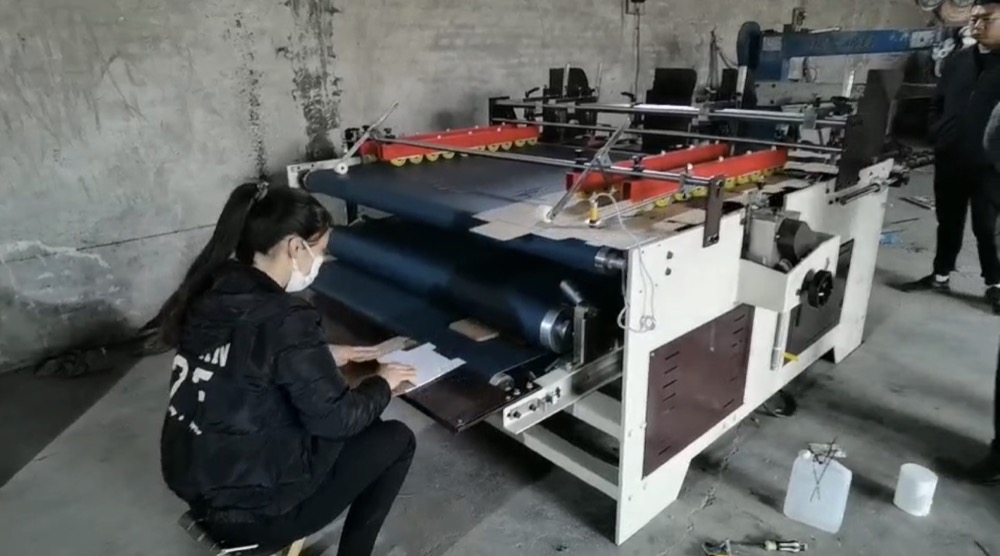
Client type:
- Mid‑size carton plant in Southeast Asia
- Main product: e‑commerce shipping boxes (rectangular), plus a smaller share of irregular gift boxes
Original setup and pain points (before upgrade):
- Equipment: 3 semi‑automatic single machines (printing, slotting, nailing)
- Daily capacity: about 3,000 boxes/day
- Labor: 8 workers required on the line
- Labor cost: about 1,200 USD per worker per month
- Typical problems:
- Frequent delivery delays as daily orders surged from 3,000 to 8,000 boxes
- Rising labor costs and difficulty recruiting experienced operators
- Limited experience with fully automatic equipment and concern about operation difficulty
- High expectations for printing registration and box strength due to export‑grade e‑commerce clients
The owner knew they needed a full set of automatic carton machinery, but struggled with four key questions:
1. Can an automatic line really cover my capacity needs and reduce labor enough to pay back the investment quickly?
2. Should I choose a fully automatic linkage line, or combine several single machines?
3. Will my team be able to operate a PLC‑controlled automatic line without production risk?
4. Can automatic equipment consistently meet export‑grade quality requirements for print accuracy and box sealing?
These questions are typical for medium‑sized carton plants entering the fully automatic stage.
Hebei Ou Ye Carton Machinery Co., Ltd, a specialist in carton printing machines and carton linkage production lines, designed a combined solution tailored to the client's product mix and growth goals. [ouyecartonmachine]
- 1 x Fully Automatic Carton Linkage Line
- Integrated paper feeding, printing, slotting, die‑cutting, gluing, and packaging in one line [ouyecartonmachine]
- Designed for continuous, high‑speed production of standard rectangular e‑commerce cartons
- 1 x Printing Slotting Die‑Cutting All‑in‑One Machine
- Used mainly as a backup and for irregular or special‑shape gift boxes
- Capable of completing printing, slotting, and die‑cutting in a single pass, avoiding multiple machine transfers
Based on detailed calculations and real production tests:
- Daily capacity:
- New setup: 10,000–12,000 boxes/day
- Trial production after optimization reached 45,000 boxes/day during peak test runs
- Labor requirement:
- Only 2 workers required (1 for line monitoring, 1 for finished‑box collection and stacking)
- Direct reduction of 6 operators, saving around 86,400 USD per year in labor costs
From a financial perspective:
- Total equipment investment: about 180,000 USD
- Average net profit per box: about 0.05 USD
- Payback period: about 18 months, validated by a similar customer in Southeast Asia who invested 175,000 USD and achieved payback in around 17 months.
For many medium‑sized e‑commerce carton plants, a 1.5–2 year payback on a major automation upgrade is commercially attractive, especially when labor markets are tight and wages continue to rise.
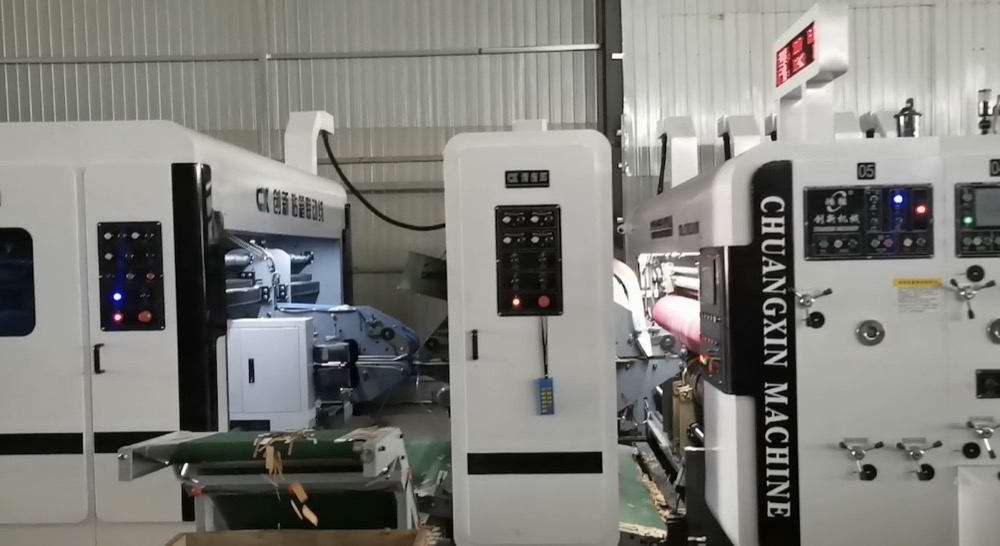
One of the client's biggest early concerns was equipment selection – whether to buy multiple independent machines or invest in a fully automatic, integrated line.
- Reduced manual transfer:
A linkage line eliminates repeated manual loading and unloading between printing, slotting, die‑cutting, and gluing, which reduces handling time and labor fatigue.
- Lower waste rate:
The integrated line helped reduce scrap from about 8% down to 2%, mainly by stabilizing registration and avoiding damage between separate machines.
- Easier future expansion:
Fully automatic lines are designed for later upgrades (e.g., extra colors, additional inspection modules, or higher‑speed components) without restructuring the entire workshop.
- Efficiency for irregular orders:
The all‑in‑one printing slotting die‑cutting machine, though about 30% more expensive than a standard printer, can:
- Complete printing, slotting, and die‑cutting in one pass,
- Replace at least two stand‑alone machines,
- Boost irregular box processing efficiency by about 40%,
making it especially valuable for mixed order structures where small‑batch custom packaging appears regularly.
From an expert standpoint, a linkage line plus one flexible all‑in‑one machine provides a more future‑proof layout than stocking several unconnected semi‑automatic units.
For export e‑commerce cartons, print registration, sealing strength, and reliability are non‑negotiable.
- The automatic linkage line was configured to ensure a printing accuracy error of ≤ ±1 mm, verified in multiple trial runs.
- When initial trial runs showed about 3 mm slotting offset, technicians quickly identified incorrect conveyor spacing and uncalibrated synchronization parameters between printing and slotting units; after fine‑tuning, the error was brought back within ±1 mm.
- The gluing unit uses an adjustable glue roller, allowing operators to set glue volume according to carton thickness and load requirements.
- In trial production of 1,000 boxes after adjustment, 100% passed sealing inspection, with no delamination or open seams.
- For heavier cartons (≥ 50 kg), the plant later upgraded to a higher‑viscosity eco‑friendly glue and extended pressure‑holding time from 5 seconds to 8 seconds, achieving a tested bearing capacity of around 60 kg per box, again with no glue failures.
- The line's output meets international export standards in terms of printing clarity, dimensional accuracy, and absence of metallic contaminants, making it suitable for cross‑border e‑commerce logistics and environmental testing.
To reinforce trust, the equipment supplier provided test reports from similar export clients and offered to run sample boxes for the customer prior to contract signing, using the same model of equipment.
Signing a contract is only the start. In this project, the equipment had a 45‑day timeline for manufacture, sea shipment, on‑site installation, and trial production. During implementation, three typical issues appeared – and were resolved quickly.
During sea transit, parts of the linkage line, including the PLC control system and some conveyor rails, were slightly damaged, preventing proper assembly on arrival.
Response:
- The supplier's service team responded within 1 hour of the customer's feedback.
- Replacement parts were dispatched from the domestic warehouse via DHL, arriving on site in 4 days.
- Assembly and commissioning were resumed without affecting the customer's planned order deliveries.
After installation, the initial trial run revealed:
- Intermittent carding between process stages
- About 3 mm deviation in slotting position after printing
- Uneven gluing, causing some boxes to fail adhesion checks
Root causes and adjustments:
- Conveyor track spacing was not correctly adjusted for the board size.
- Synchronization parameters between the printer and slotter were not yet calibrated.
- Glue roller speed settings did not match the current line speed and board thickness.
Corrective actions:
- Technicians recalibrated conveyor spacing and synchronization parameters.
- Glue roller speed was optimized to provide uniform glue thickness.
- A batch of 1,000 boxes was produced as a verification run:
- 100% qualified,
- Printing error ≤ ±1 mm,
- No carding or de‑bonding incidents.
In the following 3 days, technicians stayed on‑site, continuously monitoring operational parameters and coaching operators on daily fine‑tuning techniques. The trial run achieved a peak of 45,000 boxes/day with a 98% pass rate, demonstrating the line's stable performance at sustained high speed.
After three days of conventional training, operators still felt uncomfortable with:
- Adjusting printing speed, die‑cutting size, and other parameters independently,
- Troubleshooting minor faults such as carding without technical support.
Training strategy upgrade:
- The team replaced theory‑heavy lectures with hands‑on, one‑to‑one coaching in front of the running machine.
- Daily 4‑hour practical sessions were conducted for 2 consecutive days, focusing on:
- PLC interface navigation,
- Common parameter sets for frequent order types,
- Quick checklists for minor fault diagnosis and recovery.
- Simplified bilingual (Chinese + English) flowcharts were created, summarizing step‑by‑step operating procedures and standard fixes for typical issues.
- An online training and support group was set up so operators could send photos or videos of issues and receive real‑time guidance.
After an additional 8 hours of practical training:
- Two core operators could independently run the line, adjust key parameters, and handle common carding or misalignment problems.
- Both passed internal competency assessments with 100% success.
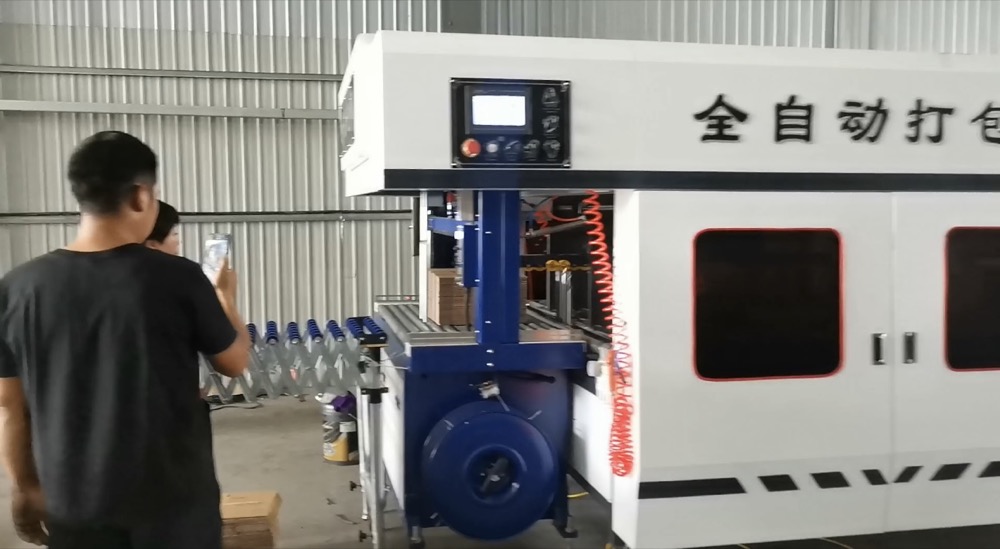
A year after commissioning, continuous follow‑up showed that the automatic line not only maintained stable output but also enabled order structure upgrades.
After about 6 months, the plant noticed occasional carding caused by wear in the paper‑feeding rollers of the linkage line.
Solution:
- The service team performed a remote video diagnosis and confirmed roller wear.
- New rollers were shipped (within warranty, free of charge) and arrived in 3 days.
- Guided by remote video, the customer's technicians completed the replacement within 1 hour.
- Post‑replacement, daily capacity stabilized at about 10,500 boxes/day with no carding and no order delivery impact.
The supplier also recommended:
- Inspecting paper‑feeding rollers every 3 months,
- Replacing them about every 6 months,
with advance stocking to avoid downtime.
At around the 10‑month mark, the customer's order portfolio shifted to include heavy‑duty e‑commerce packaging (box load ≥ 50 kg). The original gluing setup struggled to maintain sufficient bonding strength, leading to some de‑bonding failures.
Upgrade measures:
- On‑site engineers reviewed box thickness, structural design, and load requirements.
- The gluing system was upgraded by:
- Adding additional glue‑volume adjustment levels,
- Switching to high‑viscosity eco‑friendly glue,
- Extending the compression time from 5 seconds to 8 seconds.
- A test run of 50 heavy‑duty boxes showed:
- 100% pass rate,
- Load capacity of about 60 kg per box,
- No de‑bonding.
Total upgrade time was about 1 day, and the cost to the customer was only 500 USD, far below the roughly 15,000 USD required for a brand‑new gluing machine. The new configuration supported a heavy‑duty box capacity of around 2,000 boxes/day, contributing about 12,000 USD additional profit per month.
After 12 months of operation:
- Daily capacity: consistently 10,000–12,000 boxes/day
- Failure rate: below 2%, with quick resolution of minor issues
- Scrap rate: reduced from about 8% to around 2%
- Annual labor cost saving: about 86,400 USD
- On‑time delivery rate: increased from around 70% to about 98%
- Customer satisfaction: high enough that the plant ordered an additional fully automatic nailing machine and expressed interest in long‑term cooperation.
Drawing on this case and broader industry experience with carton printing machine and carton packaging machine projects, several practical guidelines emerge:
- If rectangular e‑commerce cartons account for most of your volume, a fully automatic linkage line should be your main investment.
- If you also handle small‑batch irregular or gift boxes, add one flexible printing slotting die‑cutting all‑in‑one machine instead of multiple semi‑automatic units.
- Calculate current labor cost per box and compare it with projected labor and energy cost on an automatic line.
- Build a simple payback model:
- Equipment investment
- Net profit per box
- Projected capacity and utilization
In many projects, a payback of around 18 months is achievable when capacity more than triples and scrap rates drop significantly.
- Demand on‑site training, video tutorials, and bilingual documentation from your supplier.
- Ask specifically for hands‑on, order‑based training, not just general theory.
- Establish an online group (chat/video) with the supplier's engineers for rapid Q&A and minor fault handling.
- Identify wear parts (such as feeding rollers) and create a preventive replacement schedule before failures occur.
- For customers whose order mix may shift to heavier loads or higher‑grade printing, design the equipment configuration with upgrade potential from day one (glue system, inspection modules, etc.).
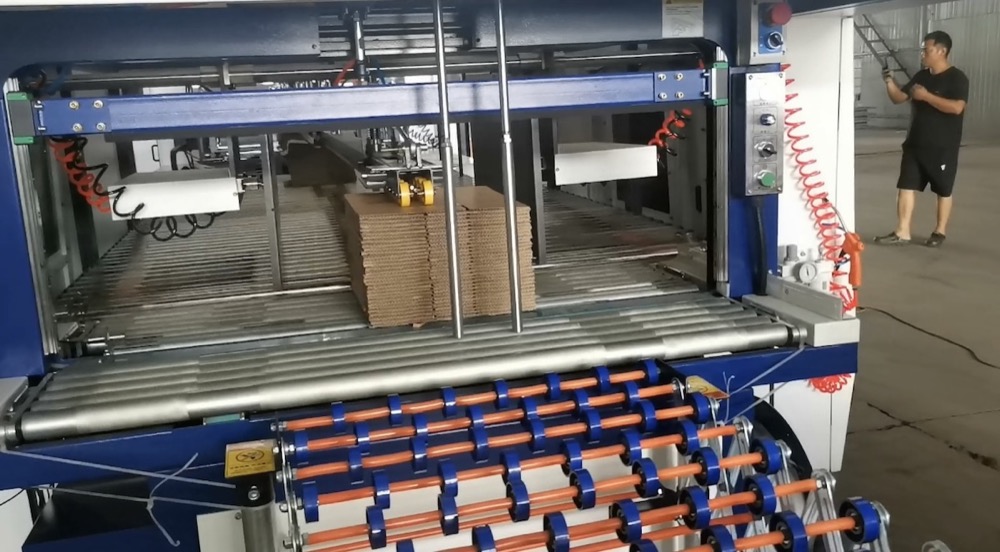
Hebei Ou Ye Carton Machinery Co., Ltd. is a China‑based factory focusing on the design and manufacture of carton printing machines, carton linkage production lines, and related carton packaging machinery. The company offers OEM and ODM services for international brands, wholesalers, and manufacturers who wish to customize features, appearance, or configuration to match their local markets. [ouyecartonmachine]
Key strengths include:
- Integrated capabilities: design, production, sales, and after‑sales under one roof, enabling faster response and customization. [ouyecartonmachine]
- High‑efficiency machines: intelligent, high‑speed equipment engineered to reduce manual labor and changeover time. [ouyecartonmachine]
- Global support: remote diagnostics, 24‑hour response windows, and on‑site commissioning for international customers. [ouyecartonmachine]
For carton plants in Southeast Asia, the Middle East, Latin America, or Eastern Europe, partnering with a specialized OEM like Hebei Ou Ye can significantly shorten the learning curve when moving from semi‑automatic to fully automatic production.
You should seriously consider a fully automatic carton printing machine and carton packaging machine upgrade if:
- Your daily orders regularly exceed your current capacity by 30–50% or more.
- You rely on 5–10 operators to keep a line running and struggle with labor availability or rising wages.
- Your defect rate is above 5–7%, or you frequently see misprinted, mis‑slotted, or poorly glued boxes.
- Key customers are asking for shorter lead times, more SKUs, or heavier‑duty packaging.
If this description matches your situation, the case described above is not an exception; it is a realistic roadmap.
If you are planning to upgrade your carton printing machine and carton packaging equipment, you do not have to start from zero.
- Prepare a brief summary of your current setup:
- Main box sizes and types
- Daily order volume and peak season volumes
- Current scrap rate and major quality issues
- Send your data and requirements to a specialized OEM like Hebei Ou Ye Carton Machinery Co., Ltd.
- Request a customized capacity, cost, and payback analysis, plus a proposed layout for your workshop.
With the right partner, a carefully planned automatic line can turn your plant into a high‑efficiency, export‑ready e‑commerce packaging hub within months, not years. [ouyecartonmachine]
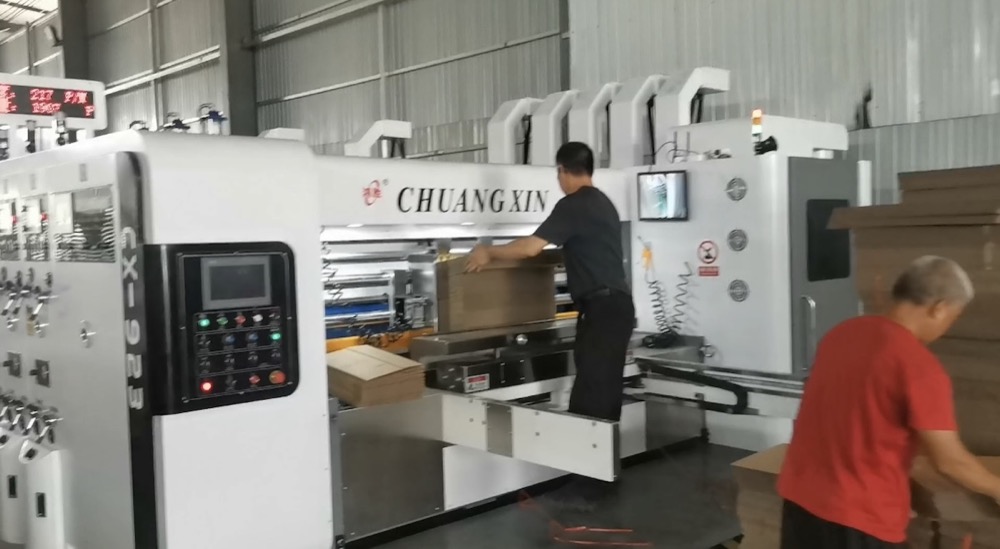
The main advantage is that it integrates paper feeding, printing, slotting, die‑cutting, gluing, and packaging into a single continuous workflow, which dramatically reduces manual handling, labor requirements, and defect rates while increasing daily capacity. For a mid‑size plant, this can mean moving from roughly 3,000 boxes per day to more than 10,000 boxes per day with only two operators. [ouyecartonmachine]
Payback time depends on order volume, profit per box, labor costs, and scrap reduction, but in typical e‑commerce carton applications, a well‑utilized automatic line can often recover its investment in about 18 months, thanks to higher output, lower labor costs, and fewer defective boxes.
Initial training is necessary, but with hands‑on, order‑driven instruction, simple bilingual flowcharts, and remote support, most operators can become competent within several days and fully comfortable within a few weeks. Practical, scenario‑based training is far more effective than classroom theory alone.
Yes. A common configuration is to use a fully automatic linkage line for high‑volume standard cartons and pair it with a printing slotting die‑cutting all‑in‑one machine for small‑batch irregular cartons. This combination avoids over‑investment in multiple semi‑automatic units and keeps changeovers efficient.
Work with your equipment supplier to specify printing accuracy targets (for example, error not exceeding ±1 mm), select appropriate glue systems and compression times for your box designs, and conduct structured trial runs and load tests before full‑scale production. Regular monitoring and preventive maintenance are essential to keep these quality levels stable over time.
1. Hebei Ouye Carton Machinery Manufacturer – Company profile and product overview. Available at:
https://www.ouyecartonmachine.com [ouyecartonmachine]
2. Hebei Ouye Carton Printing Machine – Product and OEM service details. Available at:
https://www.ouyecartonmachine.com/carton-printing-machine.html [ouyecartonmachine]
3. Hebei Ouye Carton Linkage Production Line – Technical description and features. Available at:
https://www.ouyecartonmachine.com/carton-linkage-production-line.html [ouyecartonmachine]
4. E‑commerce packaging market insights – Corrugated boxes segment and regional trends. Available at:
https://www.snsinsider.com/reports/e-commerce-packaging-market-2926 [snsinsider]
5. How e‑commerce growth is driving demand for corrugated boxes – Market background data. Available at:
https://diapkg.com/blog/how-e-commerce-growth-is-driving-demand-for-corrugated-boxes/ [diapkg]
6. E‑commerce packaging market trends and size – 2035 outlook for Asia‑Pacific. Available at:
https://www.towardspackaging.com/insights/e-commerce-packaging-market [towardspackaging]
7. Hebei Ouye Carton Machinery – Product catalog and OEM/ODM information. Available at:
https://www.ouyecartonmachine.com/products.html [ouyecartonmachine]
8. Hebei Ouye Carton Machinery – Video demonstrations and case sharing. Available at:
https://www.youtube.com/watch?v=kh3hLFocXvw [youtube]


