
Views: 222 Author: Ouye Carton Machinery Publish Time: 2026-05-23 Origin: Site


Content Menu
● How Box On Demand Technology Works
● Core Benefits of Box On Demand Systems
>> Cost savings
● Where Box On Demand Machines Fit Best
● Spotlight: Heavy-Duty Box Maker for Demanding Applications
>> Heavy-duty technical capabilities
● From Factory Floor: Practical Lessons from OEM Carton Manufacturers
● Technical Specifications That Matter When You're Buying
● Box On Demand vs. Traditional Carton Production Lines
>> Key differences for manufacturers
● Real-World Use Case: Supporting E‑Commerce and Export Growth
● Best Practices to Maximize ROI and E‑E‑A‑T
● UX-Focused Tips for Implementing Box On Demand Machines
● How to Choose the Right Box On Demand Partner
● CTA: Talk to a Carton Machinery Expert About Box On Demand
● Frequently Asked Questions (FAQ)
A Box On Demand machine is an automated system that cuts, creases, slots, and prints corrugated sheets into finished boxes based on digital orders instead of fixed tooling. Operators input box dimensions (length, width, height) and style on a touchscreen, and servo-driven modules automatically adjust within about 1–6 seconds, with no manual setup.
In practice, this means you can:
- Produce boxes for multiple SKUs in short runs
- React quickly to urgent orders or design changes
- Avoid stocking dozens of pre-made box sizes
For OEM and contract manufacturers, BOD machines bridge the gap between flexibility, cost control, and professional-grade packaging.

A modern Box On Demand system is essentially a fully integrated carton production line in one machine. It replaces traditional multi-machine setups (slotter, creaser, slitter, gluer, printer, die-cutter) with a digital workflow.
Typical workflow:
1. Order input – Dimensions and box style are entered on a touchscreen HMI.
2. Automatic setup – Servo motors adjust slotting, slitting, creasing, and other modules in 1–6 seconds.
3. Feeding – Operators load 1–50 sheets of corrugated board into the feeder, and the system automatically feeds each sheet.
4. Processing – The machine slots, scores, creases, slits, prints, and can glue in one continuous pass.
5. Output – Finished box blanks are ready for folding and packing.
Key modules typically include:
- Automated feeder for single and multiple sheets
- Slotting and scoring units
- Creasing and slitting units
- Gluing and glue-flap crush system
- Vibrating knife cutting for complex cuts
- Optional printing units for logos, barcodes, and handling marks
By integrating all of these stages, a BOD machine can complete hundreds of small-batch orders per day while maintaining consistent quality.
From both a plant manager's and an OEM buyer's perspective, Box On Demand machines deliver value on several levels.
- Fast changeovers: Switching between orders in 1–6 seconds minimizes downtime and supports high-mix, low-volume production.
- Consolidated footprint: One integrated machine replaces multiple traditional carton machines, saving space and simplifying maintenance.
- Labor optimization: Automatic feeding of 1–50 sheets and software-driven setups reduce manual adjustment and operator fatigue.
- No molds or dies: The technology is fully digital, eliminating the cost and lead time of physical molds and cutting dies.
- Lower inventory costs: You no longer need large inventories of pre-made box sizes; you can produce "just in time."
- Reduced waste: Right-sized packaging cuts overpack and avoids obsolete stock when product dimensions change.
- Better unboxing experience: Right-sized, well-printed boxes support a more professional brand image in e-commerce and export markets.
- Faster response to custom demands: OEM clients and distributors often request custom cartons; on-demand capability makes this practical even in small quantities.
- Sustainability messaging: Less waste, fewer oversized boxes, and optimized transport volumes support corporate sustainability goals.
Box On Demand machines are particularly valuable in industries with multiple SKUs, variable order sizes, and frequent design changes.
Typical application scenarios:
- E-commerce and fulfillment centers needing different box sizes for daily orders
- OEM and contract manufacturers supplying overseas brands and wholesalers
- Logistics and 3PL warehouses consolidating packaging for multiple clients
- Industrial and machinery exporters who must customize packaging for different markets and transport modes
By enabling efficient small-batch, high-mix production, these machines align well with just-in-time and lean manufacturing strategies.
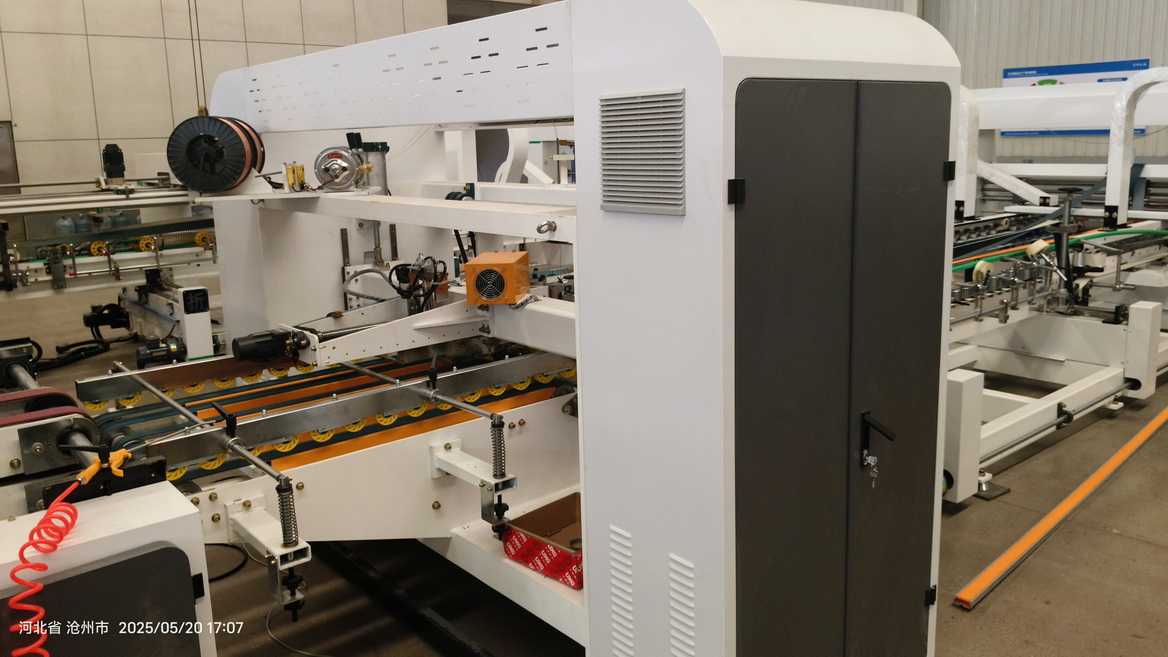
A representative example of a high-performance Box On Demand solution is a heavy-duty box maker designed to replace traditional multi-machine lines. It is engineered for corrugated packaging that needs both strength and flexibility.
- Material range: Typically handles from E-flute to AAA-flute, and from 3-ply to 7-ply corrugated boards.
- Large format: Supports a maximum board width of about 3000 mm, with effectively unlimited processing length.
- Advanced functions: Offers 7–21 mm slotting width, glue flap crush, automatic knife sharpening, and flexible creasing patterns.
- Fast order switching: Maintains an order switch time of 1–6 seconds, ideal for low to medium production volumes where flexibility is critical.
This type of machine is particularly suitable for:
- Heavy machinery packaging
- Export pallets and industrial products
- Oversized or long items requiring custom corrugated solutions
As a carton machinery manufacturer serving global OEM and private-label clients, we see how Box On Demand machines perform in real production environments.
Key lessons from the field:
- Start with your top 10 SKUs: Map your most common box sizes and see which can move to on-demand production first.
- Standardize input templates: Define standard digital templates for your customers' box styles to speed up order entry and reduce errors.
- Train operators as "box designers": The HMI makes it easy to create new sizes, but operators still need basic packaging knowledge to ensure stacking strength and load safety.
- Integrate with ERP/WMS: For higher volumes, connect your Box On Demand system with your ERP or warehouse management system to generate cartons directly from order data.
For overseas buyers, these practices translate into more reliable lead times, fewer damages, and more consistent branding.
When evaluating a Box On Demand or carton packaging machine, decision-makers should look beyond just price and basic output speed.
Key parameters to evaluate:
- Supported board grades: Confirm thickness range (e.g., 3–7 ply) and flute types (E, B, C, BC, AA, AAA).
- Maximum width and length: Ensure the machine can handle your largest required carton size (e.g., up to 3000 mm width).
- Changeover time: Check real-world order switch time; 1–6 seconds is now a benchmark for flexible production.
- Integration level: Consider whether slotting, creasing, slitting, gluing, and printing are all integrated or require separate machines.
- Software and interface: Look for intuitive touchscreen control, recipe storage, and support for multi-language interfaces.
- Maintenance and support: Ask about automatic knife sharpening, preventive maintenance schedules, and remote diagnostics.

| Aspect | Box On Demand Machine | Traditional Carton Line |
|---|---|---|
| Setup time | 1–6 seconds per order (digital, servo-controlled) | Several minutes to hours for manual adjustments |
| Tooling | No molds or dies required | Requires physical dies and tooling |
| Batch size | Optimized for small to medium batches | Optimized for large, repeat batches |
| Machine footprint | Integrated single line | Multiple separate machines |
| SKU flexibility | High – easy to add new sizes | Lower – changes are costly and slow |
| Labor requirement | Lower – one operator can manage multiple tasks | Higher – often needs multiple specialists |
| Inventory strategy | On-demand, just-in-time box production | Pre-produced, stored box inventory |
For exporters and OEMs under pressure to reduce lead times and inventory, Box On Demand solutions often deliver a faster ROI than traditional lines, especially when serving diverse product portfolios. [siteimprove]
Consider a mid-sized manufacturer exporting custom machinery to Europe and North America. Traditionally, they used pre-made cartons and wooden crates, maintaining large inventories and often overpacking.
After implementing a Box On Demand system:
- They consolidated multiple carton SKUs into on-demand production for each order.
- Export damage rates dropped because boxes were better sized and reinforced for long-distance transport.
- Warehouse space for finished cartons was freed for higher-value inventory.
- OEM clients appreciated custom-printed branding on short runs, improving perceived value.
This type of case reflects a broader trend: buyers now expect professional, tailor-made packaging even in low volumes, and Box On Demand makes that commercially feasible. [blog.saleslayer]
To align with Google's E‑E‑A‑T (Experience, Expertise, Authoritativeness, Trustworthiness) and your own performance metrics, treat your Box On Demand investment as both a technical and content opportunity. [semrush]
Operational best practices:
- Document internal setup SOPs and standard operating parameters for typical box types.
- Capture before/after data on waste, damage rates, lead times, and inventory to quantify benefits.
- Regularly review machine logs and maintenance data to prevent unplanned downtime.
Content and communication best practices:
- Publish case studies with real numbers (e.g., "Reduced packaging waste by 18% after adopting on-demand cartons"). [dignitas]
- Use detailed spec sheets and FAQs on your website to answer buyer questions upfront. [blog.saleslayer]
- Provide author bylines and company background to clearly show your experience and expertise in carton machinery manufacturing. [stellarcontent]
From a user-experience standpoint, both operator UX and buyer UX matter.
Operator UX:
- Keep the HMI layout clean and consistent, with clear labels for length, width, height, and style.
- Use pre-saved recipes for frequent box types to reduce typing and errors.
- Provide step-by-step training with short videos embedded in internal documentation.
Buyer UX (OEM clients, distributors, brand owners):
- Offer easy-to-understand capability charts (max size, thickness, print options) on your website and brochures. [blog.marketmuse]
- Provide sample packs of typical boxes your Box On Demand machine can produce.
- Communicate how on-demand packaging supports faster new product launches and customized branding.
This combination of user-friendly interfaces and clear communication helps buyers feel confident that your factory can handle complex, changing requirements.
When foreign buyers select an OEM partner for carton packaging equipment, they look at more than just machinery.
Selection checklist:
1. Technical track record: Experience in designing and manufacturing carton packaging machinery for international markets. [marketveep]
2. Customization capability: Ability to tailor machine configurations, software, languages, and safety standards to local regulations.
3. After-sales support: Remote diagnostics, spare parts availability, and training for local staff.
4. Compliance and documentation: CE or other relevant certifications, detailed manuals, and clear safety documentation.
5. Reference projects: Proven installations in e-commerce, logistics, or manufacturing plants similar to the buyer's business.
Working with a specialized carton machinery manufacturer ensures that the Box On Demand solution fits both your current and future requirements.
If you are a brand owner, wholesaler, or manufacturer looking to reduce packaging costs and increase flexibility, now is the right time to evaluate a Box On Demand solution for your factory.
- Discuss your top SKUs, export markets, and packaging pain points.
- Get a tailored proposal outlining machine configuration, expected throughput, and estimated ROI.
- Explore OEM and private-label options that align with your brand and regional requirements.
Contact our carton packaging machinery team today to discuss your Box On Demand project and receive a customized solution for your production line. [gushwork]
1. What is the main advantage of a Box On Demand machine compared to traditional box production?
The main advantage is the ability to produce customized boxes on demand with almost zero changeover time and no molds, making it ideal for high-mix, low-volume production.
2. Can a Box On Demand system handle heavy-duty industrial packaging?
Yes, advanced heavy-duty models can process 3–7 ply boards and flute types from E to AAA, with large format capacity up to about 3000 mm width, making them suitable for heavy industrial packaging.
3. How fast can a Box On Demand machine switch between orders?
Modern systems use servo-controlled modules to complete order changes in approximately 1–6 seconds, significantly reducing downtime compared to traditional lines.
4. Is it possible to print logos and handling marks on boxes produced on demand?
Many Box On Demand machines integrate printing functions, allowing operators to add logos, barcodes, and handling marks directly during production in one pass.
5. What information do I need to prepare before investing in a Box On Demand solution?
You should prepare data on your SKU list, typical box sizes, current packaging costs, waste rates, and target markets so your machinery partner can design a configuration that meets your technical and commercial goals. [siteimprove]
- AOPACK. "What is a Box On Demand Machine?" (Accessed 2026).
- Siteimprove. "SEO for manufacturing: Boost your search presence." (Accessed 2026).(https://www.siteimprove.com/glossary/seo-for-manufacturing/)
- Sales Layer. "SEO for Manufacturing Companies: The 2026 Strategy Guide." 2026.(https://blog.saleslayer.com/seo-for-manufacturing-companies)
- Gushwork. "SEO for Manufacturers: A Comprehensive Guide." 2026.(https://www.gushwork.ai/blog/boost-strategy-seo-manufacturers)
- Semrush. "Google E-E-A-T: What It Is & How It Affects SEO." 2024.(https://www.semrush.com/blog/eeat/)
- Dignitas Digital. "How to Create High-quality Content That Meets Google E-E-A-T Standards." 2023.(https://dignitas.digital/blog/create-content-that-meets-google-e-e-a-t-standards/)
- Stellar Content. "The Complete Guide to Google E-E-A-T." 2019.(https://www.stellarcontent.com/blog/seo/the-complete-guide-to-google-e-a-t-what-is-it-why-is-it-and-how-do-you-create-it/)
- MarketMuse. "SEO for Manufacturing: What You Need to Know." 2025.[](https://blog.marketmuse.com/seo-for-manufacturing/)
- MarketVeep. "10 Ways a Digital Marketing and SEO Agency Boosts Manufacturing Success." 2025.(https://www.marketveep.com/blog/10-ways-a-digital-marketing-and-seo-agency-boosts-manufacturing-success)


