
Views: 222 Author: Amanda Publish Time: 2025-08-05 Origin: Site


Content Menu
● Overview of Flat Die Cutting Technology
● Why Choose Korean Flat Die Cutting Machine Manufacturers?
● Leading Flat Die Cutting Machine Manufacturers and Suppliers in Korea
>> EK Group
>> Danke Inc.
>> Other Relevant Manufacturers and Suppliers
● OEM and ODM Services for Overseas Buyers
● Innovations and Technology Trends
● Applications of Flat Die Cutting Machines
● Evaluating and Choosing the Right Korean Flat Die Cutting Machine Supplier
● FAQ
>> 1. What advantages do Korean flat die cutting machine manufacturers offer compared to others?
>> 2. Can Korean suppliers customize machines to specific client needs and brand them?
>> 3. Which industries commonly use flat die cutting machines sourced from Korea?
>> 4. How long does it typically take to manufacture and deliver OEM machines from Korea?
>> 5. What should buyers look for when choosing a Korean flat die cutting machine supplier?
Flat die cutting machines have transformed the packaging industry by offering precise, efficient, and scalable solutions for converting paperboard, corrugated, and other materials into a wide range of products. Korea, recognized for its advanced manufacturing sector, is home to several top-tier flat die cutting machine manufacturers and suppliers who serve both domestic needs and the global market with innovative technology and strong OEM offerings. In this comprehensive article, we dive into the Korean flat die cutting machinery ecosystem, highlight leading companies, explore the latest advances, and provide valuable resources for international buyers seeking reliable partners for OEM, wholesale, or direct purchase.
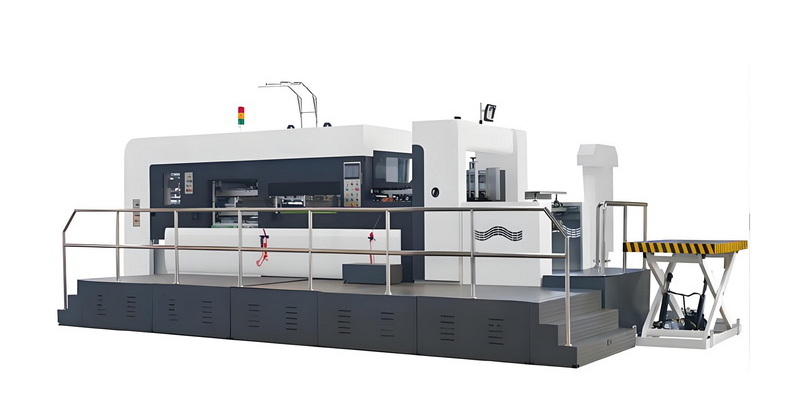
Flat die cutting, also known as flatbed die cutting, utilizes a steel rule die and a flat surface to cut shapes from various substrates. The technology is favored for its versatility—capable of handling sheet materials of varying thicknesses—and for its high precision in repetitive operations. Modern machines support automation, high speeds, and value-added processes such as embossing, hot foil stamping, and more.
Flatbed die cutting is essential for packaging, printing, labeling, and many other industries where clean, repeated cuts are necessary. The process involves pressing the sheet material onto the steel rule die with high force to create cuts, creases, and perforations depending on the die design. This method is particularly advantageous for complex and intricate shapes where precision is critical.
Modern flat die cutting machines in Korea often incorporate advanced hydraulic or pneumatic systems, servomotor-driven operations, and touchscreen controls for streamlined user interaction. That makes them suitable for both small-scale businesses and large industrial production lines.
Korean flat die cutting machine manufacturers have earned a reputation for engineering excellence, innovation, and customer centricity. Several distinct factors make Korean suppliers stand out:
- Engineering Excellence: Korean manufacturers use premium components from renowned global brands, ensuring machines are highly reliable, durable, and capable of sustained high performance.
- Customization and OEM Strength: The Korean manufacturing sector emphasizes a customer-first approach with strong capabilities in OEM and ODM. They work closely with international clients to develop machines that meet specific design, branding, and functional requirements.
- After-Sales Service: Korean suppliers provide comprehensive support including installation, operator training, maintenance services, and supply of spare parts, often with global networks.
- Competitive Pricing: Thanks to efficient production processes and advanced technology, Korean machines offer an excellent value proposition balancing cost, quality, and cutting-edge features.
- Innovation: Korean manufacturers continuously innovate to integrate automation, digital monitoring, energy-saving technologies, and multi-functional capabilities.
These qualities position Korea as a preferred source for flat die cutting machinery among foreign brand owners, wholesalers, and manufacturers looking for reliable, state-of-the-art equipment.
Established in 1980, Young Shin Industries is one of Korea's premier flat die cutting machine manufacturers. Based in Daegu, the company combines four decades of industry experience with advanced manufacturing techniques to produce a wide lineup of flat die cutting machines that cater to folding carton, corrugated board, and printing industries.
Young Shin machines are characterized by high precision, sturdy construction, and ease of operation. They cover a broad size range including large-format machines capable of handling sheets up to 1700mm by 2500mm. The company prides itself on incorporating high-grade components to guarantee long-term durability and superior performance.
Beyond its domestic market, Young Shin has developed a strong international sales and service network, making it a trusted partner for overseas OEM and export customers. Their commitment to continuous R&D ensures machines stay on the cutting edge of industry technology.
EK Group specializes in large-format flat die cutting machines tailored primarily for the heavy-duty corrugated packaging sector. Their offerings include fully automatic, semi-automatic, and hybrid flatbed die cutters optimized for maximum throughput and minimal downtime.
The machines feature powerful automation like pallet changers, conveyor systems, and automatic feeding, allowing manufacturers to achieve production speeds of up to 7,500 pieces per hour. EK Group machines are built robustly for industrial use cases requiring sustained high volume output.
Their solutions are widely adopted in large-scale packaging factories and are known for their reliability, ease of integration, and energy efficiency.
Danke Inc., founded in the late 1970s, is a veteran manufacturer serving a broad spectrum of customers with semi-automatic flat die cutting machines. Their products are suitable for smaller to medium-sized packaging converters and label producers.
Danke machines are valued for their robust design, simplistic operation, and adaptability. They maintain a strong reputation for reliable export services and offer flexible procurement options tailored to meet diverse client requirements.
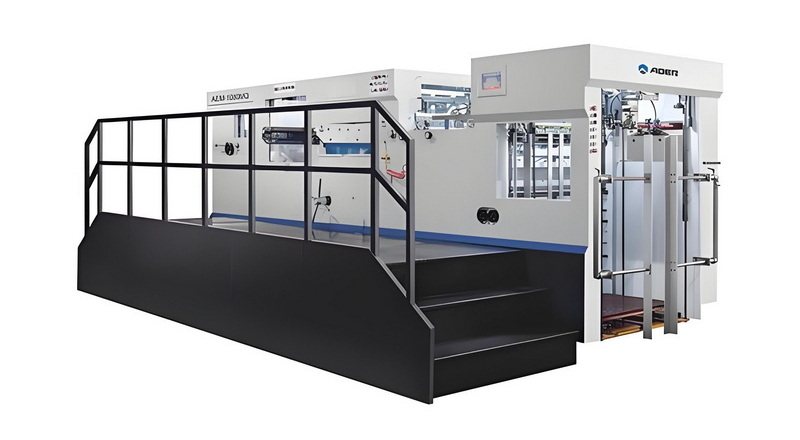
Since 1985, Future Pack has been a leading supplier in the paper converting and packaging machinery space within Korea. Their flat die cutting machines are engineered for efficiency and endurance. With comprehensive in-house design and manufacturing capabilities, Future Pack can cater to both standard machine requests and highly customized orders.
The company is recognized for rapid response to client needs, after-sales support, and competitive pricing on international shipments.
The Korean market also includes several niche and emerging manufacturers who specialize in delivering OEM and wholesale solutions to foreign brands. These suppliers leverage Korea's well-developed industrial infrastructure and global trade platforms to connect with customers worldwide.
Notably, many of these firms emphasize personalized OEM engagements, working collaboratively to design machines that align with client production processes, materials, and quality requirements. This customer-focused culture distinguishes Korea in the global flat die cutting machine supply chain.
One of Korea's most attractive offers to international buyers is its ability to provide comprehensive OEM (Original Equipment Manufacturer) and ODM (Original Design Manufacturer) services. Korean firms excel at customizing machines to client specifications, which can range from machine size, feeding and delivery mechanisms, automation levels, to control software interfaces.
These services are especially valuable for branded packaging suppliers, wholesalers, and manufacturers wanting exclusive equipment co-branded or uniquely configured for their markets. Korean OEM providers handle everything from initial design concept through prototyping, production, quality testing, certification, and after-sales support.
To facilitate seamless international cooperation, many Korean manufacturers offer English-language manuals, training videos, virtual and on-site installation support, and spare parts logistics that enhance client satisfaction and reduce operational downtime.
Korean flat die cutting machine producers continue to push boundaries by integrating the latest technologies into their equipment. Some key trends include:
- High Automation: Automated sheet feeding, die changing, product stacking, and waste material removal increase production speed and reduce labor costs. Operators benefit from simplified interfaces and error detection systems.
- Industry 4.0 Integration: Machines are increasingly connected to digital platforms enabling remote diagnostics, production monitoring, and predictive maintenance. This reduces unexpected failures and supports continuous operation.
- Energy Efficiency: Advanced motor controls and power-saving designs are common, aiming to reduce electrical consumption without sacrificing performance.
- Multi-Functionality: Beyond cutting, many machines now enable embossing, hot stamping, creasing, and perforations in single passes, adding versatility to production lines.
- Material Versatility: Machines are adapted to handle a wider range of substrates including plastics, metallic foils, and composite materials alongside paper and cardboard.
These innovations help Korean manufacturers maintain a technological edge and cater to evolving customer demands.
Flat die cutting machines produced in Korea find extensive application across numerous industries:
- Packaging Industry: Manufacturing cartons, corrugated boxes, folding cartons, point-of-purchase displays, inserts, and other packaging components.
- Labeling and Printing: Creating custom-shaped labels and stickers with precise cutting, perforation, and embossing capabilities.
- Electronics: Cutting insulating materials, gaskets, thin films, and other technical parts often used in electronic assemblies.
- Automotive: Producing sealing strips, noise/vibration/harshness (NVH) components, and insulation parts for vehicles.
- Stationery and Promotional Materials: Crafting bespoke printed materials, cards, tags, and decorative packaging elements.
Because flat die cutting machines can quickly and repeatedly produce complex shapes with high accuracy, they have become indispensable in modern manufacturing workflows.
Selecting the right supplier is critical for ensuring long-term productivity and operational success. When evaluating Korean flat die cutting machine manufacturers and suppliers, consider:
- Experience and Reputation: Look for firms with a solid track record, satisfied international clients, and relevant industry certifications.
- Product Range and Customization: Ensure they offer machines that match your production volume, material types, and technology preferences. Strong OEM capability is essential for tailor-made solutions.
- After-Sales Support: Reliable technical assistance, machine installation, operator training, and spare parts availability are vital for minimizing downtime.
- Compliance and Certification: Machines should adhere to safety and quality standards suitable for your target markets.
- Cost and Delivery: Assess pricing competitiveness alongside estimated lead times to ensure economic viability without compromising quality.
Request references or case studies, and if possible, visit supplier facilities to inspect manufacturing processes and machine performance firsthand.
Korea's flat die cutting machine manufacturers and suppliers represent a dynamic force in global packaging and converting industries. Renowned for engineering excellence, cutting-edge innovation, and customer-oriented OEM services, these companies offer versatile, reliable, and efficient solutions tailored to diverse production requirements.
Whether you are a brand owner, wholesaler, or manufacturer looking for high-performance flat die cutting machinery, partnering with Korean suppliers can boost your operational efficiency, expand your product capabilities, and give you a competitive advantage. By carefully assessing supplier expertise, technology offerings, and support services, you can build a productive alliance that lasts.

Korean manufacturers combine advanced engineering, strong OEM capabilities, comprehensive after-sales support, and competitive pricing to provide reliable, high-performance machines suitable for international markets.
Yes, most Korean companies are experienced in OEM and ODM services, allowing full customization of machine design, branding, and functional configurations to meet exact client specifications.
Typical industries include packaging, printing, labeling, electronics, automotive, and stationery, anywhere precision material cutting and shaping are essential.
Lead times vary by order complexity but are generally negotiable. Many suppliers offer efficient production schedules supported by strong export logistics.
Important factors include the supplier's market experience, product range, OEM expertise, after-sales service, certifications, and client references.


