
Views: 222 Author: Amanda Publish Time: 2025-10-27 Origin: Site


Content Menu
● Understanding Automatic and Semi‑Auto Strapping Machines
● How Automatic Strapping Machines Work
● Top Automatic Strapping Machine Manufacturers and Suppliers in the UK
>> Hazel 4D
>> Maxpack
● The Value of OEM Collaboration: Hebei Ouye Carton Machinery Co., LTD
● The Rise of Semi-Auto Strapping Machine Manufacturers and Suppliers
● Advantages of Fully-Automatic Systems
● Materials and Sustainability Focus
● Top Technology Trends in 2025 UK Strapping Market
● FAQ
>> 1. What is the key difference between automatic and semi‑automatic machines?
>> 2. How can OEM partnerships benefit UK strapping machine suppliers?
>> 3. Which materials are preferred for strapping?
>> 4. What maintenance is required for strapping machines?
>> 5. How does automation improve workplace safety?
The United Kingdom is home to some of the most innovative automatic and semi‑automatic strapping machine manufacturers in Europe. From large industrial automation companies to bespoke packaging solution providers, these manufacturers ensure fast, efficient, and secure packaging solutions. Strengthened by global OEM collaborations—particularly with Hebei Ouye Carton Machinery Co., LTD in China—the UK's packaging sector is evolving toward smart, sustainable automation.
Strapping machines apply plastic straps—typically polypropylene (PP) or polyester (PET)—to secure boxes, pallets, or bundles. A fully automatic strapping machine performs every step autonomously: feeding, tensioning, welding, and cutting. Meanwhile, semi‑automatic models require operators to insert the strap manually, after which the machine tensions and seals it automatically.
Automatic models are favored in large-scale distribution centers and e‑commerce warehouses, while semi‑auto options remain popular among smaller factories and logistics firms due to their affordability and adaptability.
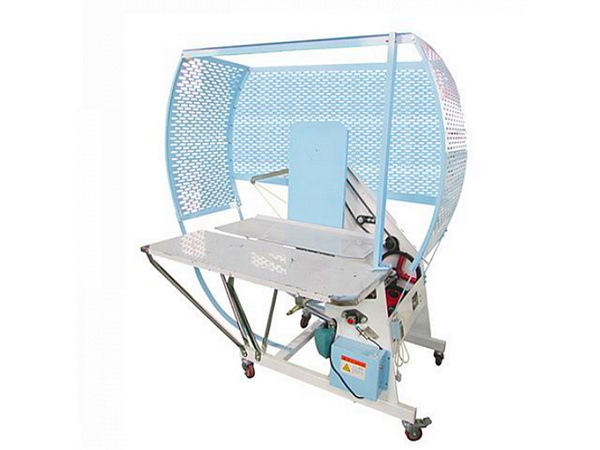
According to Hebei Ouye's strapping system design principles, an automatic strapping machine completes the packaging cycle in seconds. The process begins when a package is detected by a sensor, triggering automated strap feeding. The strap surrounds the package, applies precise tension, heat-seals the joint, and cuts away excess material before ejecting the package. This synchronized process optimizes time and resource efficiency in high-volume production lines.[7]
Key steps in the sequence include:
- Strap feeding around the package frame
- Sensor-based alignment verification
- Tensioning via servo or pneumatic control
- Heat-fusion or friction-weld sealing
- Automatic strap cutting and release
Machines like the XP 111 and MH600 PET industrial systems exemplify heavy-duty performance standards, achieving over 2.5-second cycles and adjustable strap tension reaching 7000N.[1][5]
Gordian Strapping leads the UK market with premium automatic solutions integrating Mosca and Cyklop technology. Their semi‑auto systems serve industries from food packaging to logistics. Known for long-lasting components, they provide maintenance-friendly designs that deliver repeat precision.
As one of the UK's largest packaging distributors, Macfarlane Packaging offers both fully automatic and semi‑automatic machines that balance reliability and simplicity. Their fully automated systems handle feeding, tensioning, and sealing—boosting productivity by over 30% in high-demand environments.[2]
Hazel 4D's Transpak series emphasizes ergonomic handling and minimal maintenance. Their semi‑auto units cater to businesses seeking cost efficiency without sacrificing speed or tensioning accuracy—ideal for wrapping boxes of various shapes and sizes.
A pioneer in safe and sustainable packaging, Maxpack produces semi‑automatic strapping machines such as the TMS‑300, offering adjustable tension, stainless steel platforms, and 3‑second cycles for heavy-use environments. The company's Optimax line further expands on automatic sealing precision and continuous operation capabilities.[6]
Taylor Packaging produces robust, modular strapping units that integrate easily into conveyor-based production. Using either PP or PET materials, their automatic machines deliver tailored performance suited for printing, manufacturing, and shipping operations.
Headquartered in Scotland, Pitreavie specializes in pallet and bulk packaging. Their combination of semi-auto strapping machines and PET/PP straps enhances product security for heavy-duty logistics—especially for exports and warehouse storage.
With decades of experience, Plastex designs durable semi‑automatic systems capable of precise strap adjustments. Combining proprietary strapping materials with innovative sealing techniques, their machines yield less waste and higher efficiency in continuous operations.
Among newer entrants, Pack‑Master Ltd focuses on eco‑efficient automation. Their fully automatic strappers integrate energy-saving features such as intelligent motor shutdown and servo control, reducing power consumption while preserving throughput speed.
Strapping Machines UK provides customizable, medium-scale machinery alongside maintenance contracts. Their portfolio spans tabletop semi‑auto systems and automatic pallet banders that meet the needs of small and medium enterprises across the UK.
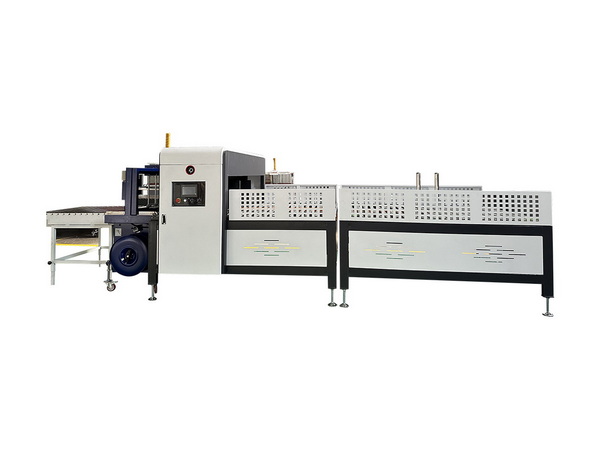
As an intelligent factory in China, Hebei Ouye Carton Machinery Co., LTD plays a crucial role as an OEM supplier for European and UK brands. Their capabilities extend beyond mere production—they design precision-engineered systems with modern PLC and servo control architecture, ensuring consistent quality output across every batch.
Key OEM advantages provided by Ouye include:
- Custom branding and private labeling
- Integration of IoT sensors for predictive maintenance
- CNC-machined structural parts ensuring alignment accuracy
- 24/7 automated assembly lines optimizing lead time
OEM collaboration allows UK manufacturers to focus on customer service and distribution while relying on Ouye's mass production and design innovation for scalability.
Semi-Auto Strapping Machine Manufacturers and Suppliers fill an important niche between manual labor and full automation. Machines such as Schott Packaging's S‑666 or Macfarlane's TMS‑Optimax offer low-maintenance mechanisms for small and medium packaging operations.
Advantages include:
- Compact design for limited workspace
- Adjustable tension and easy operator control
- Minimal training requirements
- Reduced initial investment costs
Such semi-auto units still deliver automated sealing precision and uniform strap placement, vital for carton, book, and electronics packaging.
Automatic and semi-automatic models share many structural similarities but differ significantly in functionality. A fully automatic system eliminates manual feeding entirely, thereby accelerating processes by over 50%. Benefits include:
- Enhanced consistency in tension and sealing
- Reduced human error
- Integration with conveyor-based production lines
- Improved workplace safety and ergonomics
- Significant long-term labor cost savings
As highlighted by Schott Packaging, automation also minimizes strap waste by cutting each strap to precise length requirements, reducing environmental footprint and operational cost.[3]
UK manufacturers increasingly embrace eco-friendly strap materials like recyclable PET and bio‑based PP. These materials provide durability equivalent to polyester but lower environmental impact. OEM partners such as Hebei Ouye integrate eco-plastics production lines ensuring minimal waste generation during extrusion and cutting phases.
In addition, modern strapping machine designs reduce energy consumption through optimized servo control, stand‑by power modes, and LED-based sealing diagnostics to prevent unnecessary downtime.
1. Smart Automation: Integration of real-time data collection sensors for fault diagnostics and maintenance alerts.
2. Sustainable Manufacturing: Rise of lightweight PET straps with enhanced strength-to-weight ratios.
3. Energy Efficiency: Adoption of servo-driven motors replacing hydraulic or pneumatic tensioning.
4. Customization via OEM: Tailored branding, interface languages, and strap guides for client-specific packaging needs.
5. Compact Modular Design: Machines designed for easy retrofit into existing packaging lines without layout overhauls.
These trends demonstrate the continued leadership of both UK manufacturers and overseas partners such as Hebei Ouye in delivering sustainable, intelligent automation for packaging industries.
- Carton and corrugated box packaging
- Palletized material wrapping
- Logistics and e-commerce fulfillment centers
- Food, printing, and textile sectors
- Home appliances and furniture packaging
Automatic and Semi-Auto Strapping Machine Manufacturers and Suppliers now serve virtually every packaging-dependent sector in the UK, ensuring optimized productivity without compromising quality.
The UK's packaging industry continues to thrive through a combined focus on automation and global collaboration. With companies like Gordian Strapping, Macfarlane Packaging, and Hazel 4D leading innovation—and strategic OEM partnerships with Hebei Ouye Carton Machinery Co., LTD enhancing production flexibility—the future of strapping machines is both efficient and sustainable. Whether your operation demands advanced automatic systems or cost-effective semi-automatic solutions, today's technology ensures robust, fast, and eco-conscious packaging performance tailored to any business scale.
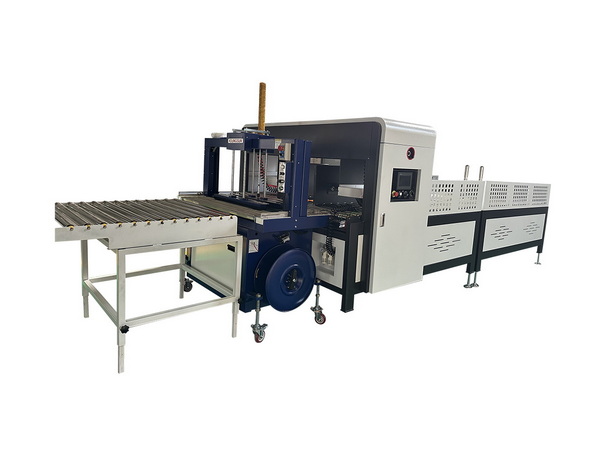
Automatic machines handle strap feeding, tensioning, sealing, and cutting with no manual input, while semi‑auto machines require the operator to feed the strap manually but automate tension and seal operations.
OEM partnerships like those with Hebei Ouye Carton Machinery Co., LTD enable British brands to ship uniquely branded machines manufactured at scale with global quality assurance and lower production costs.
Polypropylene (PP) is used for light-to-medium loads, while polyester (PET) is best for heavy-duty or palletized goods due to its higher elongation resistance and recyclability.
Routine cleaning, strap guide inspection, and tension calibration every 3 to 6 months maintain machine efficiency. Modern automated models also include built‑in maintenance alerts.
Automation reduces manual tensioning and sealing, minimizing repetitive strain injuries, hand cuts, and workload fatigue—creating safer operating environments for packaging staff.
[1](https://www.youtube.com/watch?v=bHfyymYCFZE)
[2](https://macfarlanepackaging.com/strapping-pallet-banding/machine-strapping/fully-auto-strapping)
[3](https://schottpackaging.co.uk/strapping-machine-guide/)
[4](https://gordianstrapping.co.uk/2024/04/29/strapping-machines-for-every-need/)
[5](https://www.youtube.com/watch?v=KtJ6wiXxqkg)
[6](https://www.severnpackaging.co.uk/product/automatic-strapping-machine)
[7](https://www.ouyecartonmachine.com/how-automatic-strapping-machine-works.html)
[8](https://www.cyklop.com/case-studies/automatic-strapping-of-different-sized-cardboard-packing)
[9](https://www.mosca.com/en)
[10](https://gordianstrapping.co.uk/2024/12/09/strapping-machines-reinventing-construction-packaging-solutions/)


