
Views: 222 Author: Amanda Publish Time: 2025-10-01 Origin: Site


Content Menu
● Understanding the Semi Automatic Strapping Machine
>> Key Benefits of Semi Automatic Strapping Machines
● Operating the Semi Automatic Strapping Machine
>> Feeding the Strap Around the Package
● Adjusting Key Machine Settings
● Safety Guidelines and Best Practices
● Maintenance Tips for Longevity
● Technical Specifications (Example Models)
● Frequently Asked Questions (FAQ)
>> 1. How do I load the strap coil in a semi-automatic strapping machine?
>> 2. What strap materials are compatible with semi-automatic strapping machines?
>> 3. How is the strap tension adjusted?
>> 4. What safety tips should be followed while operating the strapping machine?
>> 5. How often should the strapping machine be maintained?
A semi-automatic strapping machine is a pivotal piece of equipment in packaging operations, especially for medium-volume production environments. It combines manual and automatic processes to secure packages, boxes, or pallets with strapping bands efficiently and reliably. This detailed guide explains how to use a semi-automatic strapping machine, covering installation, operation, adjustments, safety, and maintenance.

The semi-automatic strapping machine requires the operator to manually place the strap around the package and feed it into the machine. The machine then automatically tensions, seals, and cuts the strap. This hybrid approach offers flexibility in handling various package sizes and shapes with more control than fully automatic units.
- Improved Productivity: Automates tension and sealing to speed up packaging.
- Consistent Strap Tension: Ensures secure and uniform fastening.
- Adaptability: Works with different package sizes and strap materials.
- Cost Efficiency: Balances labor and automation costs.
- Ease of Operation: Requires minimal training for operators.
- Durability: Designed for continuous use in industrial environments.
Proper installation is paramount to ensure safety and effective machine performance.
Choose a level, stable surface with enough clearance for operator access and package handling. Confirm that electrical outlets match the machine's voltage requirements, which typically are single phase 220-230V AC.
- Remove all packing protections.
- Set the machine on its casters, lock them to prevent movement.
- Clear away any shipping debris inside the machine body.
1. Remove the dispenser spool flange by turning the hand nut counterclockwise.
2. Place the coil of strap (usually polypropylene, PP, or polyester, PET) on the spool correctly according to directional arrows.
3. Replace and secure the flange.
4. Unroll about 20 inches of strap from the coil.
5. Thread the strap through the guide rollers and forward slot until the machine motor engages.
6. Press the manual feed button to auto-feed strap further through the machine.
Switch the power ON and allow any heating elements time to warm up if the machine uses heat sealing. This usually takes around one minute.
Place your package on the worktable, sliding it flush against any stop brackets to ensure the strap will sit correctly around the box or pallet. The package should completely cover the strap entry slot.
Manually place the strap around the package and feed both ends into the machine. The micro-switch sensor will detect the strap presence and activate the tensioning cycle.
- The machine tensions the strap to a preset tension.
- It seals the strap, typically by heat sealing or friction welding.
- Finally, the strap is cut off to complete the cycle.
- Remove the secured package and prepare the next.
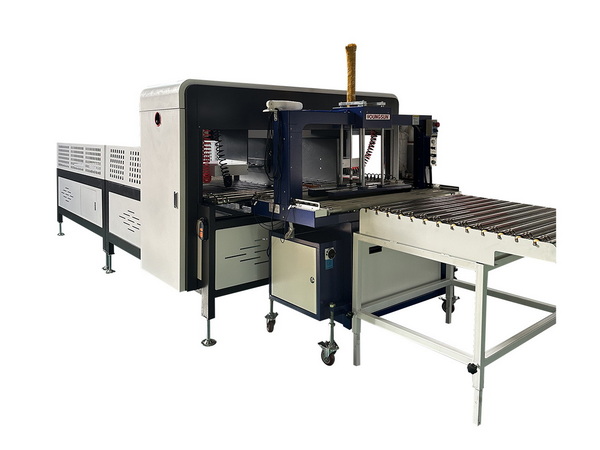
Fine-tuning these parameters optimizes performance and guarantees package integrity.
Use the tension dial to increase or reduce the force that tightens the strap around the item. For heavy or dense packages, increase tension. For fragile goods, reduce tension to prevent damage.
Adjust feed length to control how much strap is fed per package. Larger packages require more strap length; smaller ones need less to avoid waste.
- The manual feed button provides extra strap feed or assists with strap loading/jamming.
- The reset function ejects the strap to ready the machine for a new cycle.
- Never place hands or arms near the strap sealing area during operation.
- Always ensure the protective covers are secured before powering on.
- Use the caster locks to stabilize the machine.
- Avoid tight grip on the strap during manual feeding to prevent injury.
- Regularly inspect electrical cords and plugs for damage.
- Verify emergency stop buttons and safety sensors are functional.
- Train operators on proper use and emergency procedures.
Routine maintenance significantly extends machine life and avoids costly downtime.
- Clean the surface and strap guides daily to remove dust and debris.
- Check tension rollers and guides for wear; replace parts if needed.
- Lubricate bearings and moving mechanical parts following manufacturer recommendations.
- Replace worn heating elements or friction plates promptly.
- Cover the machine when idle to protect from environmental contaminants.
Typical semi-automatic strapping machines have the following features:
| Specification | Description |
| Power Supply | Single-phase AC, 220-230V |
| Strap Width | Adjustable, typically 5mm to 15.5mm |
| Strapping Speed | Around 1.4 - 2.5 seconds per strap |
| Tension Range | 5kg to 55kg (varies by model) |
| Sealing Method | Heat sealing or friction welding |
| Package Size Range | Min 60mm dimension, max unlimited |
| Weight of Machine | 78 kg to 90 kg |
| Machine Dimensions | Approx. 900mm(L) x 580mm(W) x 730mm(H) |
Some features found in advanced models:
- PCB touch control panels for precise tension and cycle timing.
- Auto-stop after inactivity for energy saving.
- Adjustable heating and cooling time.
- Low noise DC motor drives.
- Safety compliance to CE standards.
The semi automatic strapping machine is a critical investment for manufacturers, wholesalers, and brand owners aiming at efficient, secure packaging. Its hybrid manual-automatic operation ensures precise strap tension and sealing, reducing labor intensity while improving throughput. Following correct installation, operation, adjustment, safety, and maintenance procedures optimizes machine performance and extends service life. Proper use of the Strapping Machine improves load stability, protects goods during transit, and elevates professional packaging standards.
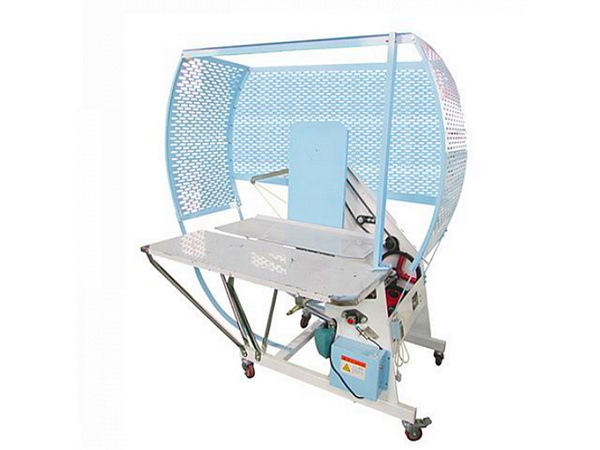
Remove the dispenser flange, place the strap coil correctly, thread the strap through the guides, and press the manual feed button to feed strap through the machine.[11][12]
Polypropylene (PP) and polyester (PET) are commonly used for their strength, flexibility, and heat-sealing compatibility.[12][13]
Use the tension dial on the control panel; clockwise to increase tension, counterclockwise to reduce it depending on package requirements.[14][11]
Keep hands clear of the sealing area, ensure protective covers are in place, lock casters to prevent movement, and never operate with parts removed.[11][14]
Maintenance frequency depends on usage but generally includes daily cleaning, periodic lubrication, checking for wear, and replacing worn sealing elements as necessary.[14][11]
[1](https://www.globalpackindia.com/products/strapping-machine/semi-automatic-strapping-machine/kh-90/)
[2](https://www.joinpackstrapping.com/semiautomatic-strapping-machines.html)
[3](https://www.signode.com/en-us/productslist/sig-n/)
[4](https://strapsolutions.com/products/strapping-machines/semi-automatic-strappers/)
[5](https://nidoworld.com/mechanization/end-of-line-packing/strapping-machines/semi-automatic-box-strapping/)
[6](https://www.axes-s.com/en/product/packinglist/c2_lsa_n4.php)
[7](https://www.emballagecartier.com/en/iq-400-strapping-machine-fromm/)
[8](https://messersi.com/en/prodotti/m1-inox/)
[9](https://seevetec.de/en/Semi-automatic-strapping-machines/semi-automatic-strapping-machines.html)
[10](https://www.fromm-pack.co.uk/strapping-solutions/semi-automatic-plastic-strapping-machines/pm206-semi-automatic-plastic-strapping-machine/)
[11](https://eastey.com/assets/uploads/support/user-guides/5001699%E2%80%93Eastey%E2%80%93EXS-100-Semi-Atomatic_Strapping_Machine%E2%80%93UG%E2%80%93RevA.pdf)
[12](https://www.fromm-pack.com.au/fromm-central/blog/how-to-use-strapping-machines-a-complete-guide-for-all-types/)
[13](https://www.gripstrappingtech.com/how-to-use-a-strapping-machine.php)
[14](https://h-shop.no/images_hovedside/Extend/2019%20EXS-303%20MANUAL-komprimert.pdf)


